
The Abaco Club, Bahamas
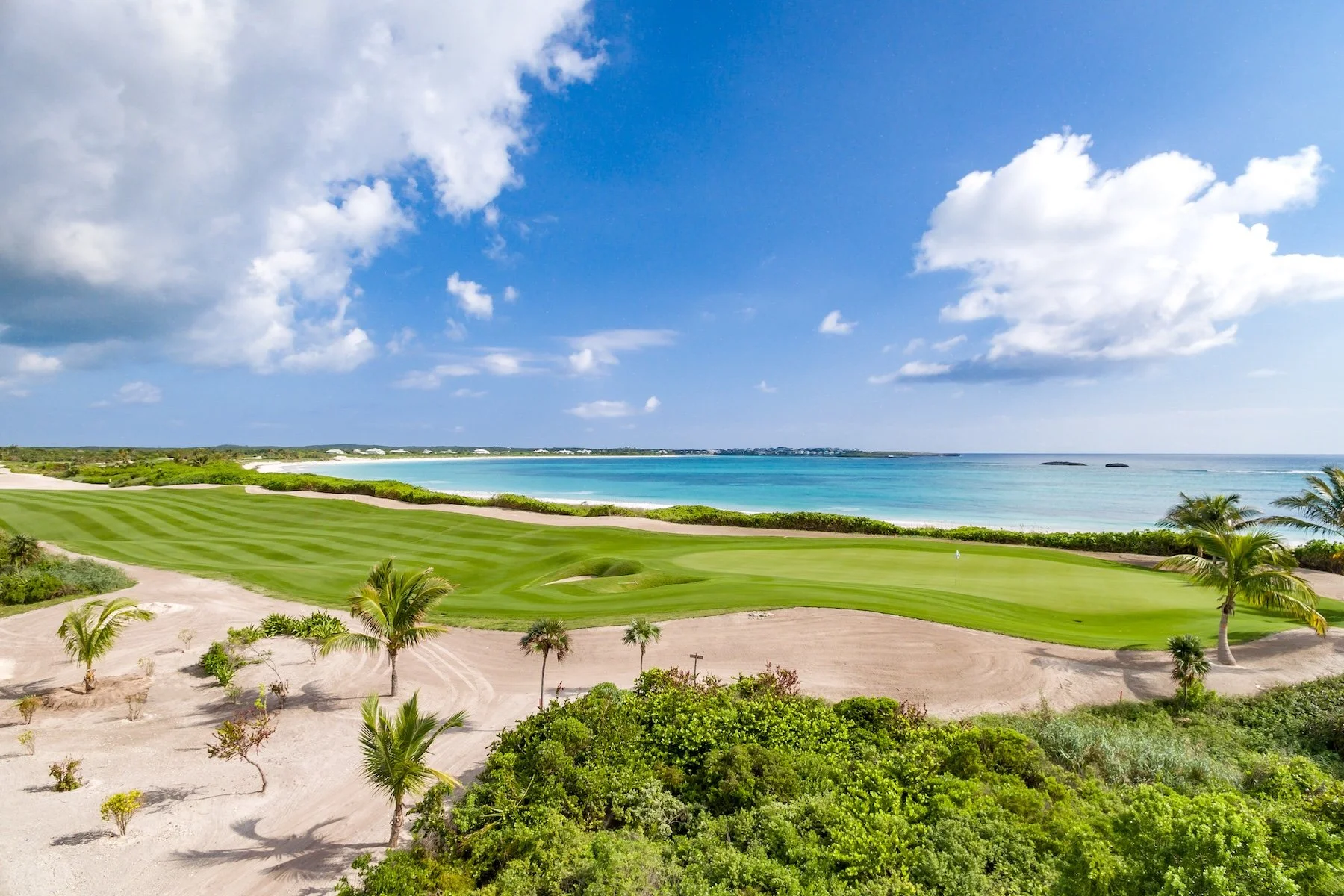
The Abaco Club wraps around graceful Winding Bay, setting the tone for a different kind of Bahamas escape. [credit: The Abaco Club]
The Abaco Club:
A Private Bahamas Escape with Links-Style Golf
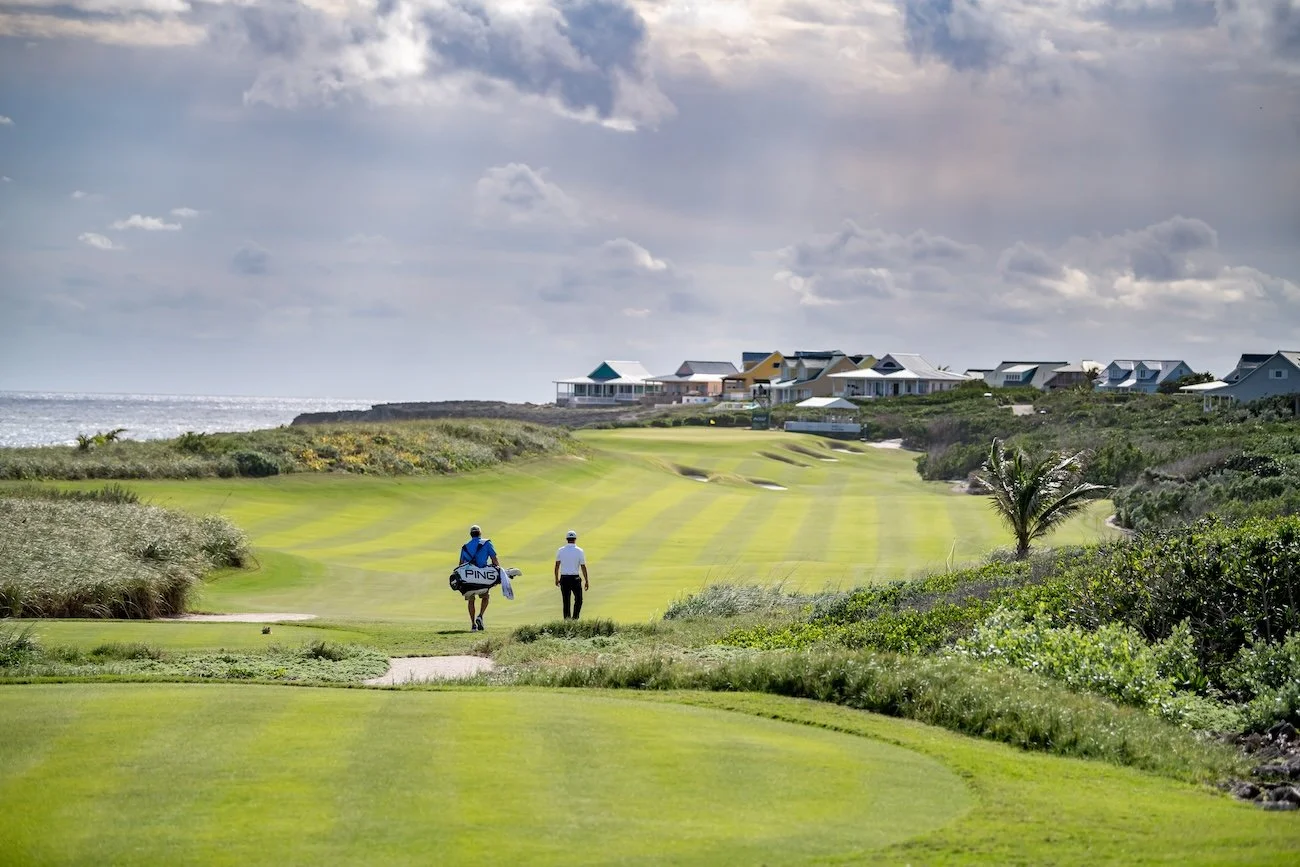
The golf course offers a links-style game, with seven holes that bring the ocean into play. [credit: Kyle Biedenbach]
Most Bahamian golf trips orbit Nassau. You drop into the gravity field of big-vision resorts—Baha Mar’s casino, Atlantis’s waterparks, Albany’s celebrity compound—then shuttle between tower, tee sheet, and pool complex, accepting that spectacle is part of the bargain. The golf can be excellent and the hotels polished, but the experience often feels scripted by the resort machine: busy, glitzy, and rarely still.
The Abaco Club sits in a different register. Set along a two-mile crescent of white sand on Great Abaco Island’s quieter coast, it is a private sporting club and residential community—but those words undersell it. What it actually feels like is a small, unhurried village that happens to have a serious golf course, a stunning beach, and the rare quality of knowing exactly what it is, with no need to apologize for it.
Life at Abaco turns on two main anchors. The first is a genuine links-style course by Donald Steel and Tom Mackenzie, a layout touring professionals have tested for nearly a decade as host of the Bahamas Great Abaco Classic on the Korn Ferry Tour. As 2011 Open Champion Darren Clarke—an Abaco Club member and resident since near its inception—often notes, this is not a casual resort loop but a serious examination of shot-making, one many consider the finest course in the Bahamas.
The second anchor is a kind of curated ease that runs quietly through the rest of the property: no cars inside the gates—golf carts and bikes instead; a staff culture built around reading guests rather than hovering; amenities that skew playful, social, and family-oriented rather than flashy. Everything is undeniably high-end, yet never showy—what the club itself calls barefoot luxury.
Non-members can arrange a one-time “holiday visit” to Abaco through the club—typically a short stay in a studio-style cabana, cottage, or estate home—with temporary member privileges that allow you to experience the club’s rhythm for a few days while deciding whether ownership or membership might make sense.
You can come here for the golf alone and leave completely satisfied. Guests often remark on something broader: mornings on the range or first tee, afternoons on Winding Bay with paddleboards and kids in the shallows, and evenings that drift from Flippers Beach Bar to dinner beneath a dark sky you might have forgotten exists if you spend most of your life near cities. It is a place built for people who like to be outside—and who don’t mind that the most reliable soundtrack is wind, surf, and the occasional whoop from a pickup game of kickball or wiffle ball.
From De Savary’s Vision to Southworth’s Second Chapter
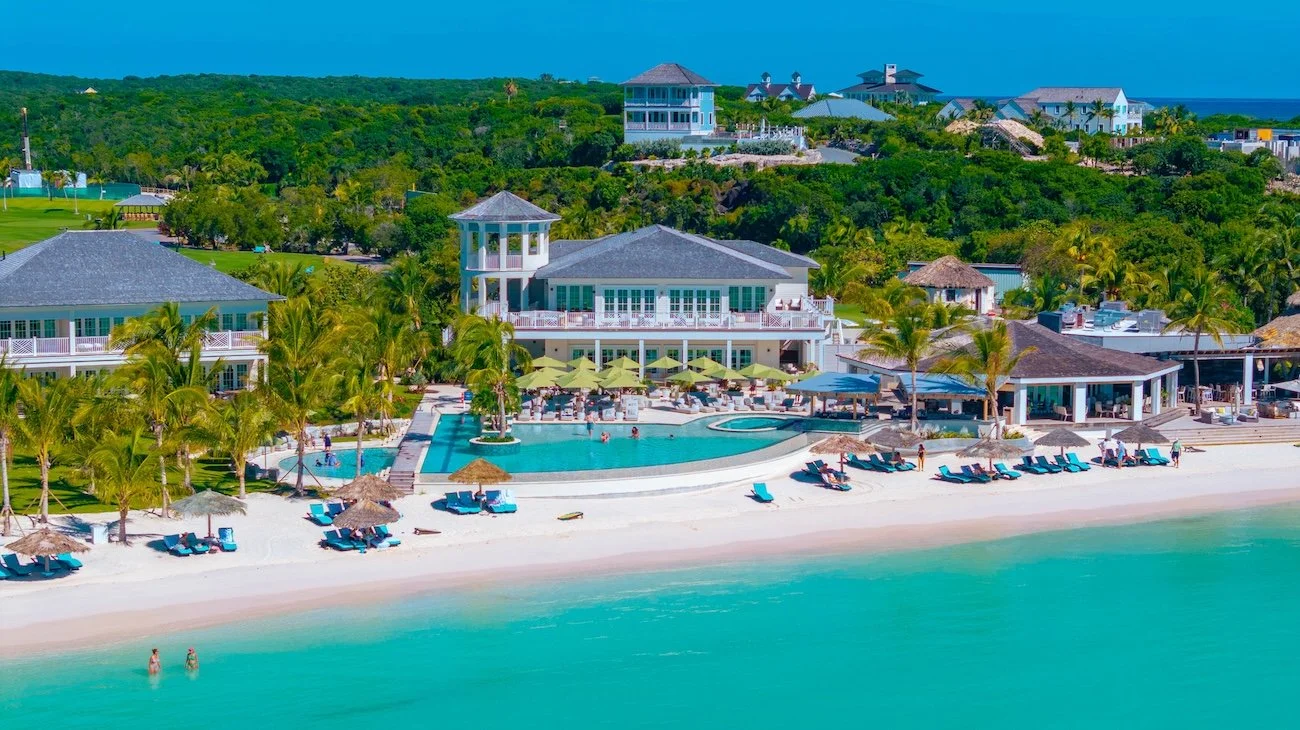
From ambitious vision to member-driven community, the club’s evolution is written into the landscape. [credit: The Abaco Club]
The Abaco Club began in the early 2000s as an ambitious project from British developer Peter de Savary, conceived in the same spirit as his earlier “sporting estates,” including Skibo Castle in Scotland and Carnegie Abbey in Rhode Island. De Savary specialized in discovering dramatic landscapes and shaping them into club-centered communities—places built around golf, outdoor pursuits, and residential ownership rather than traditional resort turnover. At Winding Bay, he recognized the raw ingredients immediately: rolling dune lines, a natural amphitheater of beach, and just enough inland elevation to frame homes and golf holes with long Atlantic views.
To realize that vision, he turned to Donald Steel and Tom Mackenzie, who produced their seventh course for him—a links-inspired design laid across a sandy base where natural dunes, a reclaimed limestone quarry, and flashes of turquoise water are woven into the routing. Ritz-Carlton managed the property during its early years, when the club operated in a more familiar luxury-resort mode, blending ownership with hotel guests arriving under an internationally recognized brand.
Abaco’s modern era began in 2014, when Southworth Development, a Boston-based company focused on golf-centered residential communities, acquired control in partnership with its members. Southworth’s philosophy differs from the traditional resort model: rather than building and exiting or handing management to a third party, the company operates its properties for the long term, with success tied directly to membership and real estate. At Abaco, that foundation has reshaped both the experience and the atmosphere in ways that matter to visitors.
First, the club has doubled down on its identity as a private, member-driven retreat that still leaves the door open for one-time discovery visits. You don’t book The Abaco Club the way you book an oceanfront hotel in Nassau; you speak with membership, are placed into an appropriate residence, and—for the duration of your stay—are treated like part of the club rather than a transient guest.
Second, Southworth has steadily reshaped and expanded the amenity set while emphasizing the club’s sense of play. Recovery following Hurricane Dorian in 2019 became an unexpected inflection point. The storm forced a reckoning that went beyond repairs—when the club rebuilt, it rebuilt with a clearer sense of what it wanted to be. The golf course and accommodations were refreshed, but the more telling investments were in shared spaces: places designed less for private use and more to foster a collective experience that gives a community its character.
Club ambassador Darren Clarke, who has often placed his Abaco home in the rental pool while competing on tour, designed El Diablo, an 18-hole putting course inspired by the Himalayas at St Andrews and the bold contours found on the main course. The club created Wake Field, a small-scale ballfield honoring the memories of longtime members Tim Wakefield and his wife Stacy—deeply connected to both the Boston Red Sox and Abaco—complete with its own Green Monster for wiffle-ball and kickball games and outdoor movie nights. The historic stables have meanwhile been repurposed as The Stables, a racquet complex with tennis, padel, and pickleball set beside a small park and pond, while the Bay Club now serves as the club’s central social hub, anchored by a new pool complex and gathering spaces that broaden the club’s appeal well beyond golf.
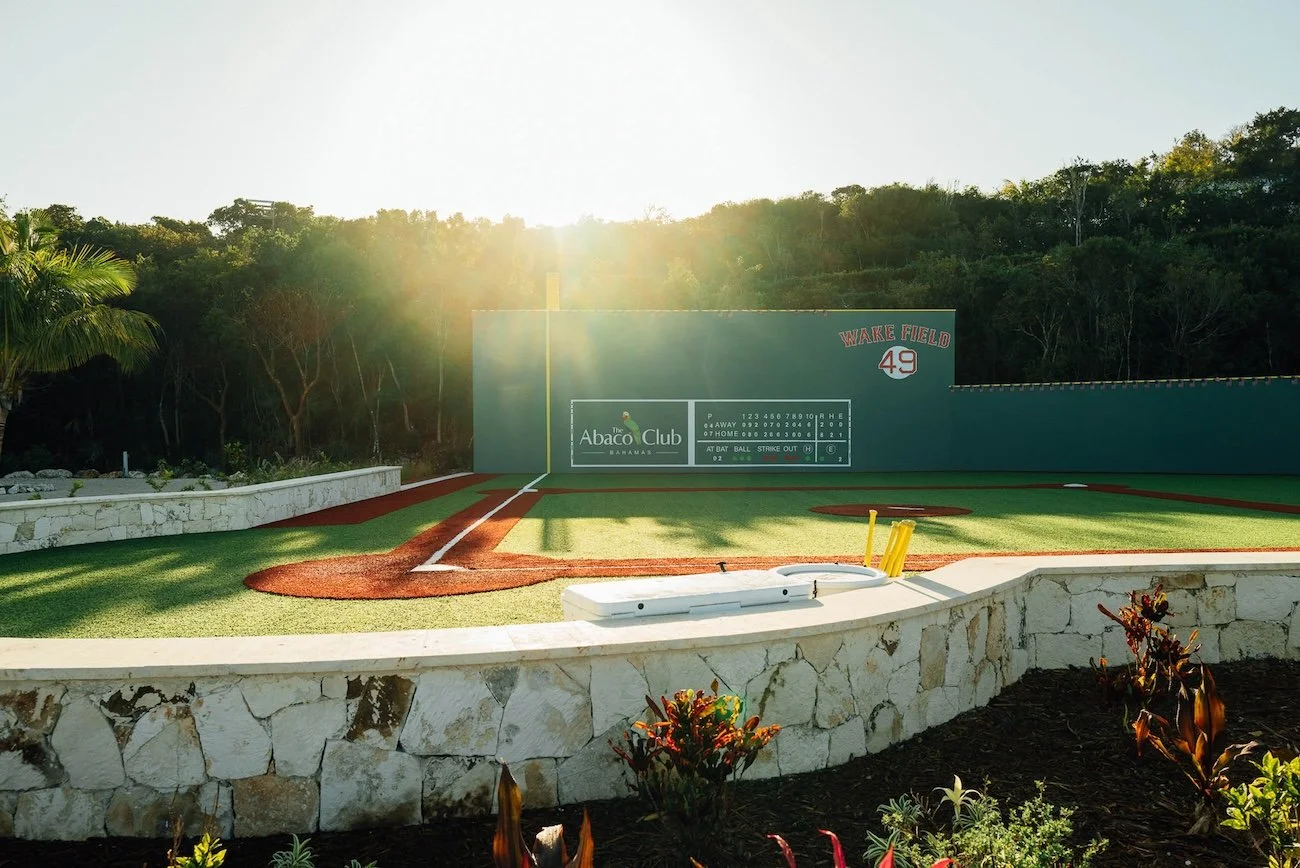
Wake Field, honoring the memories of Tim and Stacy Wakefield, features its own Green Monster. [credit: The Abaco Club]
Those additions reveal more about today's Abaco Club than any brochure could. Growth here is not defined by bigger pools or louder nightlife. Instead, investment favors shared experience: families putting after sunset at El Diablo, kids moving from morning beach swims to pickup games on Wake Field, and parents slipping away late in the afternoon for doubles at The Stables. The result feels less like a resort expanding its amenities and more like a community deepening its identity.
The Golf: A True Tropical Links, Tempered by Wind
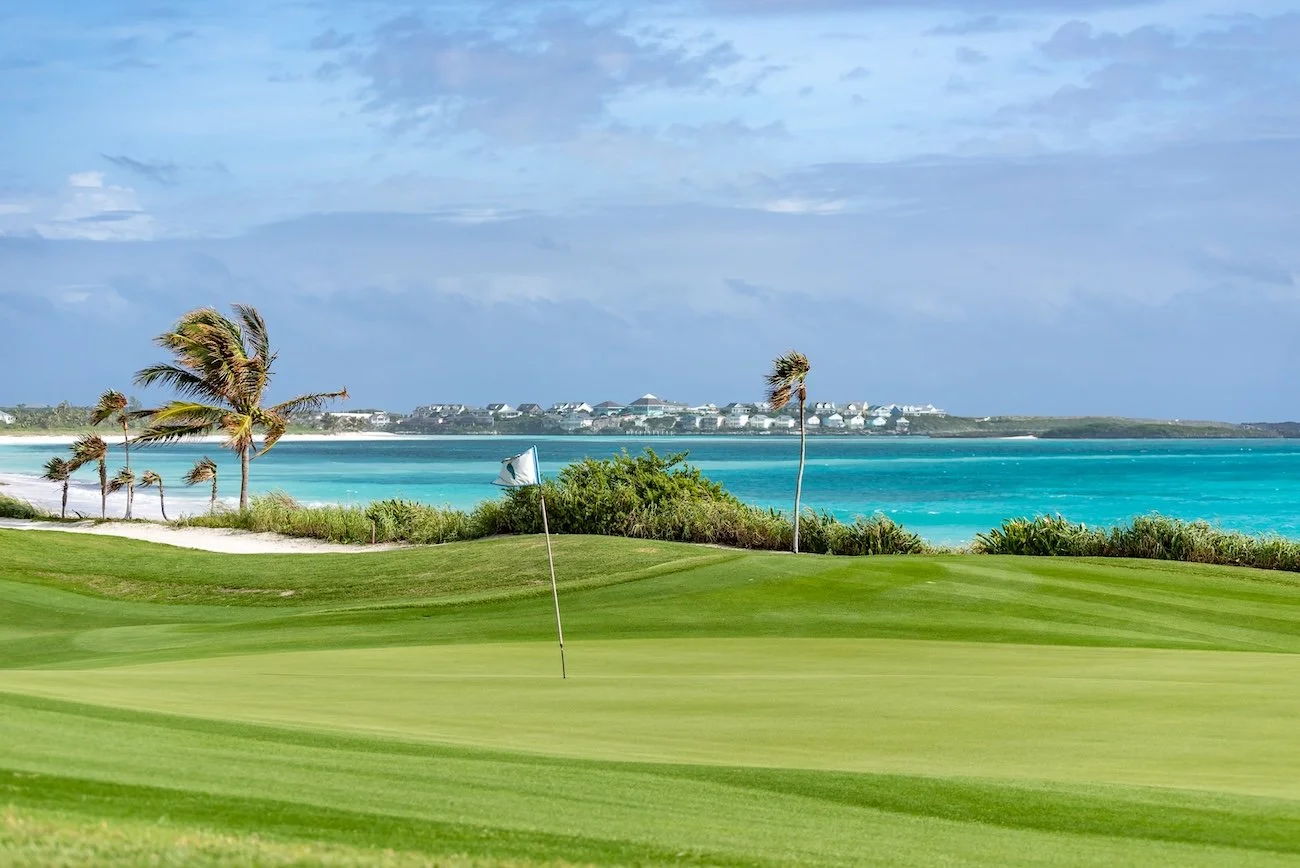
Firm turf, coastal wind, and natural contours shape one of the Caribbean’s most thoughtful courses. [credit: The Abaco Club]
Calling The Abaco Club a tropical links is a label the course earns rather than borrows. Largely free from housing intrusion, the layout rides a sandy base across playing corridors shaped by natural dunes and quarry remnants. It plays firm and fast by Caribbean standards, favors the ground game whenever wind makes the aerial route unreliable, and encourages creativity throughout the bag.
Though the scorecard stretches just beyond 7,100 yards, distance is rarely the primary determinant of scoring. From sensible tees, the course reveals itself as a thinking player’s test built on positioning and trajectory rather than power. Deep pot bunkers punish careless lines, while expansive, rumpled greens reward players who use slopes and contours thoughtfully rather than attacking every pin.
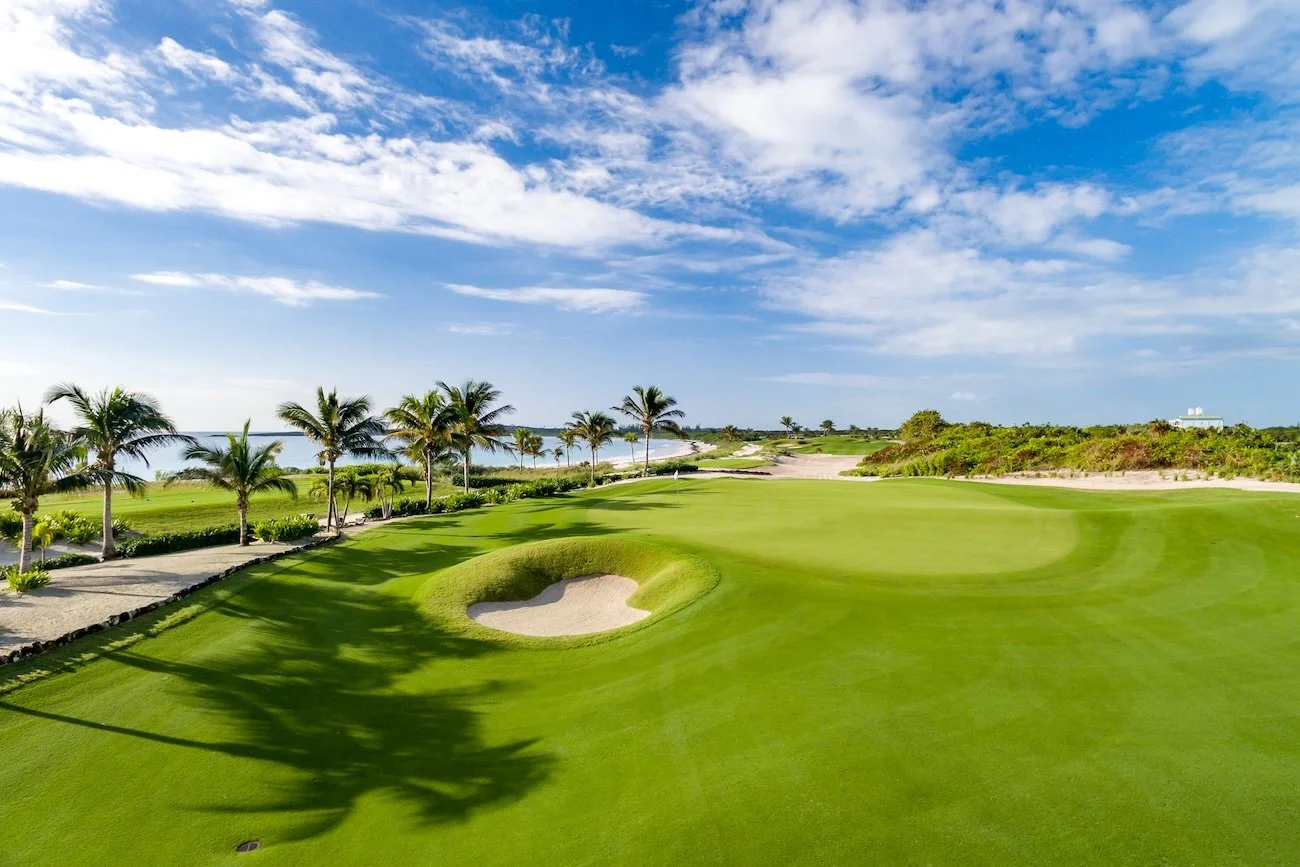
The sea comes into view fully on the 4th hole. [credit: The Abaco Club]
The routing introduces Winding Bay gradually, early holes moving across shoulders and swales before the ocean fully comes into view at the 4th hole. One hole later comes the moment most players remember: the short par-four 5th, played from a tee set just above the beach. Conservative players can lay back, leaving a wedge over a dune to an elevated target, while aggressive players challenge the dune itself, attempting to drive the green. Downwind, the gamble feels irresistible. Into a stiff onshore breeze, it can feel like a shot from another game entirely.
What makes the course so compelling over multiple days is how it can vary so much without any trickery. You can play the same stretch two afternoons in a row and encounter a completely different set of problems simply because the wind has shifted. The club’s agronomy team leans into that variability with firm conditions and tightly mown surrounds that reward creativity—putting from off the green is often the percentage play. It is a course serious golfers embrace as a test, yet one higher handicap players can fully enjoy if they choose the appropriate set of tees and keep their expectations centered on the experience rather than the score.

2011 Open Champion and Abaco resident Darren Clarke designed El Diablo putting course. [credit: The Abaco Club]
Practice facilities match that ambition. A double-ended range and expansive short-game areas replicate the tight turf and varied lies found on the course, and El Diablo—the one-acre putting course—extends the golf day into the evening with its relaxed environment that accommodates children alongside social play.
Staying on Property: Residential Comfort, Club Rhythm
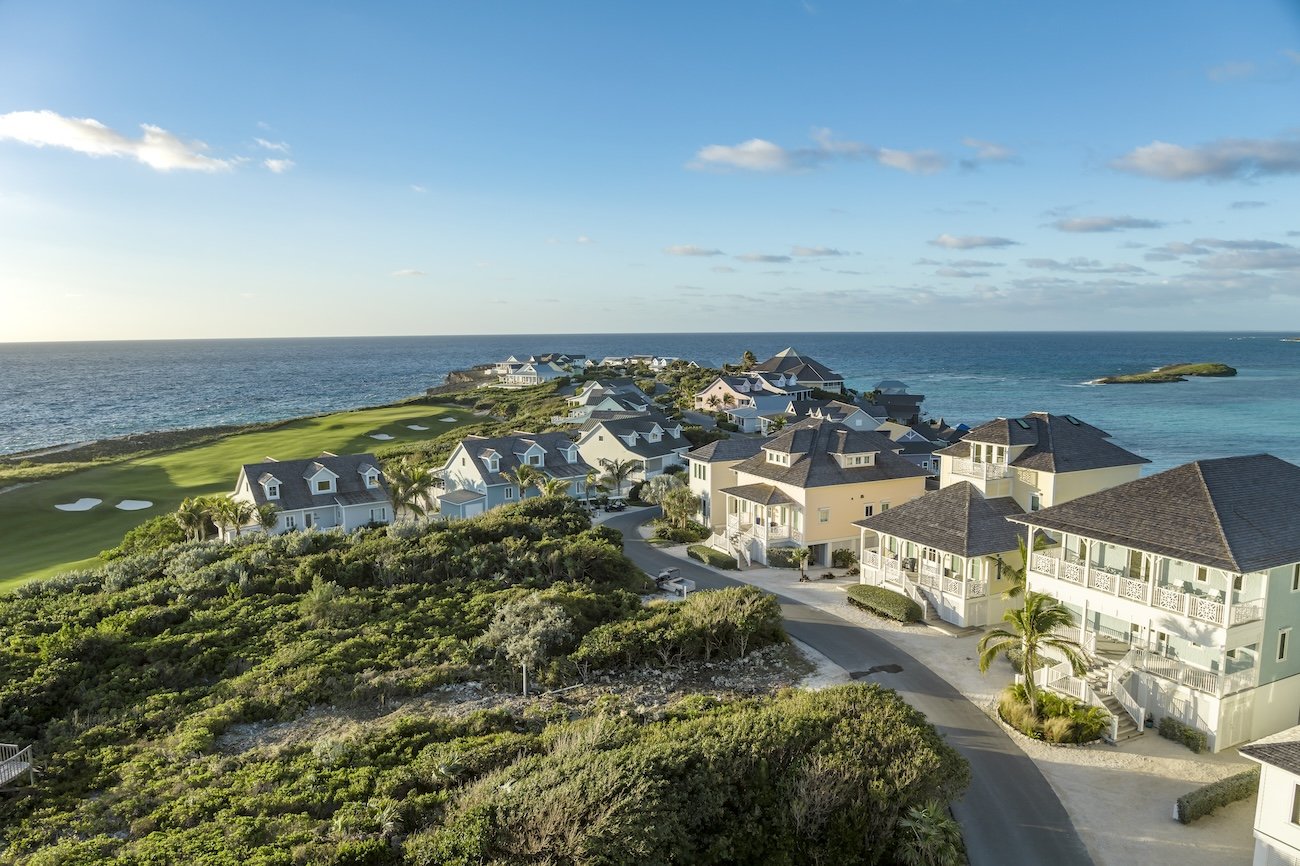
Barefoot elegance defines the oceanfront homes and other accommodations at The Abaco Club. [credit: The Abaco Club]
Lodging at Abaco reflects both its private DNA and a sense of barefoot luxury. There is no central hotel tower; accommodations are instead spread across cottages, cabanas, and private homes set into the landscape.
Most visitors on a discovery visit stay in the Club Cabanas near the opening holes—one-bedroom suites with separate living areas and screened porches that look out onto mornings that make checking out feel like a real sacrifice.
Larger accommodations come in the form of cottages and estate homes, many positioned along the ridge or extending toward the point. These range from three to four bedrooms, with styles that vary from traditional Bahamian-inspired décor to more contemporary island design. No matter the style, they share a common set of traits: full kitchens, generous living and dining spaces, verandas oriented toward the water, and enough separation between bedrooms that multi-generational groups can coexist comfortably without feeling crowded. Many residences participate in a managed rental pool; others remain owner-occupied but may become available through the club at select times of year.
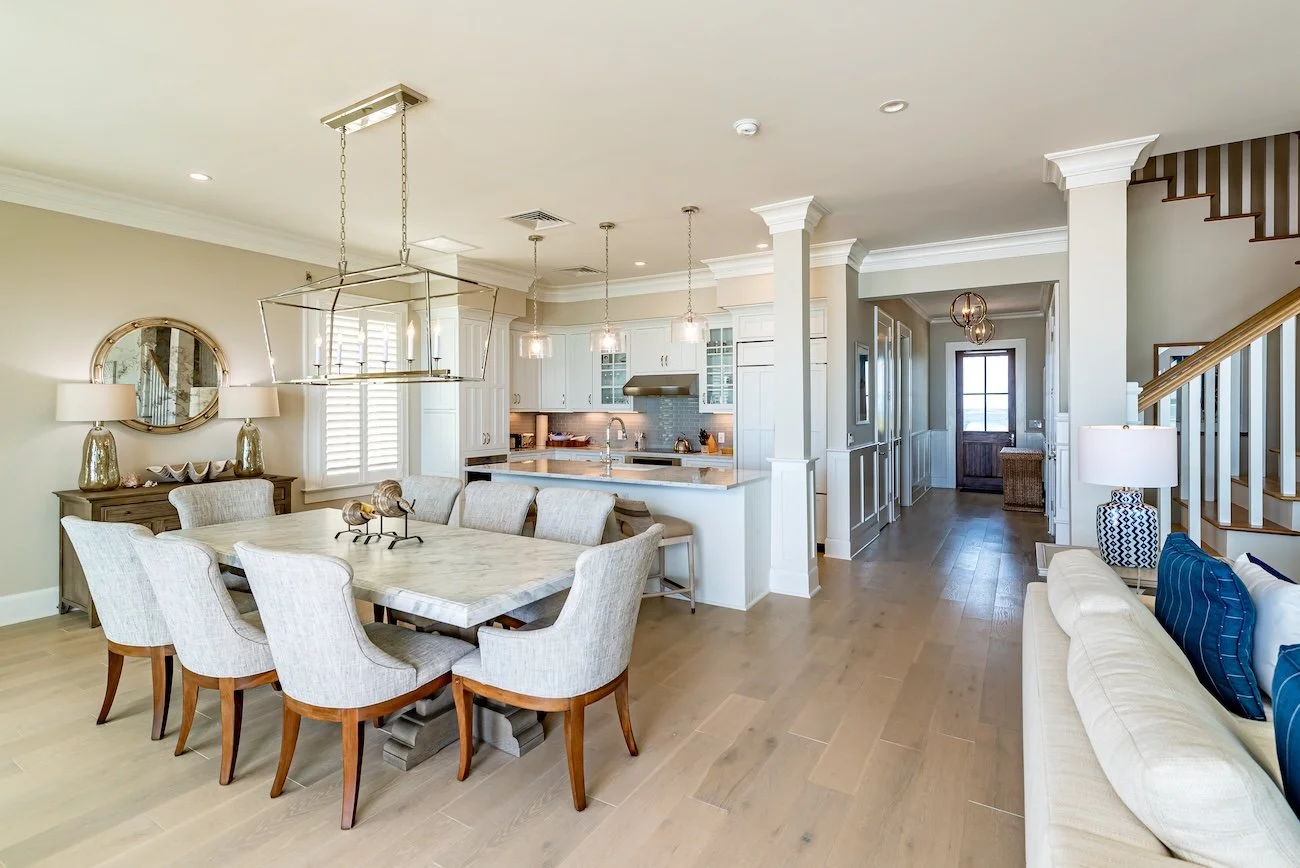
Cottages and Estate Homes feature full kitchens and generous living spaces. [credit: The Abaco Club]
Private cars are not permitted on property. After arriving at the clubhouse, guests check in, are greeted, and are transported to their accommodations by golf cart. The cart quickly becomes the primary mode of transport, supplemented by bicycles and a network of walking paths. The usual friction points of resort life—circling for parking, waiting for shuttles, navigating busy internal roads—simply do not exist inside the gate.
The quality of the staff is another through line. Many have been here since the early years, a continuity that members and visitors alike say creates a familial atmosphere. Longtime staff set a warm, personal tone rather than formal resort service, looking after guests with a minimum of fuss.
Dining: From Casual Beach Meals to Cliff-Top Dinners
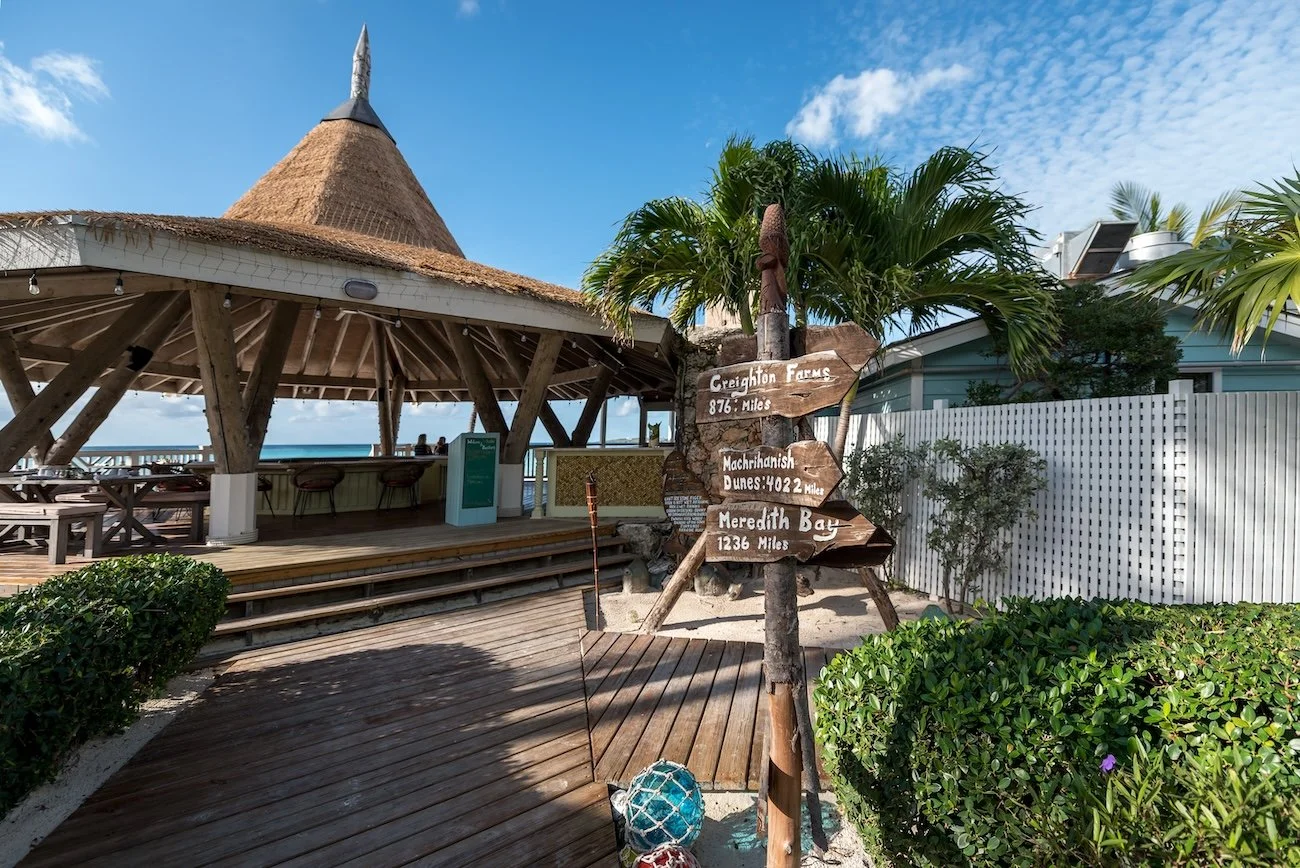
From barefoot breakfasts at Flippers to sunset dinners above the bay, dining follows the rhythm of the day. [credit: The Abaco Club]
Every club develops a central gathering place—a spot where people know they can drop in at nearly any hour and find familiar faces. At Abaco, that role belongs to Flippers Beach Bar. Set just off the sand, it sits close enough to walk up barefoot and still feel perfectly at ease at any meal. Breakfast might mean French toast as the bay comes to life; lunch centers on salads, burgers, and fish sandwiches; dinner ranges from casual midweek meals to themed evenings with buffets and music.
This is also where the club’s unofficial signature drink, the DC Breeze—a variation on a Sea Breeze built around coconut water and named for Darren Clarke and his nearby home—seems to multiply. People arrive for “a quick one” and find themselves in the same seat several hours and several stories later. On certain days, the club’s Tingum food truck joins the scene, serving tacos and Kalik-battered fish just steps from the beach.
Above the shoreline, the Cliff House occupies a bluff with sweeping views over Winding Bay and out to the open Atlantic. The setting earns that polish—this is the natural choice for a celebratory dinner, a last night on property, or simply the night you decide the trip has been worth every penny. The kitchen leans into local seafood—grouper, snapper, and lobster—alongside familiar comfort dishes suited to nights when travel or golf has left you craving something straightforward.
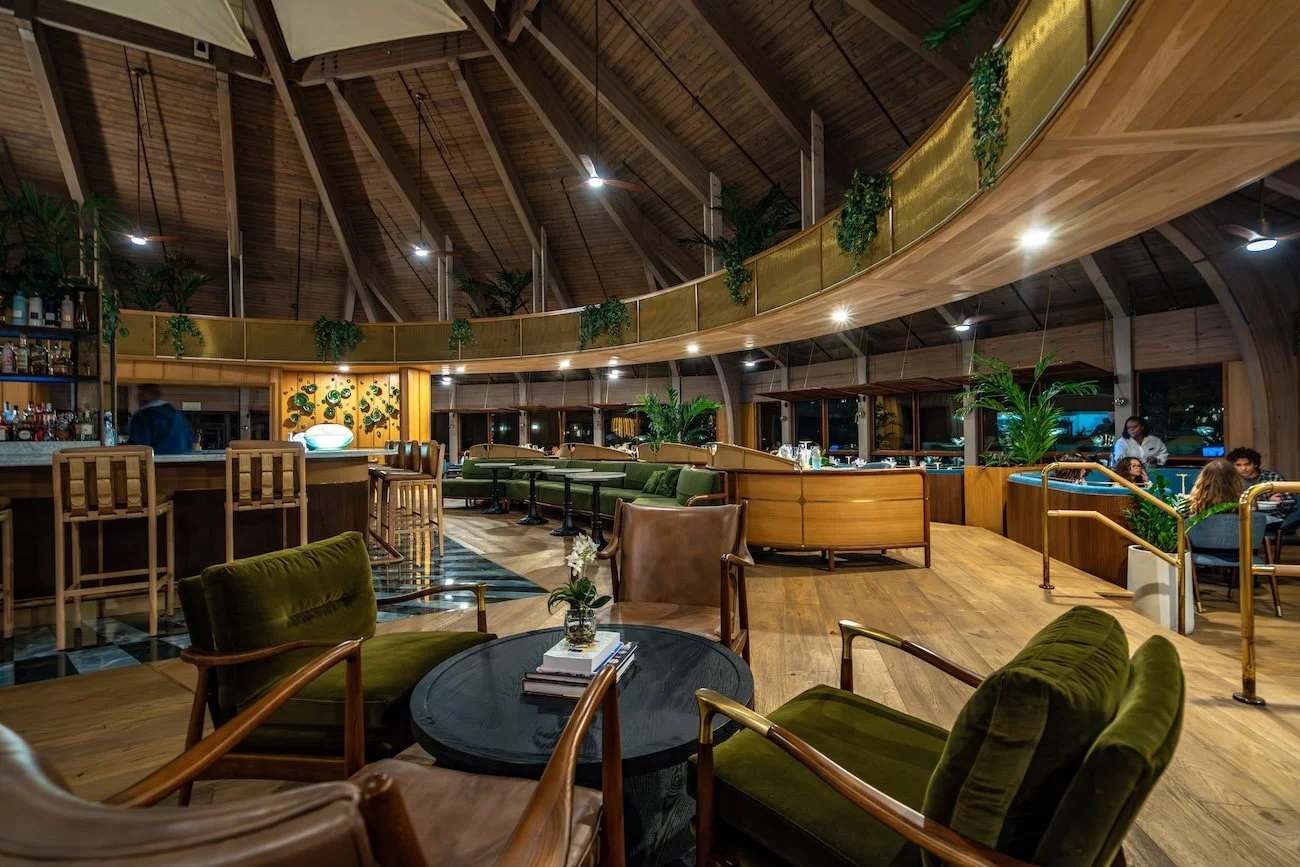
The Cliff House is the club’s most polished restaurant. [credit: The Abaco Club]
The Veranda (formerly the Beach House) and Tip-Top Sunset Deck add variety without changing the club’s relaxed tone. The Veranda’s breezy, open-air setting is designed for lingering evenings, with a Mediterranean coastal–inspired dinner menu that transitions into the After Dark menu, highlighted by handcrafted brick-oven pizzas. Tip-Top, perched high above the water with a refreshed bar, is the place to watch the sun drop into the ocean with a drink in hand. As the Bay Club hub continues to evolve, the dining map may shift slightly, but the underlying philosophy remains clear: several smaller venues with distinct personalities rather than one all-purpose dining hall.
For guests staying in cottages or villas, the club can also arrange in-residence chef services, often drawing on produce from its own hydroponic farm on the property.
It’s easy to spend entire days without looking beyond the club for meals, but nearby excursions reward curiosity. Pete's Pub in nearby Little Harbour is an institution on Grand Abaco Island—an open-air beach bar where fresh seafood, strong drinks, and a sand floor make it one of those places that outlasts trends by simply never chasing them. For those exploring by boat, Firefly Bar and Grill in Hope Town on Elbow Cay—about a half hour or so away—makes a popular lunch or sunset destination, pairing creative cocktails from its Firefly Vodka owners with fresh seafood, hogfish, and sushi rolls.
Beyond Golf: Beach, Boats, Racquets Sports, and More
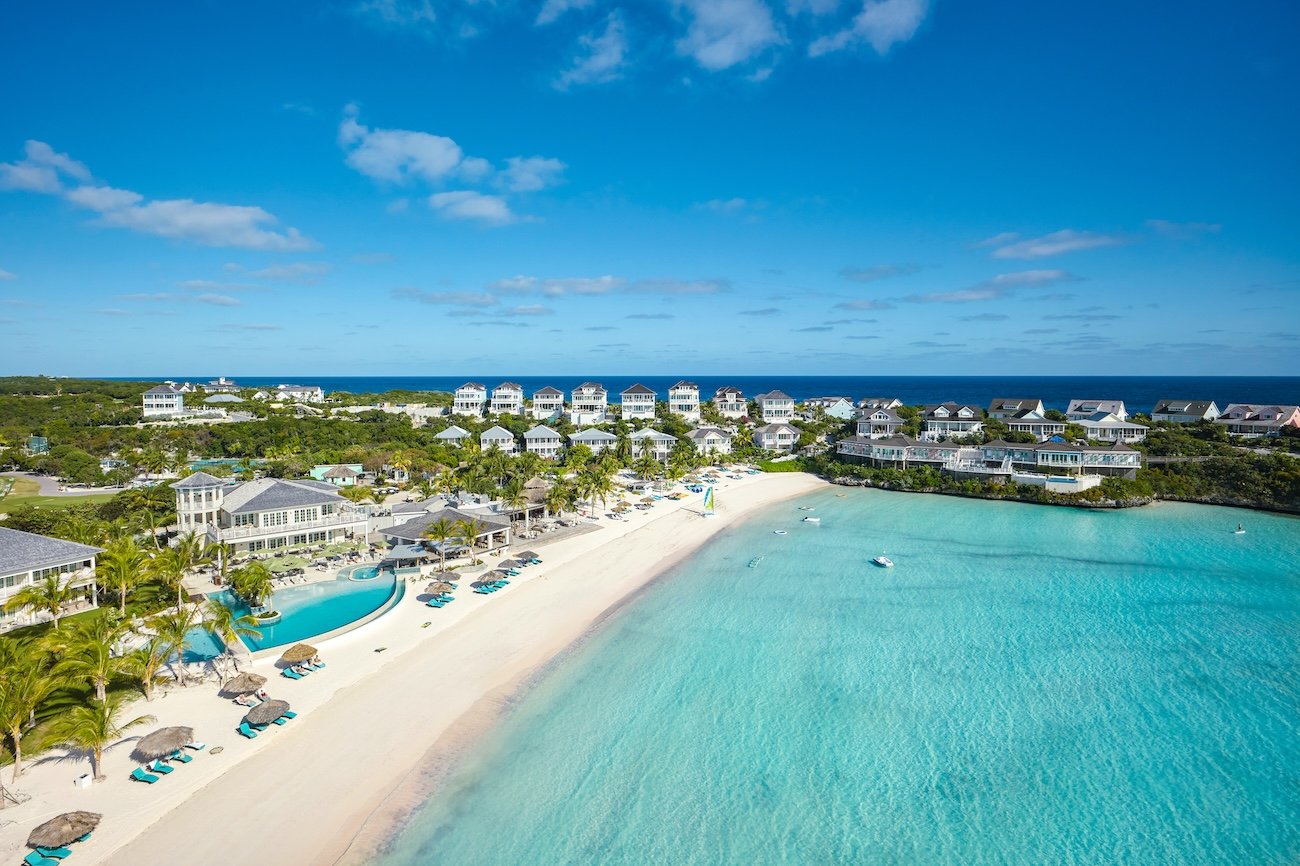
Days extend naturally from the water and the beach to the courts, the field, and back again. [credit: The Abaco Club]
Winding Bay is the kind of beach that recalibrates your sense of what a beach should be. It forms a near-perfect horseshoe of pale sand and shallow, protected water. On calm days, Winding Bay feels like a vast saltwater swimming pool; when the breeze picks up, the surface gains texture but remains welcoming for children and less confident swimmers. A small cay sits across the mouth of the bay, close enough that determined walkers can wade out at very low tide, while kayaks and stand-up paddleboards make it an easy destination the rest of the time.
An array of non-motorized watercraft—paddleboards, kayaks, and small sailing boats—lines the sand, with staff at the watersports hut ready to help guests launch or plan an outing. Snorkeling gear opens another layer of exploration; on calmer days, underwater visibility can be startlingly clear.
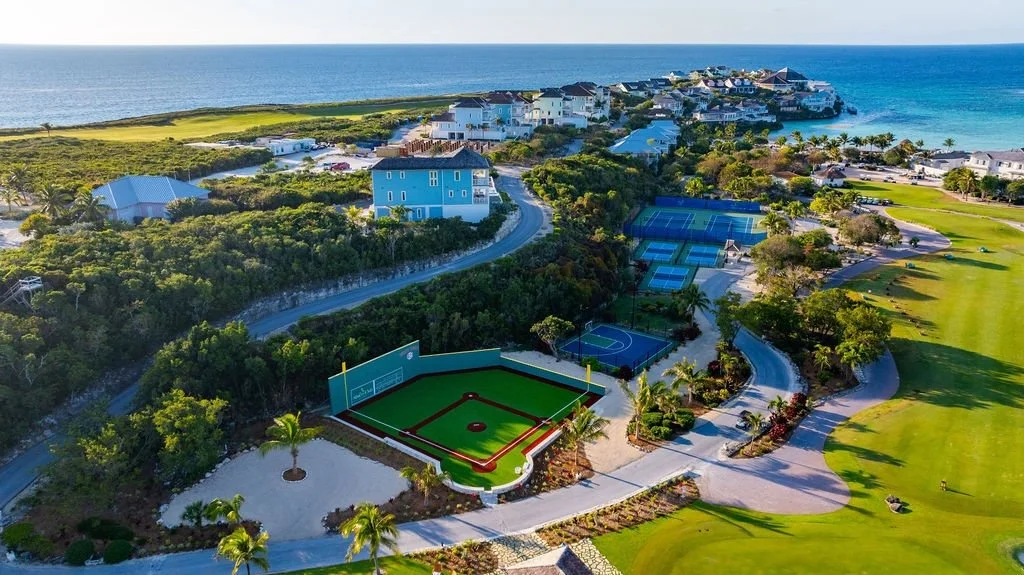
Tennis, pickleball and padel courts are available at The Stables. [credit: The Abaco Club]
Away from the shoreline, Southworth’s ongoing investment has reshaped the club’s land-based amenities into gathering spaces as much as activity centers. The Stables, repurposed from the property’s original equestrian center, now serves as the hub for racquet sports, with tennis courts, four padel courts, and pickleball along with a pro shop and relaxed social areas. Nearby, a small park with a pond and dock creates an easy rhythm for families—kids fishing or wandering while parents finish a set.
A short walk away, Wake Field is a compact but fully realized sports ground honoring longtime members Tim and Stacy Wakefield. Designed as a playful tribute to Fenway Park, complete with a scaled-down Green Monster rising beyond the outfield, it has quickly become a communal gathering place for wiffle ball games, kickball, and outdoor movie nights. The space captures something essential about Abaco’s evolution: serious amenities delivered with a sense of humor and an emphasis on shared participation.
Wellness offerings continue that balance. There’s a fitness center and a small spa that provides massages and treatments, both in the midst of phased upgrades as part of the club’s broader capital plan. Yoga sessions often migrate outdoors—to decks, lawns, or directly onto the beach—while the Bay Club’s new pool complex, combining lap lanes, a children’s pool, and an adult-oriented infinity edge, gives non-beach days their own focal point.
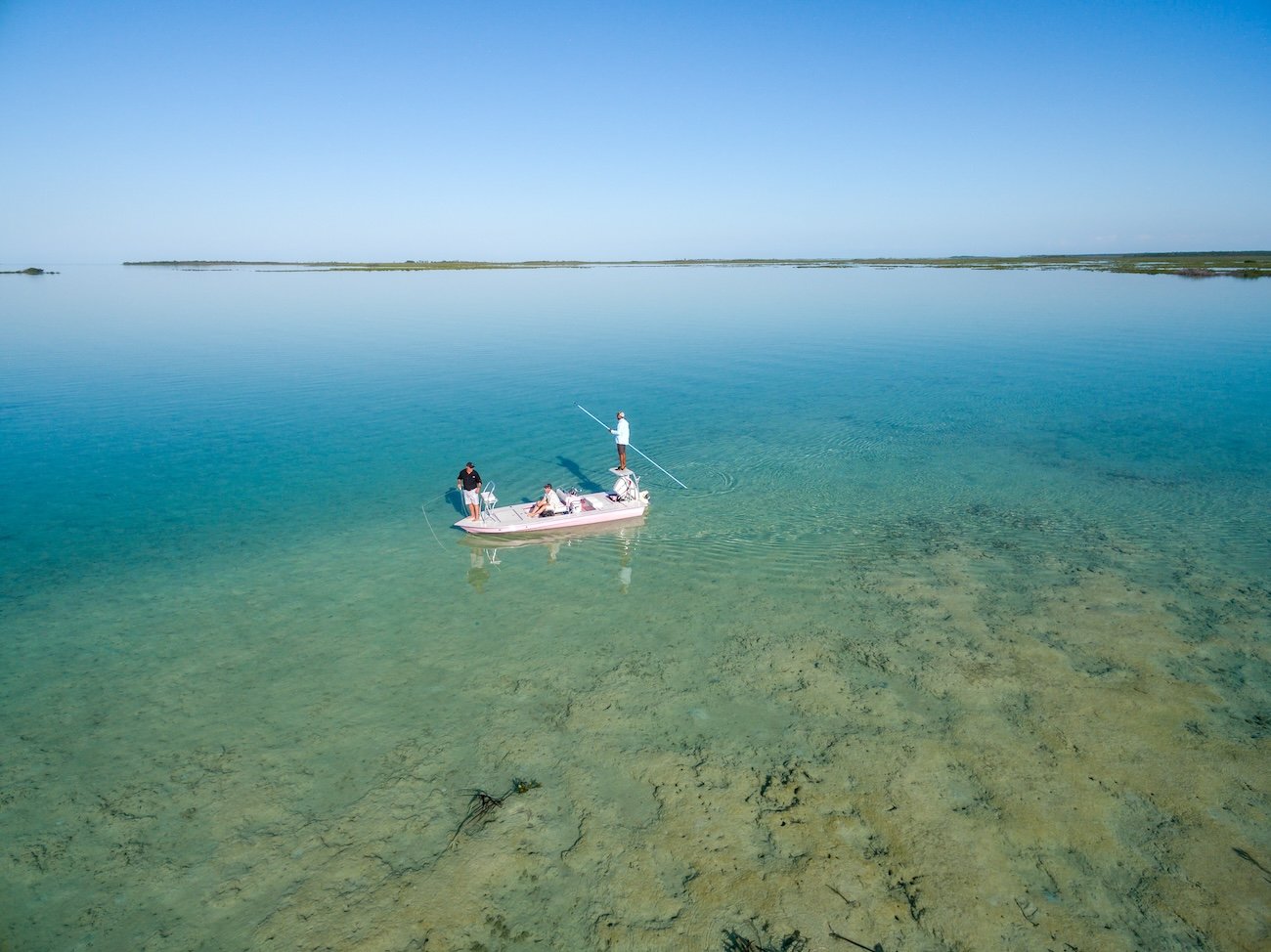
The waters of Great Abaco Island are legendary among bonefish anglers. [credit: The Abaco Club]
Fishing remains a constant thread in daily life here. The flats north of the club are legendary among bonefish anglers, and the club’s partnership with nearby Black Fly Lodge makes arranging guided outings seamless. Offshore charters pursue marlin, wahoo, mahi-mahi, and tuna, with boats accessible within a short drive and returns timed comfortably for dinner. For those who prefer the water without a rod in hand, club yachts and charter boats offer sunset cruises and island-hopping excursions across the surrounding cays.
Getting There and Timing the Trip
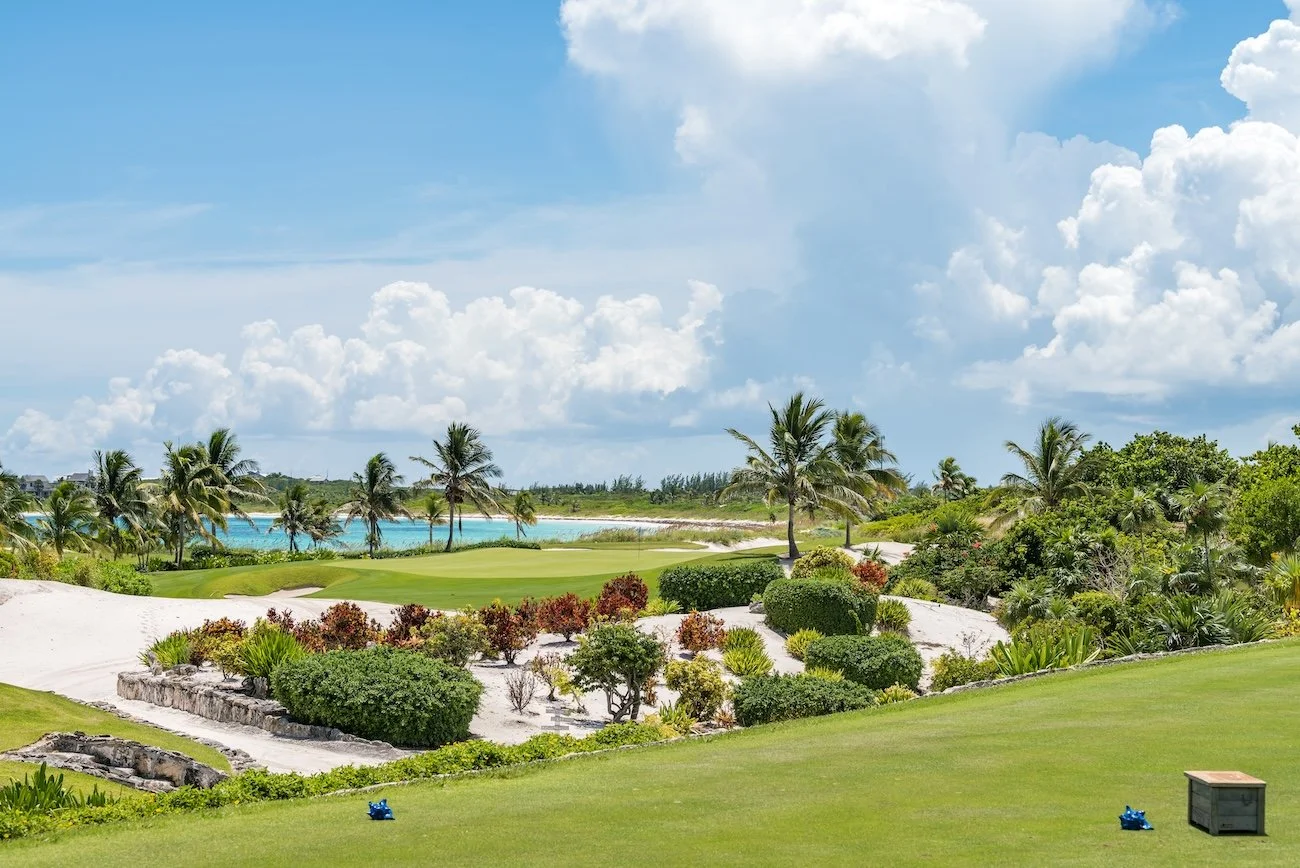
Reaching The Abaco Club is straightforward; choosing when to go shapes the experience. [credit: The Abaco Club]
Access begins at Marsh Harbour International Airport (MHH), roughly a 30 to 45-minute drive from the club. Direct commercial service is available from several East Coast gateways—including Miami and Fort Lauderdale, West Palm Beach, Charlotte, Atlanta, and Orlando—along with Nassau and other Bahamian points. Schedules vary seasonally, and private aviation facilities are well established.
Weather follows the familiar Bahamian pattern: warm, generally stable, and defined more by subtle shifts than dramatic swings. Winter and early spring mark prime golf months, with daytime highs in the upper 70s, cooler evenings, and the strongest winds of the year. That’s when the Korn Ferry Tour visits—and when the course shows its full set of teeth.
Late spring and summer bring lighter breezes and warmer water. Humidity climbs, but the trade-off is softer scoring conditions, calmer seas, and quieter tee sheets.
Hurricane season runs June through November, with September and October historically the slowest visitor months, largely because travelers prefer not to risk their plans during the peak of the storm window.
If your primary focus is golf in proper links conditions—firm turf, lively bounces, and enough wind to make club selection an honest question—winter and the shoulder seasons on either side are the sweet spot. If beach time, boating, and more activity-driven days rank higher, late spring through midsummer can work beautifully, provided you’re willing to schedule most golf in the mornings before the heat builds.
Who This Getaway Works For — and Who It Doesn’t
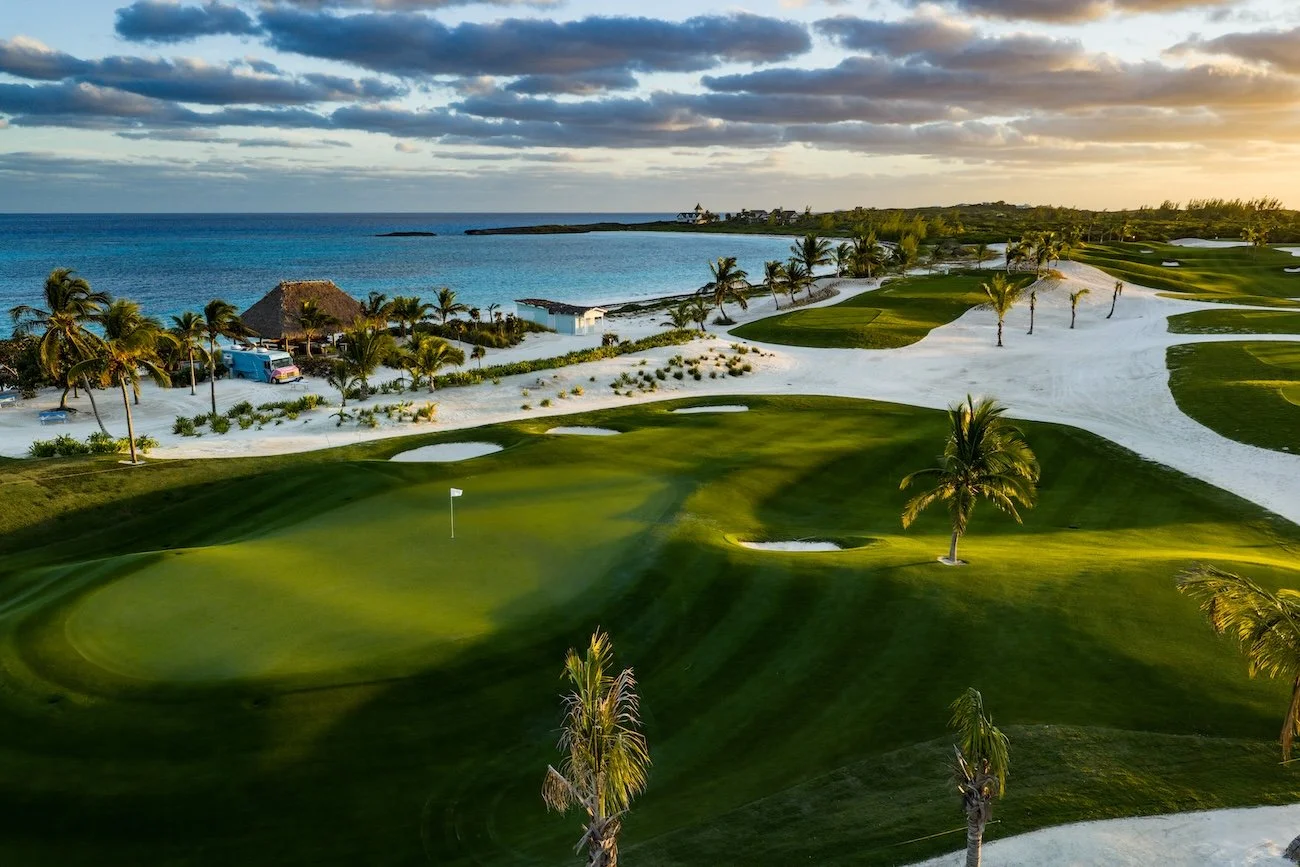
A visit to Abaco rewards those seeking space, rhythm, and a more personal kind of escape. [credit: The Abaco Club]
The Abaco Club is not for everyone, and its one-time discovery visits reflect the premium nature of the experience. It works exceptionally well for:
Travelers with the means and a genuine interest in a growing, family-oriented club with real estate opportunities and a full range of amenities
Golfers who value strategy, wind, and links-style play
Couples and families seeking privacy and calm
Beach lovers, as well as enthusiasts of saltwater bonefishing and deep-sea fishing
Repeat Caribbean travelers ready for something quieter and more personal
It may not suit:
Travelers seeking multiple restaurants, casinos, or nightlife
Families who want constant organized activities or large, high-energy pool complexes
Golfers looking to play multiple courses within a single stay
Budget-conscious travelers, as discovery stays reflect the club positioning with rates tied to full member privileges and limited inventory
Abaco delivers on its promise of barefoot luxury, grounded in simplicity. Days revolve around golf, sea, and conversation. The premium experience lies not in abundance but in space—space to play, to rest, and to disconnect. In the Bahamas, where scale and spectacle often define the experience, that restraint becomes the club’s greatest strength.
This feature draws on a firsthand visit hosted by The Abaco Club and has been refreshed with current research to reflect the property as it stands today.
Planning your next golf getaway?
Browse all Weekend Golf Getaways destination guides for in-depth coverage of golf resorts, memorable courses, accommodations, dining, and experiences worth building a trip around.