
Omni Grove Park Inn & Spa
Golf, History and Blue Ridge Luxury
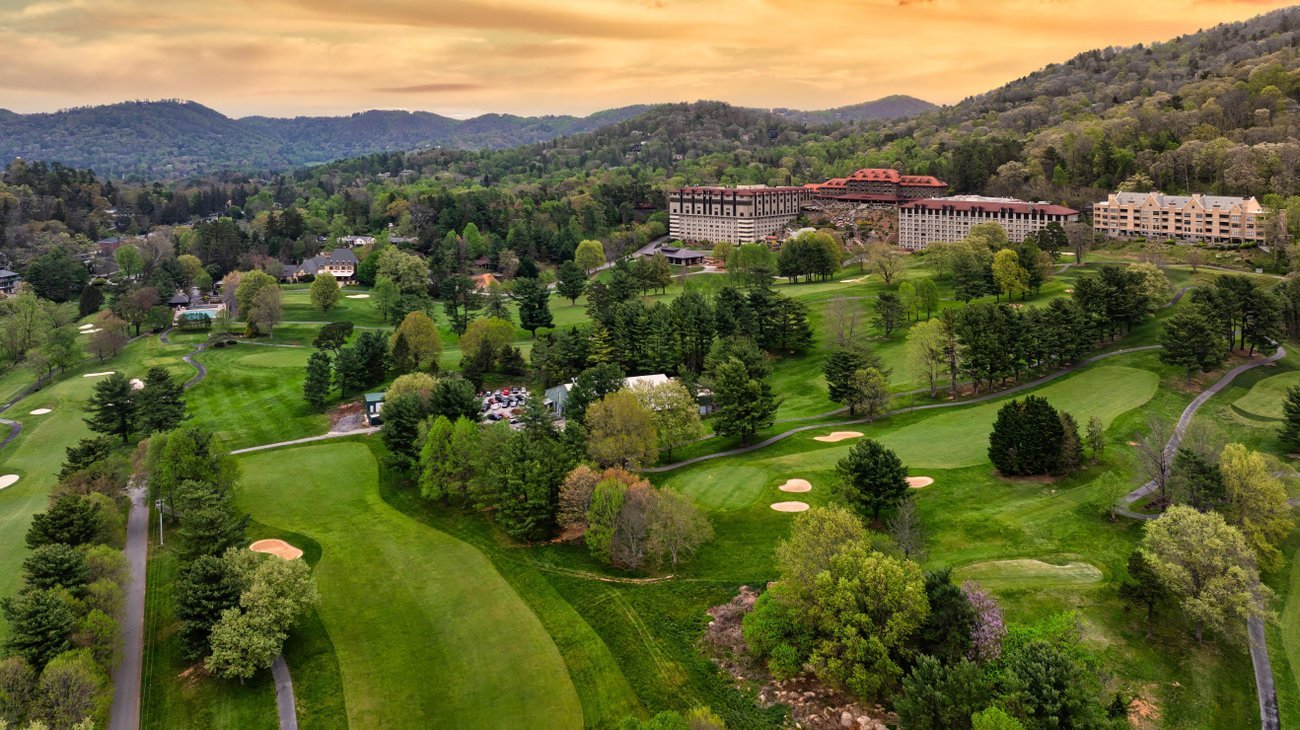
The Inn delivers historic grandeur and mountain majesty, with downtown Asheville just minutes away. [Credit: ExploreAsheville.com]
Most Asheville-area golf trips follow a familiar pattern. The best courses sit well outside of town, tucked into gated mountain developments like The Cliffs at Walnut Cove or Biltmore Forest, where access is limited and the drive becomes part of the commitment. Golf is usually paired with scenic isolation, and Asheville itself—its restaurants, breweries, and walkable core—often feels more like a side trip add-on than a central part of the golf getaway experience.
The Omni Grove Park Inn flips that formula entirely. Perched on Sunset Mountain just two miles from downtown, it places a Donald Ross course directly beneath the hotel while keeping Asheville fully within reach. You can play in the morning and be downtown before lunch without a second thought. In a city that often asks golfers to choose between access and atmosphere, the Inn manages both.
The golf course dates to 1924, when Ross shaped a compact par-70 routing along the slopes. At 6,050 yards, it relies on terrain more than length. The front nine moves through tighter corridors where creek lines, hardwoods, and the road bordering the property pinch landing areas. The back nine climbs and tilts with the mountain, producing uneven stances, uphill approaches, and greens protected by false fronts that shed anything under-committed. It is short by modern course standards but rarely forgiving.
The Inn itself has always been part of the experience rather than a backdrop to it. Built in 1913, its granite walls and Arts & Crafts interiors announce their presence immediately. The Great Hall—with its massive stone fireplaces and still-operating Otis elevators—anchors the building and sets the tone. Original Stickley furnishings remain in many public spaces and guest rooms, carrying a patina that fits the setting.
The Inn’s location truly defines the stay. Interstates 40 and 26 converge nearby, the Blue Ridge Parkway curls within easy reach, and Asheville’s energy hums just below the ridge—galleries, breweries like Wicked Weed and Highland, the Biltmore Estate, and trail access into Pisgah Forest. Unlike most Asheville golf getaways, the Grove Park Inn doesn’t isolate you from any of it.
From Early Draw to Full Getaway
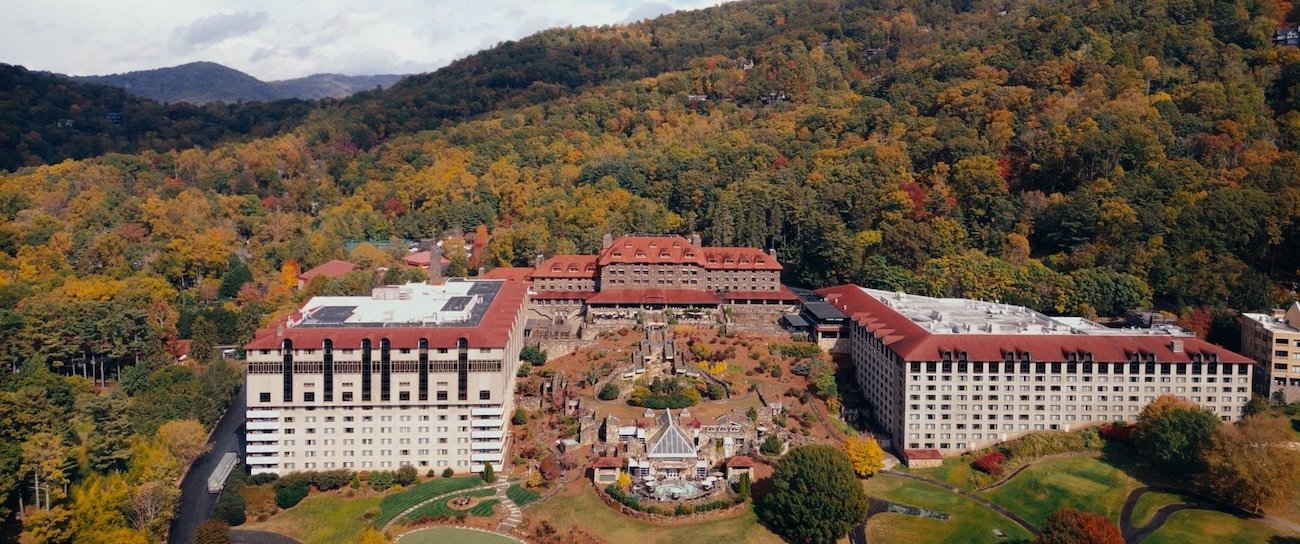
Two modern wings flank the 1913-vintage Main Hotel building and the Grove Park Inn Spa. [credit: ExploreAsheville.com]
The Grove Park Inn and the golf course below it each evolved on their own timeline—two separate histories that eventually merged into one of America's most iconic golf resorts.
The course originated as the private Country Club of Asheville before Donald Ross reworked it in 1924 and turned it into one of the South's most respected resort layouts. The Inn acquired the course decades later, and in 2001–02 golf architect Kris Spence, who is renowned for historic restorations, revived Ross’s bunkers, greens, and contours. The surfaces are now quick, false fronts hold firm, and creek lines still weave through the front nine.
Golf at the inn has always had a social side. Resort guests once tagged along for rounds with Henry Ford, Harvey Firestone, and Thomas Edison, and the course hosted PGA Tour stops through 1951. Legends like Bobby Jones, Ben Hogan, and Jack Nicklaus have walked these fairways, and that lineage still shapes how players experience a round: from immediately recognizing classic shot values to later recalling a particularly awkward downhill approach.
Meanwhile, the Inn grew into the property’s true centerpiece. In its early decades, it was a genteel social hub—a place where prominent families, politicians, and cultural figures (among them F. Scott Fitzgerald, Harry Houdini, President Woodrow Wilson) promenaded much as they did at seaside resorts or mountain lodges of the era, with golf soon joining the mix.
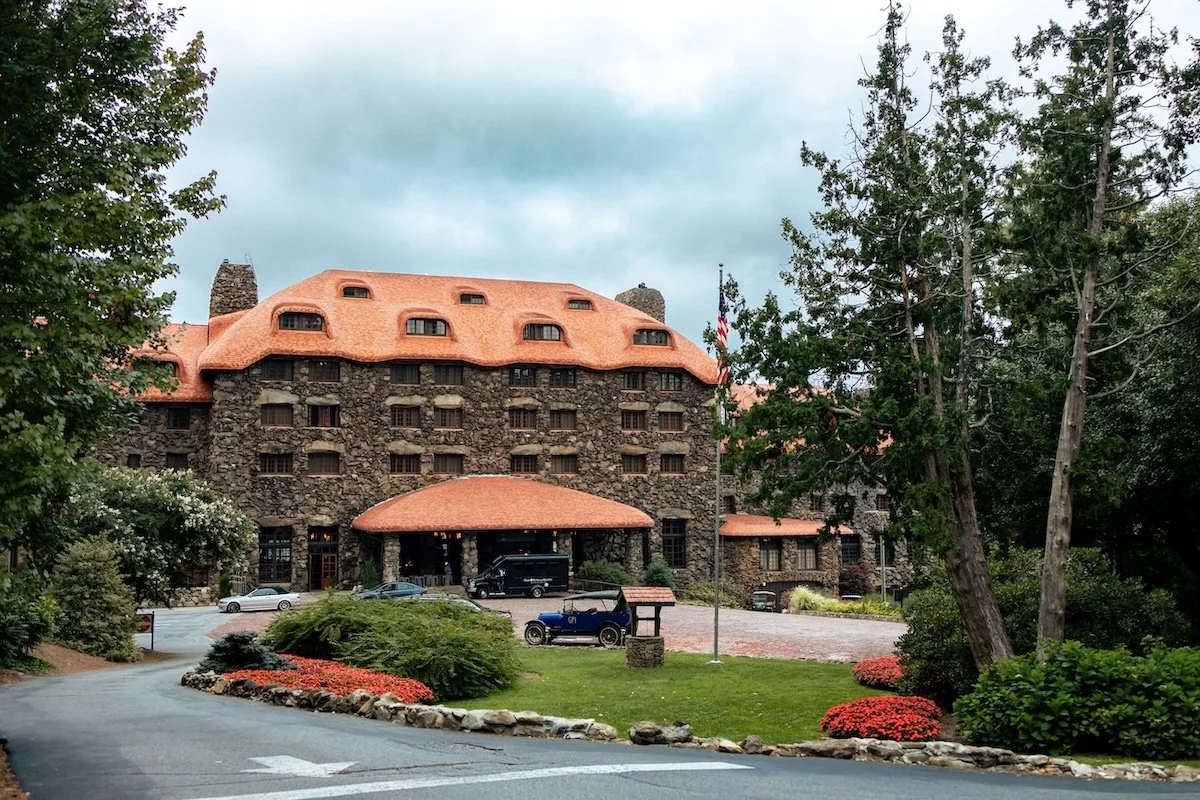
Built from hand-stacked granite, the Grove Park Inn was envisioned as a “resort for the ages.” [credit: ExploreAsheville.com]
Built from hand-stacked granite to be a 'resort for the ages,' the Inn still reads like a mountain castle. The Main Inn, Sammons Wing, and Vanderbilt Wing give the hotel scale, yet the core remains intact: Great Hall fireplaces rising 36 feet, original Stickley and Roycroft furnishings, and three-sided Otis elevators. Expansions added space without diluting the feel.
Since Omni assumed management in 2013, public spaces and guest rooms have been refreshed across all wings, but the granite heart endures. The Omni flag brings the property into a larger resort network, standardizing booking packages, golf-spa-dining deals, and family programming. Day to day, that means a more standardized resort framework and a national polish layered over a historic Asheville landmark—expanding options rather than replacing its original character.
In September 2024, Hurricane Helene forced a brief closure when floodwaters swept through Asheville—the Inn reopened in phases within weeks, fully restored to operation by December of that year.
Grove Park Inn Golf Course
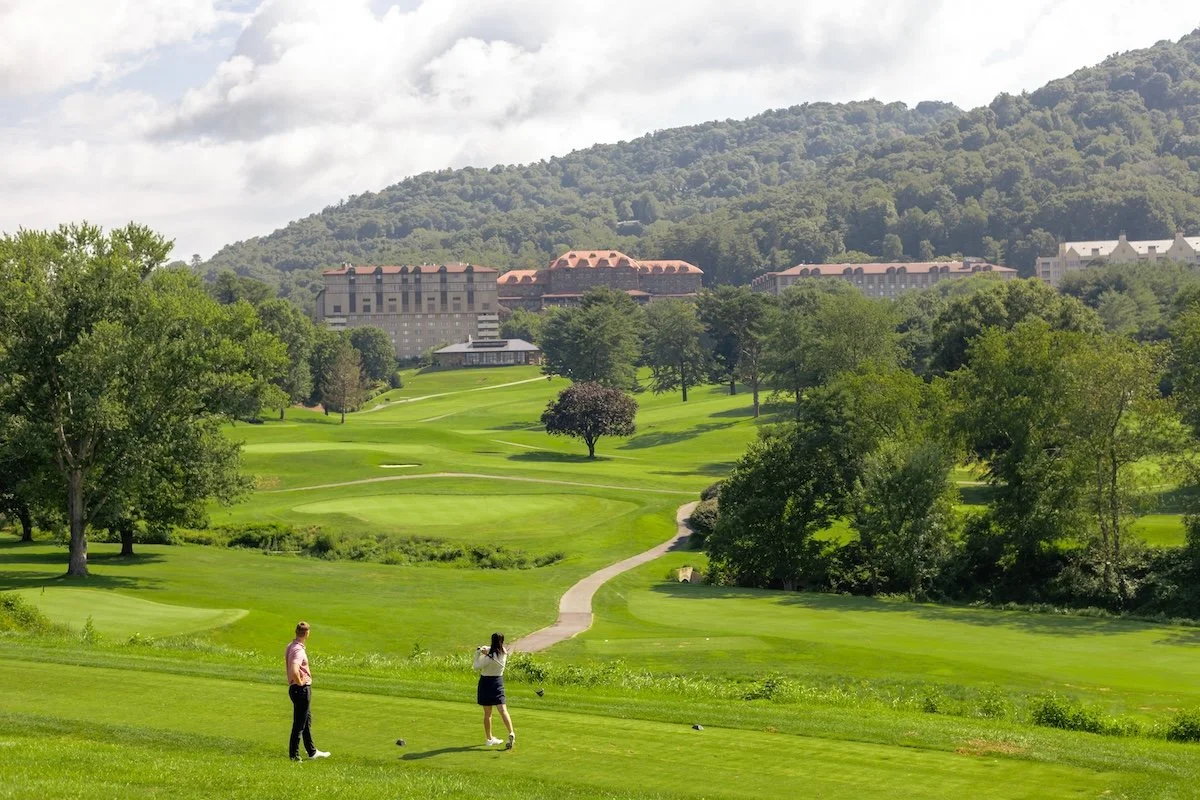
Though short by modern standards, the Grove Park Inn Golf Course is fun for players of all abilities. [credit: Grove Park Inn]
A Donald Ross Test That Punches Above Its Yardage
The Grove Park Inn’s restored Donald Ross course occupies a snug, well-timbered site just below the Inn, but that compact footprint is deceptive. What it lacks in scale it makes up for in routing and terrain that rarely sits flat for long. Tees and greens tilt with the slope, fairways fall into creeks and hollows, and the back nine pulls steadily toward Sunset Mountain. Though the par-70 tops out at just over 6,000 yards, the Gold tee markers at 5,761 (65.4/118) see the most play. The rating looks manageable on paper, but the course resists muscle. Angles matter more than length, misses compound quickly, and patience tends to score better than aggression.
The front nine stays tight and contained, weaving through hardwoods and along creek lines that pinch landing areas early. A miss here rarely travels far—you’re more likely to be held up than scattered—and that containment gives the opening stretch its character. The creek-guarded 2nd hole offers an early reminder to think past yardage, while the 5th runs tight along Country Club Road, where a push flirts with the fence and a pull drifts toward bunkers.
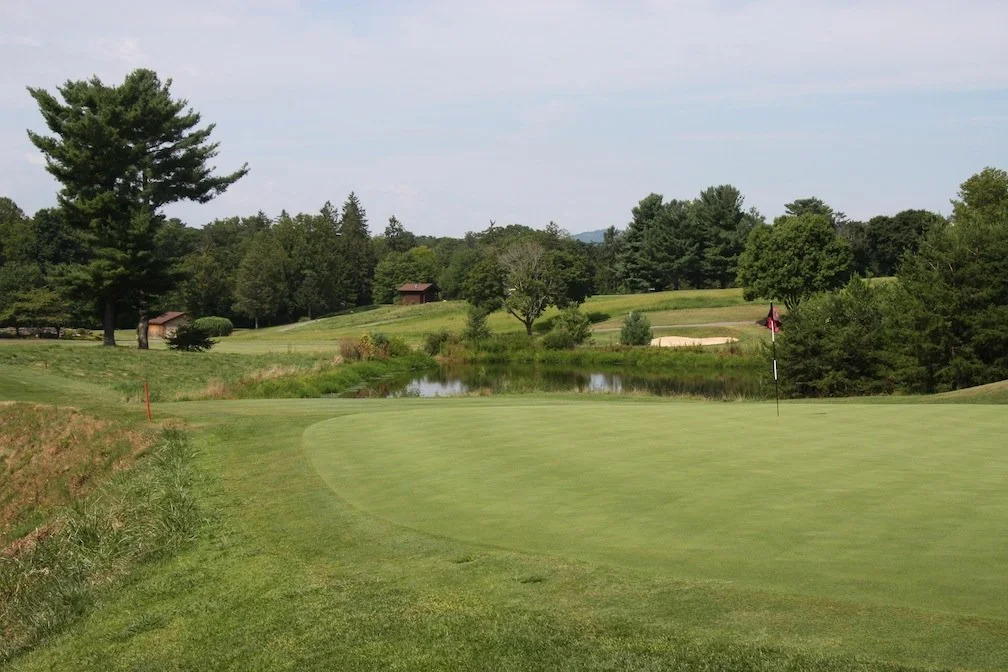
Tricky greens with false fronts provide the sternest defense of par at the Grove Park Inn Golf Course. [credit: James Klein Buffalography]
The turn brings a shift in tone. After a stop at the Cabana Grill—common enough to feel traditional—the course climbs toward the mountain and starts to ask different questions. Tee shots perch higher, more pronounced uneven lies creep in, and approaches begin to play longer than the numbers suggest. The uphill 10th is the clearest example, adding twenty or thirty effective yards and exposing anything under-struck. A few blind approaches follow, more from terrain than trickery, and the routing reinforces the sense that you’re gaining elevation without leaving the property behind.
Greens are bentgrass and roll consistently, but they’re the course’s quiet defense. False fronts are common, tiers are subtle, and fall-offs punish tentative shots. You can two-putt from the edge and three-putt from the middle if you misread speed or break. It’s classic Ross restraint—nothing exaggerated, everything consequential.
There’s no driving range at the Grove Park Inn course. Warm-ups happen at a net and on the putting green beside the first tee, a limitation that ends up reinforcing the course’s rhythm. You’re meant to get out there and play rather than calibrate endlessly. Walking is common on the front nine, where the terrain is manageable compared to the climbs on the back nine. Most players who start on foot switch to a cart at the turn.
Conditioning stays reliable year-round, with recent updates to keep bunkers in optimum shape and greens surfaces firm and responsive. In spring dogwoods frame the fairways, while fall color lingers for weeks thanks to shifting elevation. Summers stay mild enough for early rounds before the pool crowd fills in behind the 18th hole.
Staying at the Grove Park Inn
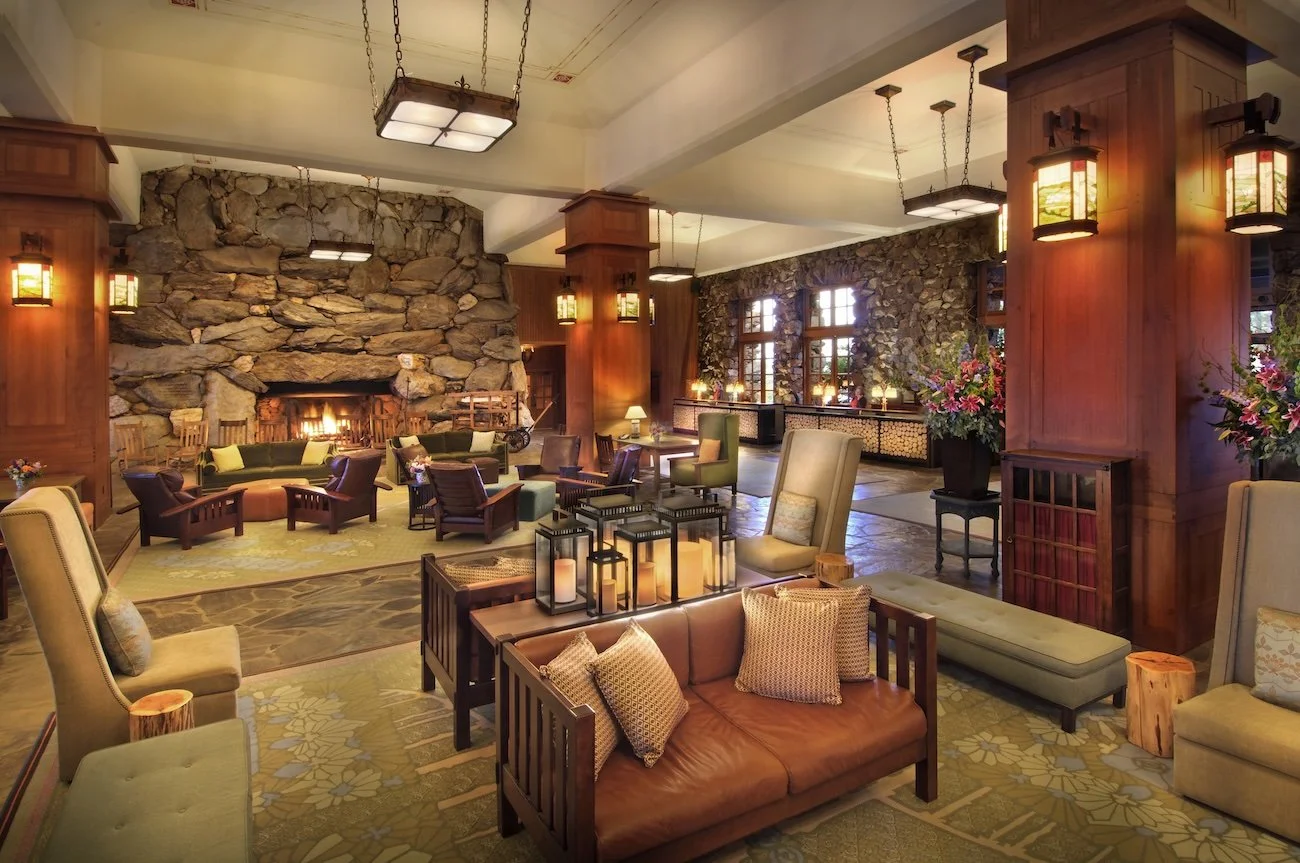
The Great Hall of the Main Building is the atmospheric anchor of a Grove Park Inn getaway. [credit: Grove Park Inn]
The Omni Grove Park Inn is a historic Asheville resort with 513 guest rooms and suites, spread across several wings along a ridge overlooking the Blue Ridge Mountains and the resort’s Donald Ross-designed golf course.
The Inn absorbs golfers, weddings, families, and spa days without losing its footing. For well over a century it has been a stylish retreat to relax, celebrate, and enjoy the natural beauty of western North Carolina—one of America’s true grande dame hotels.
Though the Inn extends across multiple wings, it keeps a clear sense of center. The Great Hall anchors the experience, with its stone floors, vaulted ceilings, and massive fireplaces making it easier to pause than to pass through. Mountain light pours through wide windows, and the steady flow of guests—golfers early, spa traffic by mid-day, jackets and dresses by evening—gives the space a rhythm that feels lived-in rather than staged.
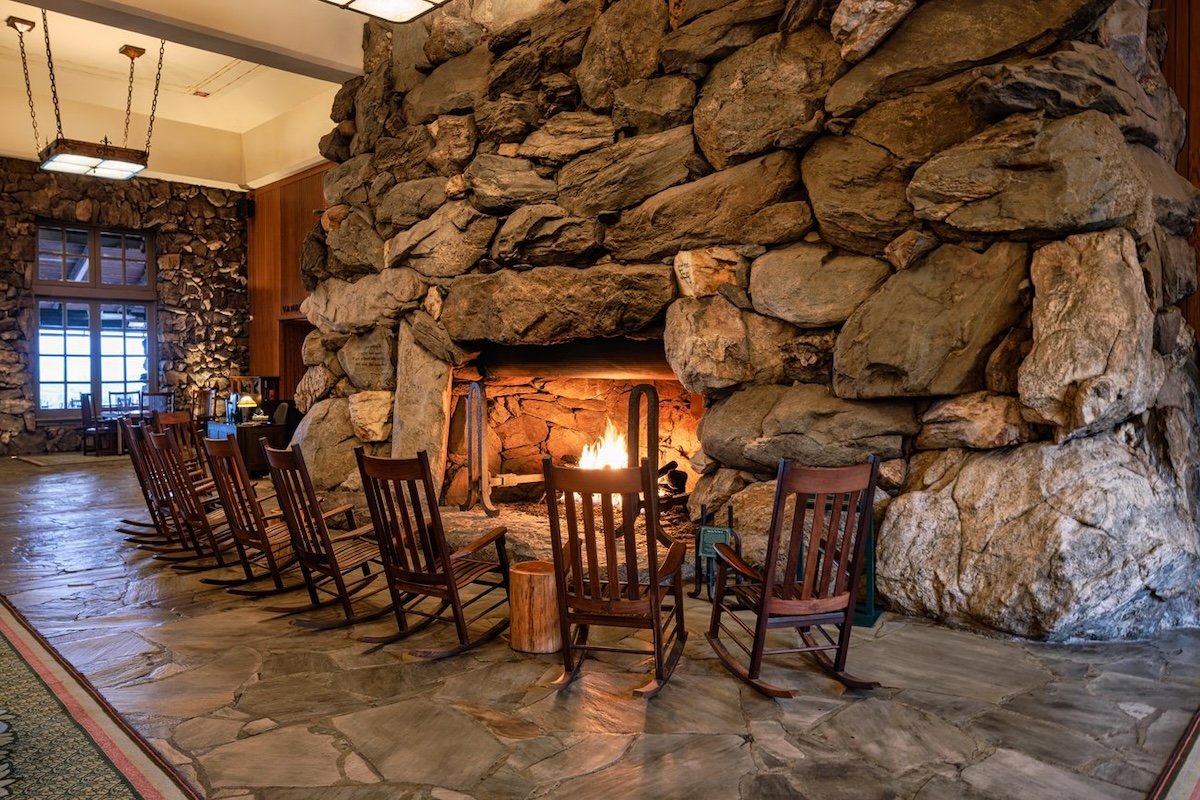
The massive stone fireplaces rise 36 feet in the Great Hall. [credit: Grove Park Inn]
Much of that atmosphere comes from what’s original and still in use—the monumental fireplaces, heavy Arts & Crafts furnishings, and the original Otis elevators that quietly carry guests between floors, reinforcing that Grove Park isn’t preserved history but lived-in history.
Guest rooms vary by wing, and that variation matters. The Main Inn leans historic and compact, with rooms featuring built-in oak dressers, leaded-glass lighting, and cottage-style windows that look toward the course or out across Asheville. Sammons Wing rooms offer more space and work especially well for groups, particularly the two-queen layouts common on golf weekends. The Vanderbilt Wing feels more contemporary, trading tubs for large showers and cleaner lines throughout.
Suites expand the footprint with separate living space, but even standard rooms stay practical—comfortable bedding, mini-fridges, safes, and enough storage to settle in without fuss.
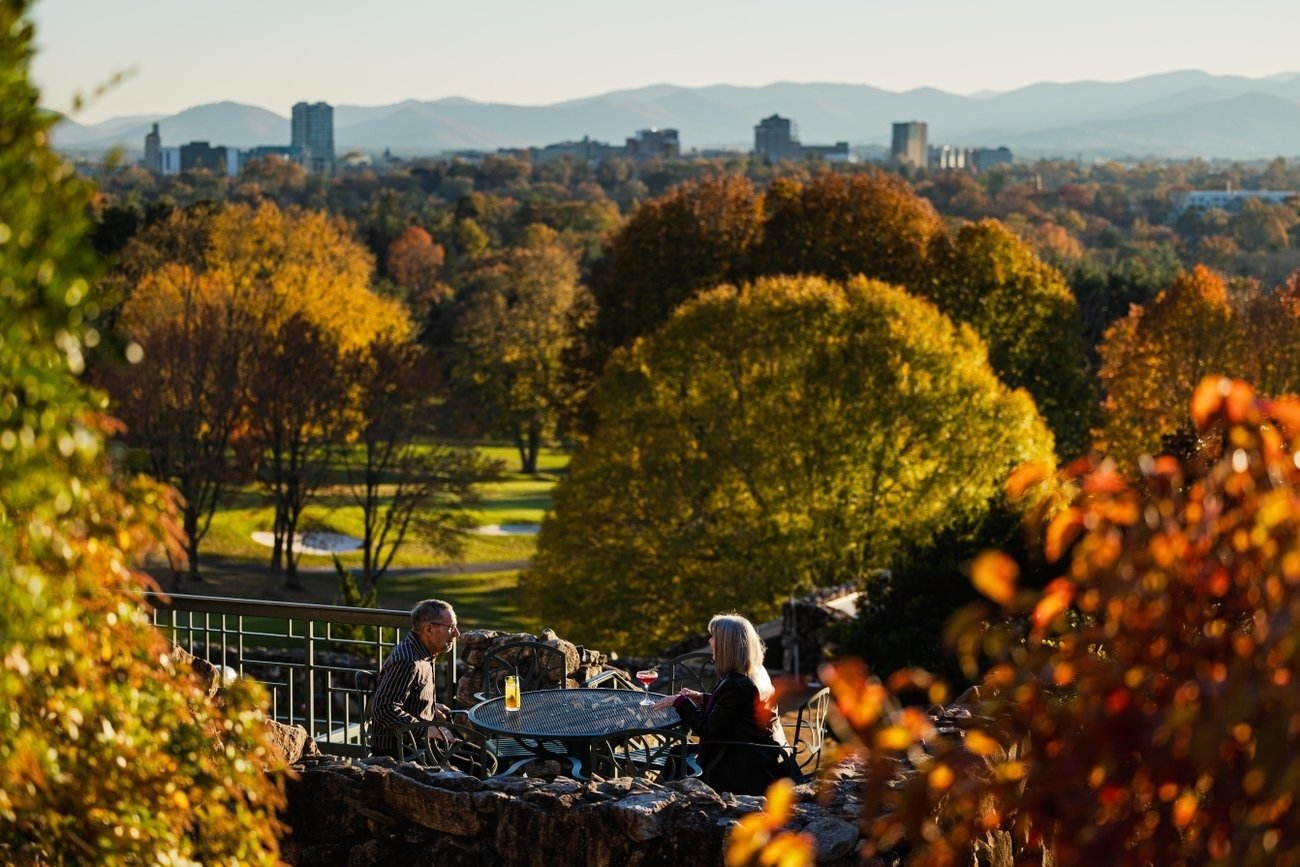
In fall, when the trees begin turning colorful, the Inn’s occupancy rates rise. [credit: ExploreAsheville.com]
For golfers, the setup is especially convenient. You can walk from your room to the golf shop, practice areas, or first tee without ever starting the car, and the clubhouse feels connected rather than separate. The outdoor pool sits just beyond the eighteenth green, patios often gather activity at sunset, and nearby trails invite early walks or post-round clearing of the head.
Once settled in, the ridge-top setting makes leaving feel optional. Downtown Asheville is just a couple of miles downhill and the Biltmore Estate an easy drive, but many stays unfold almost entirely on property. The scale absorbs crowds without feeling busy. The Inn has long had a reputation for operations that feel steady and unforced—efficient check-in at the Main Inn, valet service for those who want it, and straightforward self-parking near the outer wings.
The Grove Park Inn stands apart as a lodging choice because it still feels like a working place rather than a preserved one. The stone, the furniture, the rooms, and the public spaces all show use without feeling dated. For a golf weekend, that matters. You’re not tiptoeing through history—you’re staying inside it, moving through a building designed for long stays and still operating that way.
Dining at the Inn and in Town
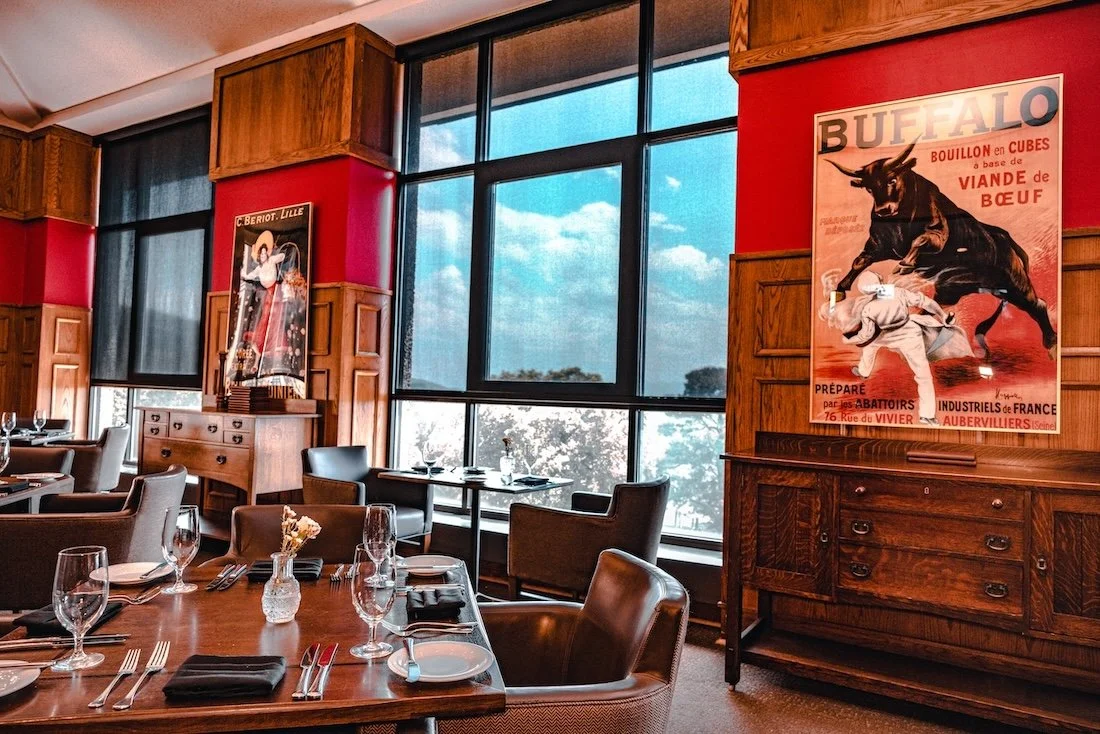
Vintage poster art adds to the ambiance of Vue 1913. [credit: Grove Park Inn]
Dining at the Grove Park Inn reflects Asheville’s strengths: seasonal cooking, regional influence, and an ease that never asks for attention.
Vue 1913 is the Inn’s most refined dining room without feeling formal. The menu leans regional—mountain trout, pork, and seasonal vegetables. It’s a natural choice for an unhurried dinner after a round, especially when light still holds on the ridges outside.
Sunset Terrace handles the middle ground. Steaks, seafood, and sandwiches come with open views and a relaxed pace that suits post-golf afternoons and early evenings. Edison Craft Ales + Kitchen stays casual, pouring local beers alongside straightforward plates.
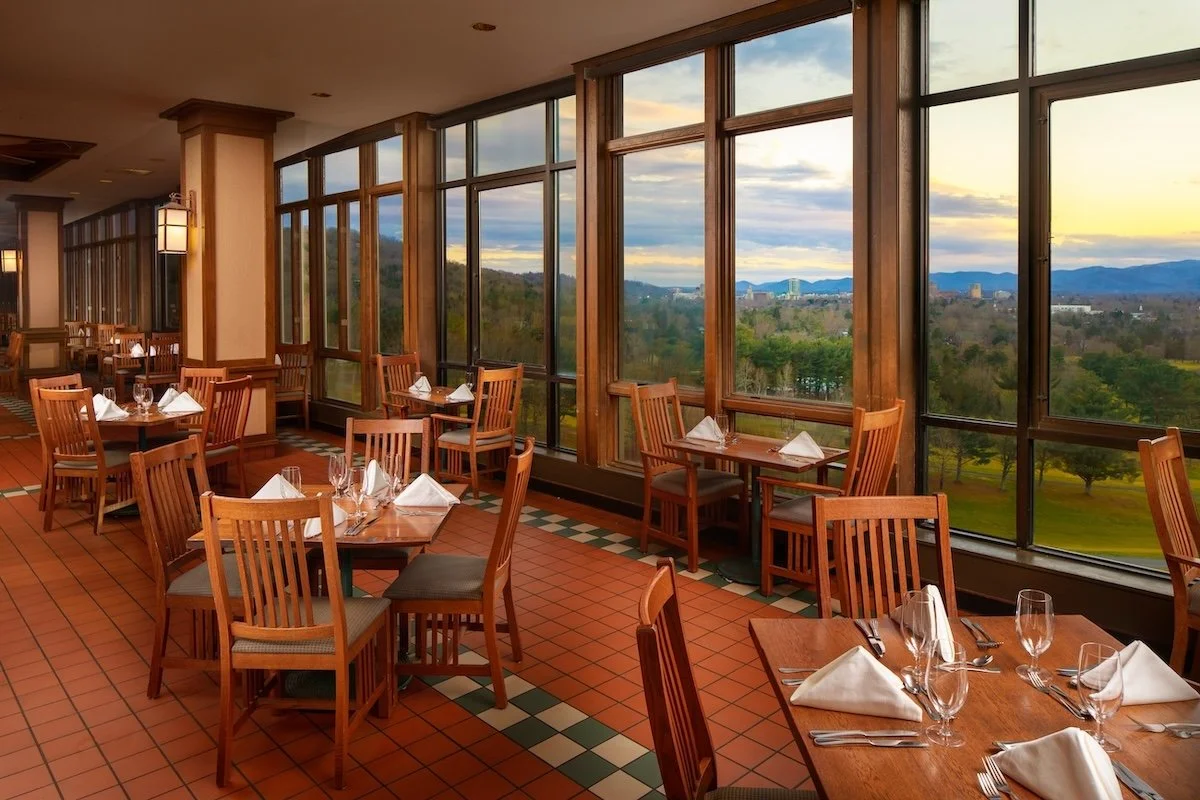
Blue Ridge restaurant in the Vanderbilt Wing offers a breakfast buffet and sunrise views. [credit: Grove Park Inn]
Breakfast centers on Blue Ridge in the Vanderbilt Wing, where a well-run buffet offers omelets, fresh breads, fruit, and lighter options without excess. Early mornings bring sunrise views over the mountains. On weekends the room’s role expands with seafood and prime rib dinner buffets and a Sunday brunch that keeps things lively.
Elsewhere, the Spa Café and The Marketplace cover lighter needs and early starts. The Cabana Grill by the outdoor pool fills a familiar role for golfers, sitting just beyond the eighteenth green and long serving as a traditional stop at the turn—quick sandwiches, cold drinks, and enough shade to make the back nine feel manageable.
Asheville’s food scene rewards a seven‑minute drive downhill. Downtown restaurants lean toward thoughtfulness over flash, with chef-driven places like Rhubarb (seasonal Southern focused on regional meats and produce) and Table (New American with a daily‑changing, farm‑driven menu) offering meals remembered as much for their pacing as their plates. Others—The Market Place (refined Southern), Cúrate (Spanish tapas), and Chai Pani (Indian street food)—add range without pulling you far from the Inn.
You can comfortably eat every meal on property—but with a food scene as good as Asheville's, at least one night downtown feels like part of the trip rather than a break from it.
Time Off the Fairways
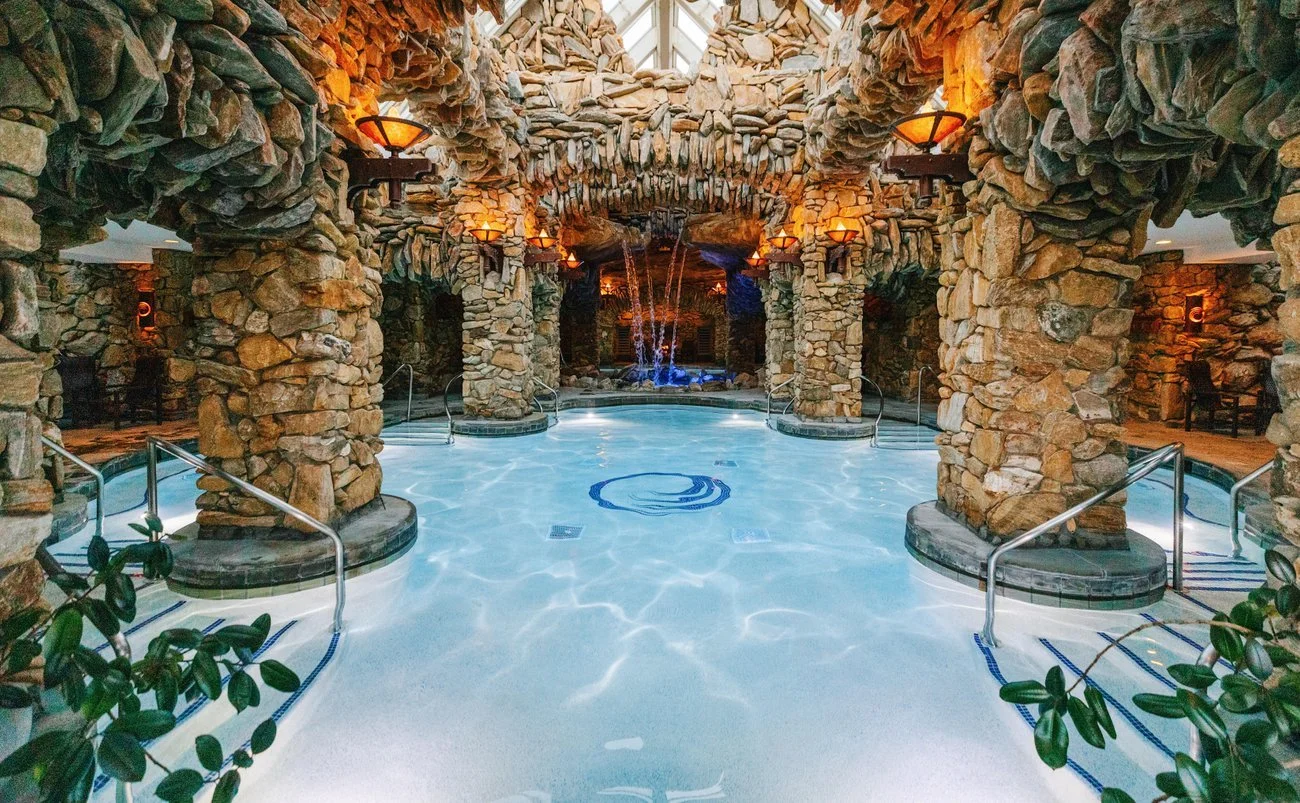
The Grove Park Inn’s subterranean spa is a wonder of stone, water and tranquility. [credit: Grove Park Inn]
While the Grove Park Inn works well as a golf getaway, its reputation has long been built off-course around the spa. The subterranean hideaway unfolds beneath stone archways and natural rock walls, with promenades leading to indoor and outdoor pools, steam rooms, and treatment spaces that ease the tension golf and travel tend to create. Settle into the water’s warmth after a morning round, and you’ll feel half your tension melt away.
Afternoons and evenings with no agenda find their own rhythm at the Sports Complex, where indoor and outdoor tennis courts, fitness spaces, and pool decks invite casual laps or lingering conversation about the last putt. The main pool behind the eighteenth hole becomes a natural gathering spot on warm afternoons. The resort’s trails and grounds accommodate lighter days, offering easy options for non-golfers without imposing schedules.
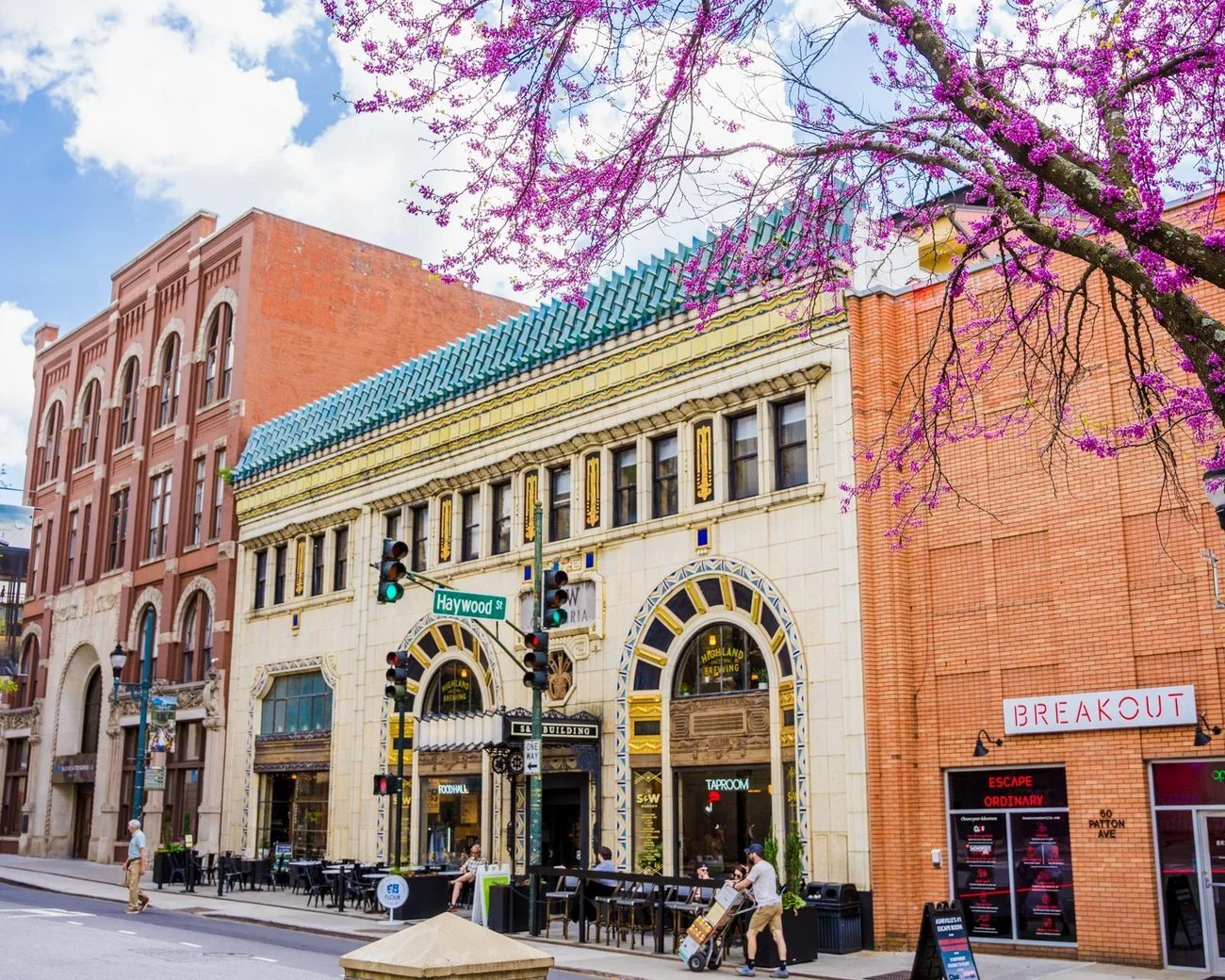
Known as a craft-beer capital, downtown Asheville exudes a welcoming vibe. [credit: ExploreAsheville.com]
When the urge comes to leave the property, Asheville rewards the effort. Top of the list is The Biltmore Estate, the largest private residence in the United States, whose sweeping architecture and gardens can anchor an afternoon—or more.
Downtown, the Folk Art Center and local galleries make for easy wandering, while the Blue Ridge Parkway offers scenic drives and overlooks that feel custom-made for quiet afternoons, especially in fall.
For a closer communion with nature, celebrated hikes such as Craggy Gardens and the summit of Looking Glass Rock are within an easy drive from the Inn.
Asheville is synonymous with craft beer, consistently ranking among the top cities in the country for breweries per capita. Hidden gems abound, though most crawls naturally include local favorites like Wicked Weed Brewing and Highland Brewing Company.
By the time you return to the Inn—whether for spa, dinner, or evening drinks on a ridge-top patio—it’s clear the property and the town complement one another: golf mornings and downtown evenings, all in a rhythm that never feels forced.
Getting There and When to Go
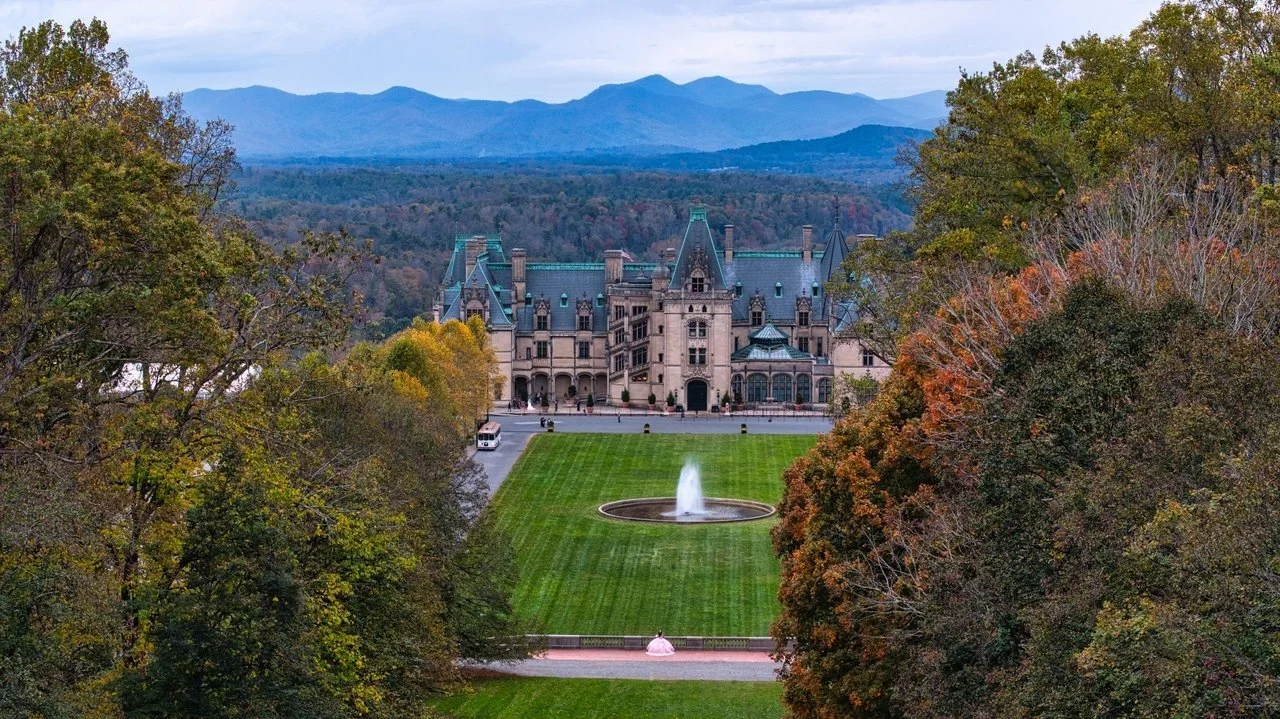
Biltmore Estate—the largest privately owned home in America—is an easy drive from the Inn. [credit: ExploreAsheville.com]
Getting to the Grove Park Inn is easier than its mountain setting suggests. Interstates 40 and 26 converge nearby, making downtown Asheville and the wider region straightforward to reach by car.
For those flying, Asheville Regional Airport (AVL) is 25-30 minutes away. Many travelers choose to use Charlotte Douglas International Airport (CLT), roughly two hours east of the Inn and often the more practical option for nonstop routes and better fares. Greenville-Spartanburg International (GSP) in South Carolina works as another alternative, about 75 minutes away.
Downtown Asheville is only a couple of miles from the Inn, and ride-shares are sufficient if your plans revolve around the resort and evening meals or shows in town. A car isn’t essential—but it’s liberating. Having one opens up the Blue Ridge Parkway, scenic overlooks, trailheads, and easy trips to Biltmore, turning short drives into part of the experience rather than a chore.
Golf is playable year-round. Spring and fall are the sweet spots, when mornings carry a mountain chill and afternoons stretch comfortably into terrace dinners. Summer brings longer days, active pools, and cooler temperatures than much of the Southeast. Winter is quieter and cooler, with softer rates and fewer crowds, though golf remains very much in play.
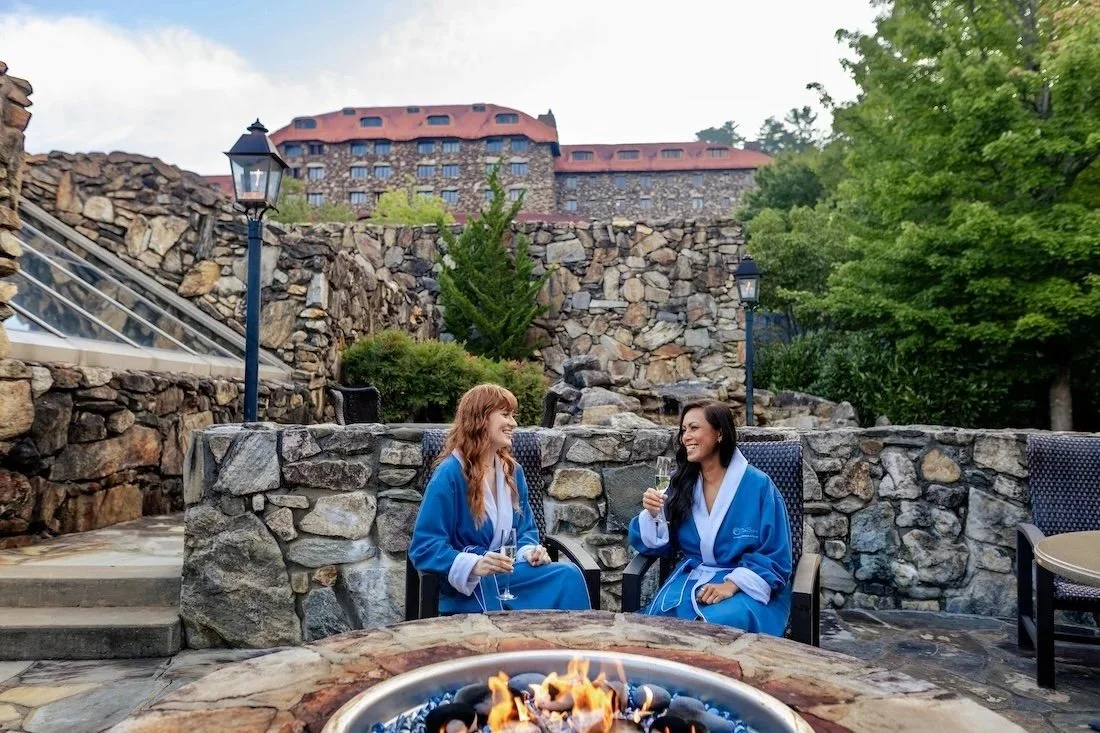
For many Grove Park Inn guests, everything revolves around the Spa. [credit: Grove Park Inn]
One planning tip: peak fall foliage season fills the Inn quickly, and reservations—especially for rooms and tee times—should be made well in advance.
A note on Asheville's recovery from Helene: The hurricane struck in September 2024, causing severe flooding throughout the city. The Grove Park Inn closed briefly but fully reopened by December 2024, with the golf course and spa returning to operation within weeks of the storm. Across the city, restaurants, breweries, and the downtown core also rebounded and are thriving again, reinforcing Asheville’s reputation as one of the South’s most vibrant and easygoing destinations.
Who This Getaway Fits
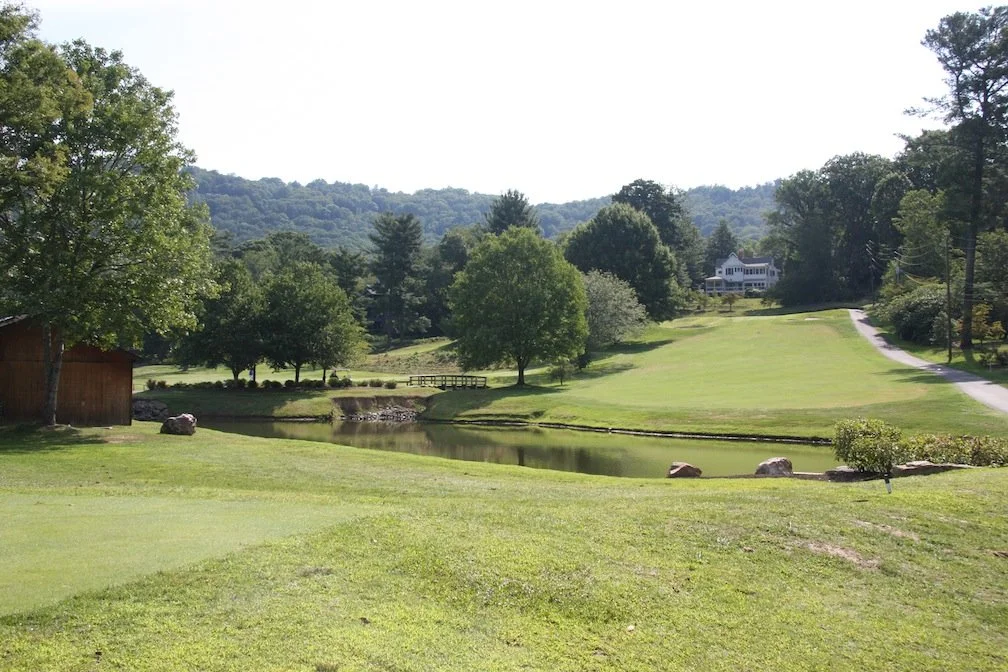
The restored Donald Ross golf course adds yet another layer of history to a stay at the Grove Park Inn. [credit: James Klein Buffalography]
Grove Park Inn doesn’t lean on its history as a selling point—it lives inside it. What it offers is flexibility: a stay that can be shaped around golf, the spa, food, the outdoors, or some easy blend of all four. Golfers who appreciate classic design will find enough nuance in the routing to justify repeat rounds. Spa seekers will find an immersive resort spa, a place that can quietly become the anchor of the stay even for guests who arrive thinking golf comes first.
The Inn also fits travelers drawn to historic hotels that still function as working resorts, not museums. Outdoor lovers have trails, parkway drives, and signature hikes within easy reach, while food-focused travelers and craft-brew fans can treat Asheville itself as an extension of the property, returning each night to a calmer ridge-top base.
It works especially well for upscale friend getaways—the spa, dining, and downtown galleries forming a natural itinerary of their own—and for golf buddy trips where the Ross course and craft brewery scene can fill days without anyone running out of ideas.
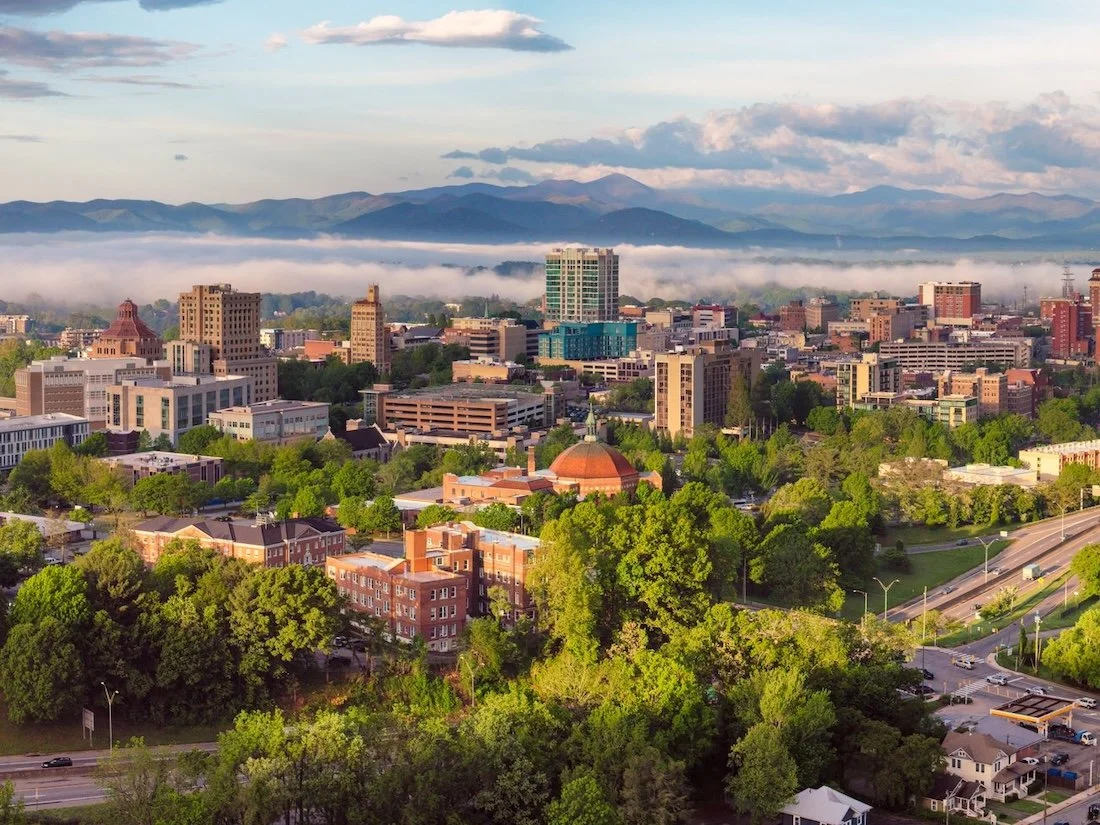
After a morning round on an Omni Grove Park Inn getaway, Asheville beckons. [credit: ExploreAsheville.com]
Whatever your inclination, the Grove Park Inn ultimately rewards attention more than effort. Shadows move across greens in the morning, color shifts along the ridges at sunset, and there's a quiet satisfaction in staying somewhere built for long visits and still operating that way—for mixed parties and solo golfers alike, for couples and families, for anyone drawn to a place where days fill naturally and leaving, when it finally comes, feels optional.
Thanks to ExploreAsheville.com for use of its photos.
You May Also Enjoy …
If you enjoyed this look at the Omni Grove Park Inn & Spa, you might also like these Weekend Golf Getaways destination guides:
• Enchantment & Seven Canyons Golf Club (Arizona) — Red-rock scenery, the nationally renowned Mii amo spa, and one of the Southwest's most memorable golf settings.
• Forest Dunes (Michigan) — Pure golf immersion featuring Tom Weiskopf’s original championship course, Tom Doak’s reversible Loop, and the Bootlegger short course.
• The Abaco Club (Bahamas) — A look inside one of the Caribbean's premier private golf communities, available to prospective members through Discovery Visits.
Planning your next golf getaway?
Browse all Weekend Golf Getaways destination guides for in-depth coverage of golf resorts, memorable courses, accommodations, dining, and experiences worth building a trip around.