
Forest Dunes in Michigan
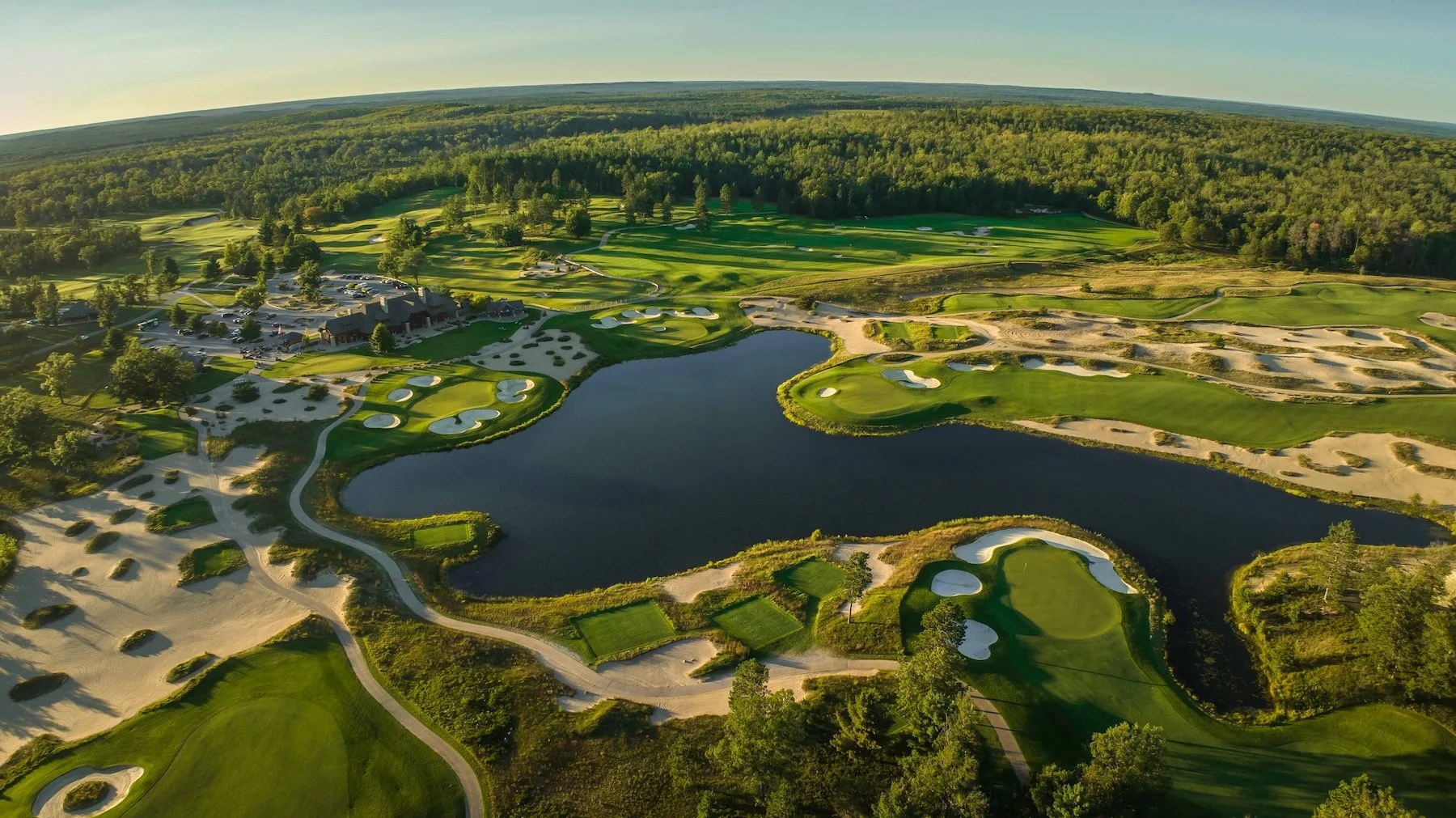
Forest Dunes offers a pure golf immersion experience, set deep in Northern Michigan. [Patrick Koenig/Forest Dunes]
A Pure Golf Retreat in Northern Michigan—Nothing Else, and Proud of It
Forest Dunes isn’t a resort in the conventional sense. There’s nothing here but golf—exceptional, all-consuming golf—and that’s entirely the point.
Northern Michigan has never lacked for outstanding golf. For decades, traveling golfers have made annual pilgrimages to destinations like Boyne Golf, Gaylord, Bay Harbor Golf Club, and Arcadia Bluffs Golf Club, along with a distinguished collection of private clubs—Crystal Downs Country Club and The Kingsley Club chief among them—whose reputations extend well beyond the state. It’s a region defined by repeat visits, long drives, and the understanding that the best golf destinations are often the ones you have to work a little to reach.
Forest Dunes fits squarely within that tradition—but it also stands apart. It isn’t trying to be everything to everyone. There’s no spa, no pool complex, no family programming, and no effort to soften the experience for casual visitors.
You come here to play golf all day, eat on property, stay on property, and wake up ready to do it again.
For the right kind of golfer—the architecture-curious, walk-36-with-a-smile crowd—it has become one of the most compelling destinations in the Midwest and, increasingly, one of the most compelling in the country.
From Northern Michigan Staple to National Draw
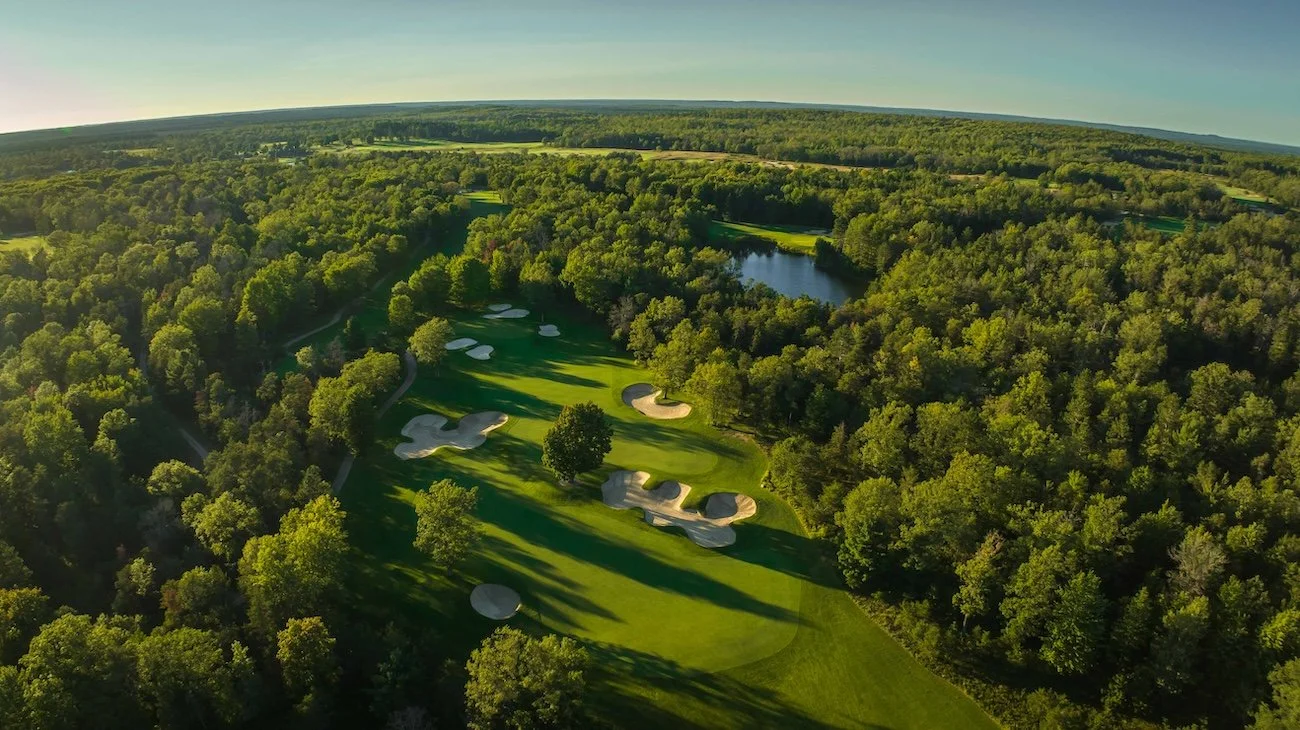
Located in the Hudson National Forest, Forest Dunes is well removed from Northern Michigan’s resort clusters. [Patrick Koenig/Forest Dunes]
Forest Dunes’ appeal today rests on a layered evolution beginning with the original course and accelerated dramatically over the past decade.
The property—once part of General Motors founder William Durant’s holdings and later a Prohibition-era retreat for the Detroit Partnership, a consortium of mob families running bootlegging operations between Windsor and Detroit—sits near Higgins Lake, deep in the Huron National Forest. It’s well removed from the highway exits and resort clusters farther north, and for years, first-time visitors commonly got lost trying to find it. You’re about 15 minutes off I-75; once you arrive, you’re very much there. Cell service may or may not cooperate. That, as it turns out, is part of the charm.
Private developers acquired the site in 1997 and hired Tom Weiskopf to design the original Forest Dunes course, completed in 2000. Financial trouble struck immediately: the original owners defaulted before opening, leading to receivership. The Detroit Carpenters Union Pension Trust Fund took ownership in 2001, finally opening the then-private course in 2002 alongside a modest clubhouse and a handful of homes—though the property continued to struggle financially.
Forest Dunes’ transformation into a true destination began when Lew Thompson, an Arkansas trucking entrepreneur, acquired the property in 2011 and reimagined its potential. Thompson recognized that the resort needed something more. He added a lodge and a few stand-alone accommodations to encourage overnight stays, then pursued a second course to transform the property into a true golf destination.
Rather than commissioning a conventional second 18-hole course, he took a significant risk—giving Tom Doak the opportunity to realize his longstanding vision of a fully reversible golf course. Doak, a Northern Michigan-based architect who had already become one of the most influential course designers of his generation, was a natural fit for a property with land capable of supporting an unconventional idea. The Loop, which opened in 2016, changed Forest Dunes’ trajectory overnight—effectively creating two new courses, giving the property national relevance, and making clear this was no longer a quick play-and-go stopover.
Thompson also revived the long-dormant Hilltop, a two-acre, 18-hole putting course dotted with trees and grassy mounds that dated back to the original Forest Dunes development. In 2021, Bootlegger debuted—a fun short course designed by Keith Rhebb and Riley Johns that, while approachable and social, reflects the same careful attention to site and design found across Forest Dunes’ full-length courses. Together, these additions established Forest Dunes as a destination built around memorable architecture, thoughtful routing, and golf that rewards creativity and repeat play.
In 2021, Rich Mack and his business partner Tom Sunnarborg acquired Forest Dunes. Mack was the founder and driving vision behind Florida’s Streamsong Resort, conceiving and building it from the ground up during his years as a senior executive at The Mosaic Company. That experience has clearly informed Forest Dunes’ golf-first, destination-driven approach. He has since invested in lodging, dining, and infrastructure, while commissioning the upcoming Gil Hanse–Jim Wagner Skyfall course. The result is a property that preserves its original spirit while evolving into a modern pilgrimage destination for traveling golfers.
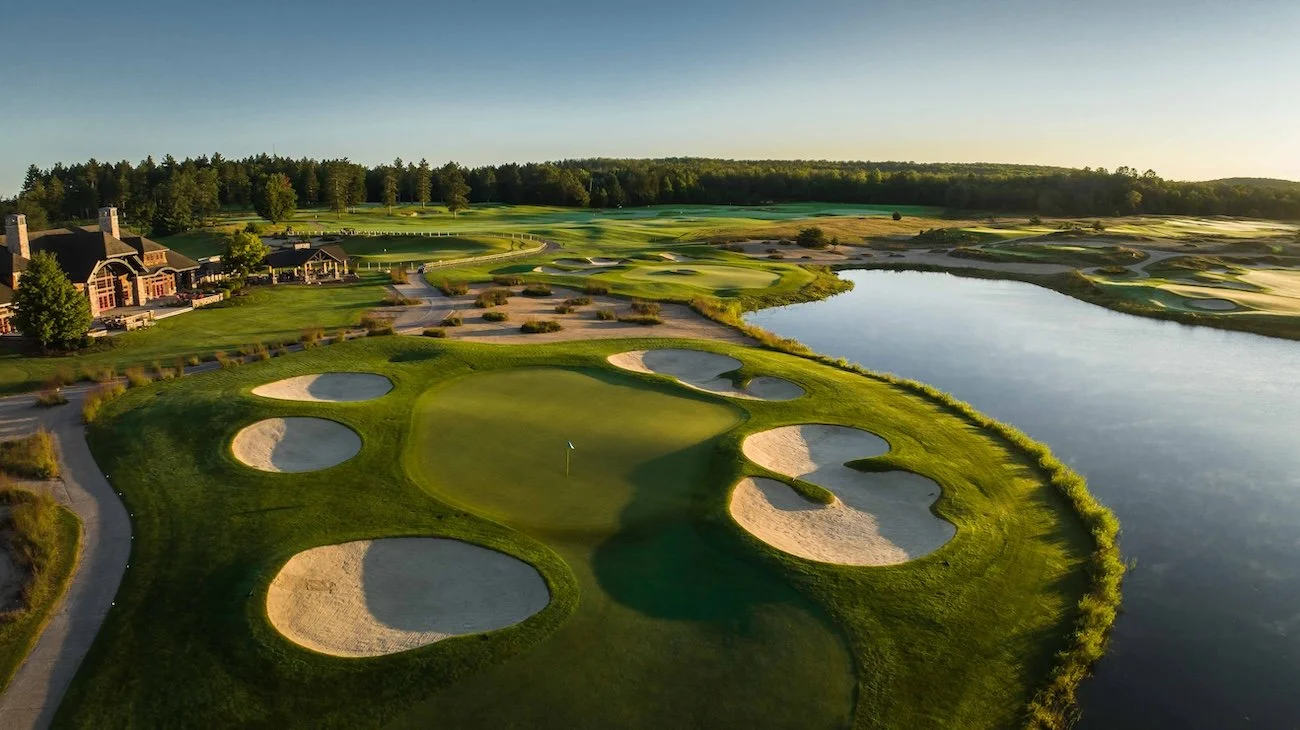
Traditional, innovative, minimalist, and playful—Forest Dunes offers true variety, all in one place. [Patrick Koenig/Forest Dunes]
The Golf Experience: Variety by Design
The Loop: One Brilliant Idea, Two Courses
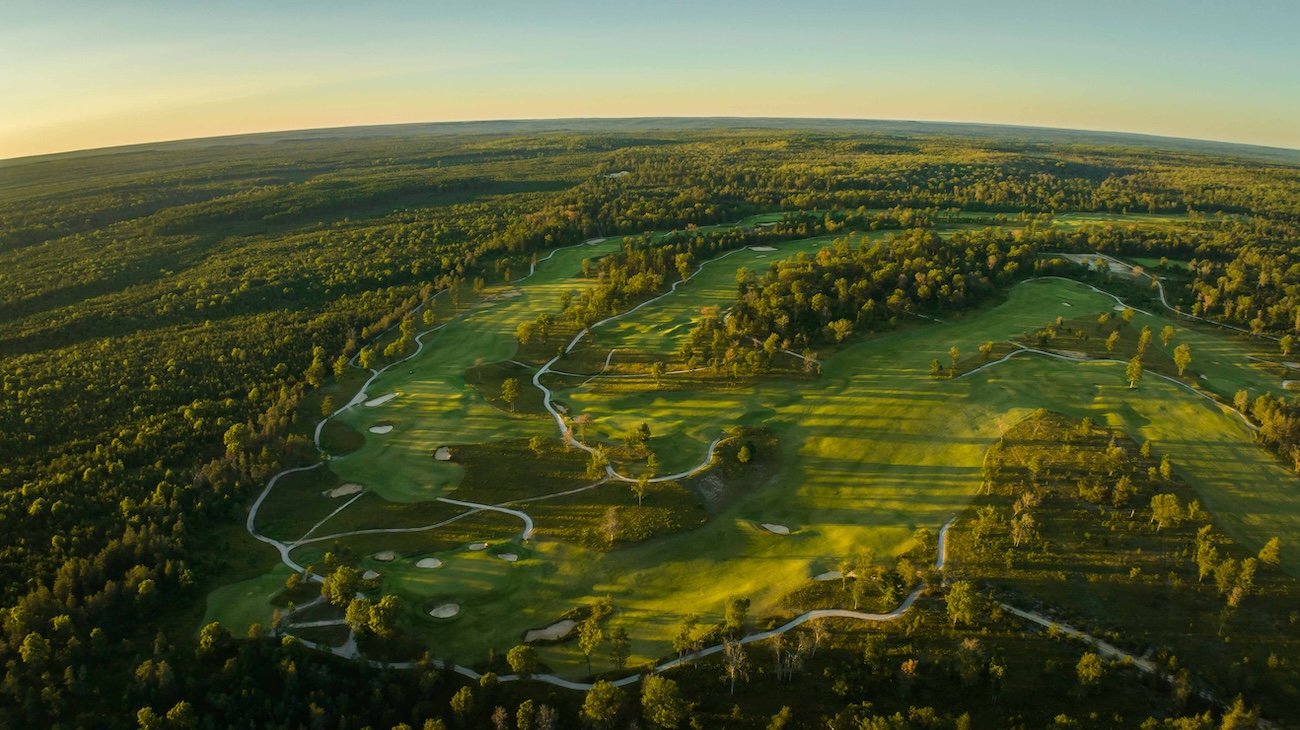
A mark of the success of The Loop, Tom Doak’s reversible creation, is that opinions are split on which direction is better. [Patrick Koenig/Forest Dunes]
The Loop is one of the most intellectually interesting golf experiences in the United States. It is, quite literally, two courses in one—played clockwise as the Black Course one day and counterclockwise as the Red Course the next. Eighteen greens, eighteen pins, one shared landscape.
What makes The Loop special isn’t novelty; it’s how naturally it works. From either direction, the course feels intentional and complete. You never get the sense that you’re simply retracing steps in reverse. Angles change. Strategy shifts. Wind matters differently. And players remain divided on which direction of The Loop they prefer.
Walking-only and built on sandy, firm ground, The Loop encourages creativity and restraint. Fairways are generous. Rough is minimal. The real defenses lie in contour, firmness, and green complexes that reward thoughtful positioning rather than brute force. It’s a course that reveals more with each play—and one that begs to be played on consecutive days. If you don’t do that, you miss the point entirely.
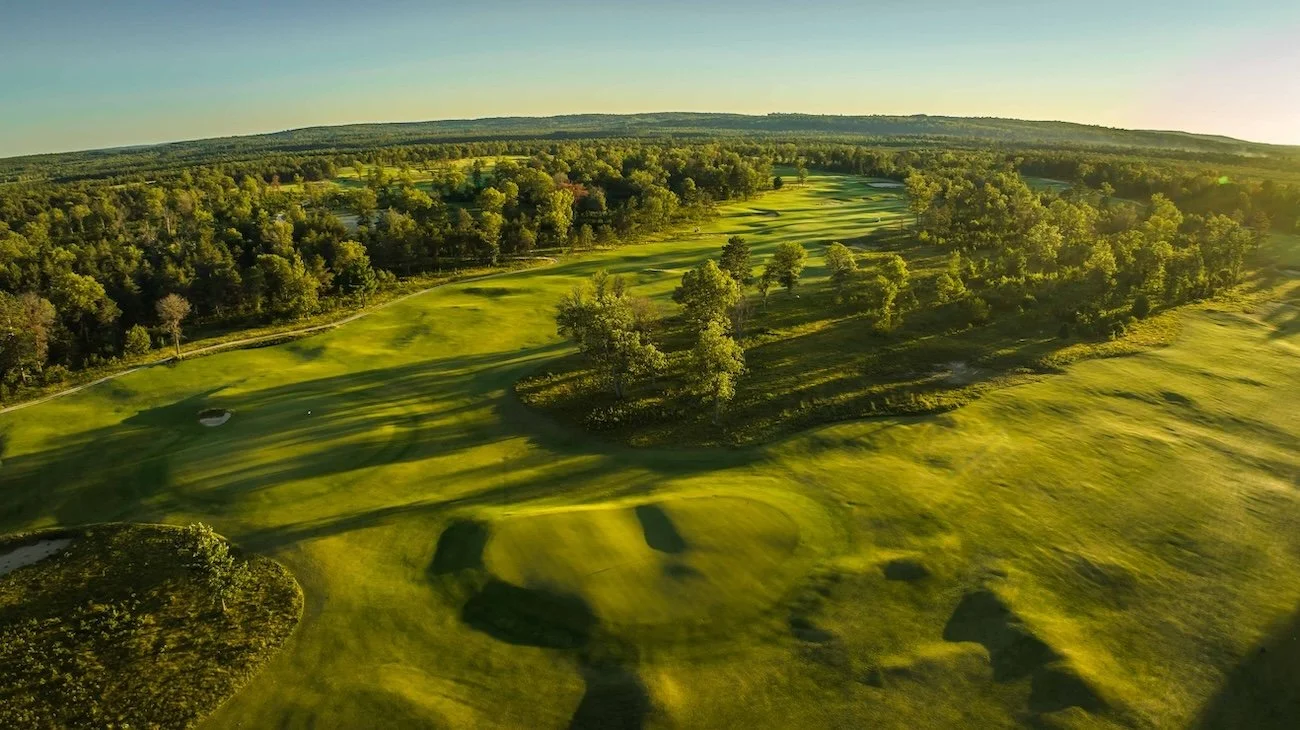
Doak’s green complexes add intrigue to a site that, of necessity, was undramatic. [Patrick Koenig/Forest Dunes]
The Loop isn’t a course built on high drama or a parade of unforgettable holes. Tom Doak has noted that the site was predominantly featureless and uneventful—and here, that is precisely the point. Only such a site could lend itself to Doak’s reversible vision.
In many ways, The Loop validated Forest Dunes’ larger identity: this is a place built for golfers who care deeply about how golf courses work.
The Original Forest Dunes Course: A Worthy Counterpoint
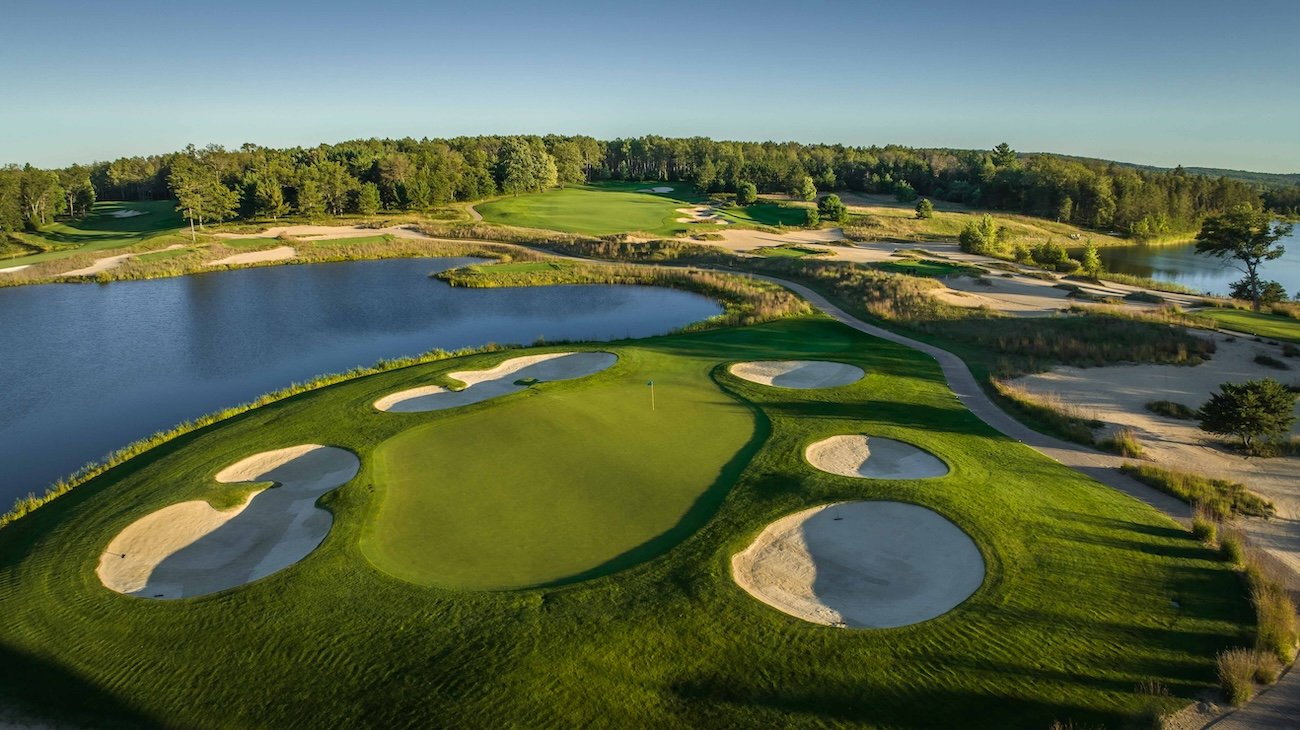
The Tom Weiskopf–designed Forest Dunes Course is a modern classic. [Patrick Koenig/Forest Dunes]
If The Loop is cerebral and minimalist, the original Forest Dunes course is its polished, parkland counterweight—less an architectural experiment than a traditional championship test built around shot values and visual clarity. Golf Digest ranks it 37th among America's top public courses—a position that has held remarkably steady over two decades and reflects the enduring quality of both the design and conditioning.
Tom Weiskopf’s design winds through a mix of tree-lined corridors and more open, sandy landscapes, offering constant variety across its routing. Doglegs, split fairways, water hazards, and bold bunkering force players to make decisions from tee to green. The drivable par-4 17th—a Weiskopf trademark—exemplifies this best: go for it or layup toward a narrow green flanked by bunkers and water, where aggression brings both opportunity and real penalty. The course is beautifully maintained, eminently fair, and deeply satisfying to play.
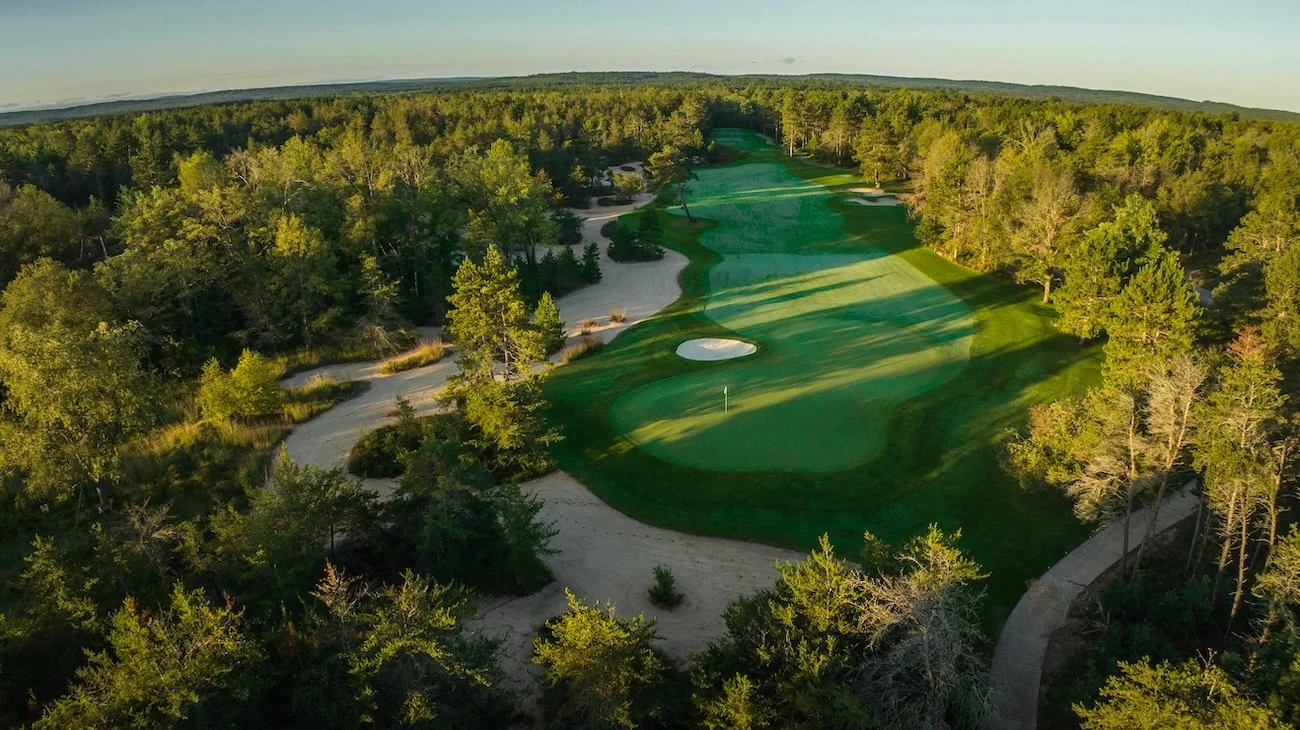
Forest Dunes’ routing mix includes holes routed through tree-lined corridors. [Patrick Koenig/Forest Dunes]
The greens have long been regarded as among the best in Northern Michigan—fast, true, and often subtly contoured. They demand attention without crossing into excess. The par-three ‘bye’ hole after 18—a nod to the old Scottish tradition of settling unfinished matches—is a fitting final touch, extending the round just long enough to settle last bets or give the result one more chance to turn.
Together, The Loop and the original Forest Dunes course form a deliberate architectural balance—one asking questions, the other rewarding execution. That contrast sets the foundation for everything the resort would add next.
Bootlegger: Golf with the Volume Turned Up
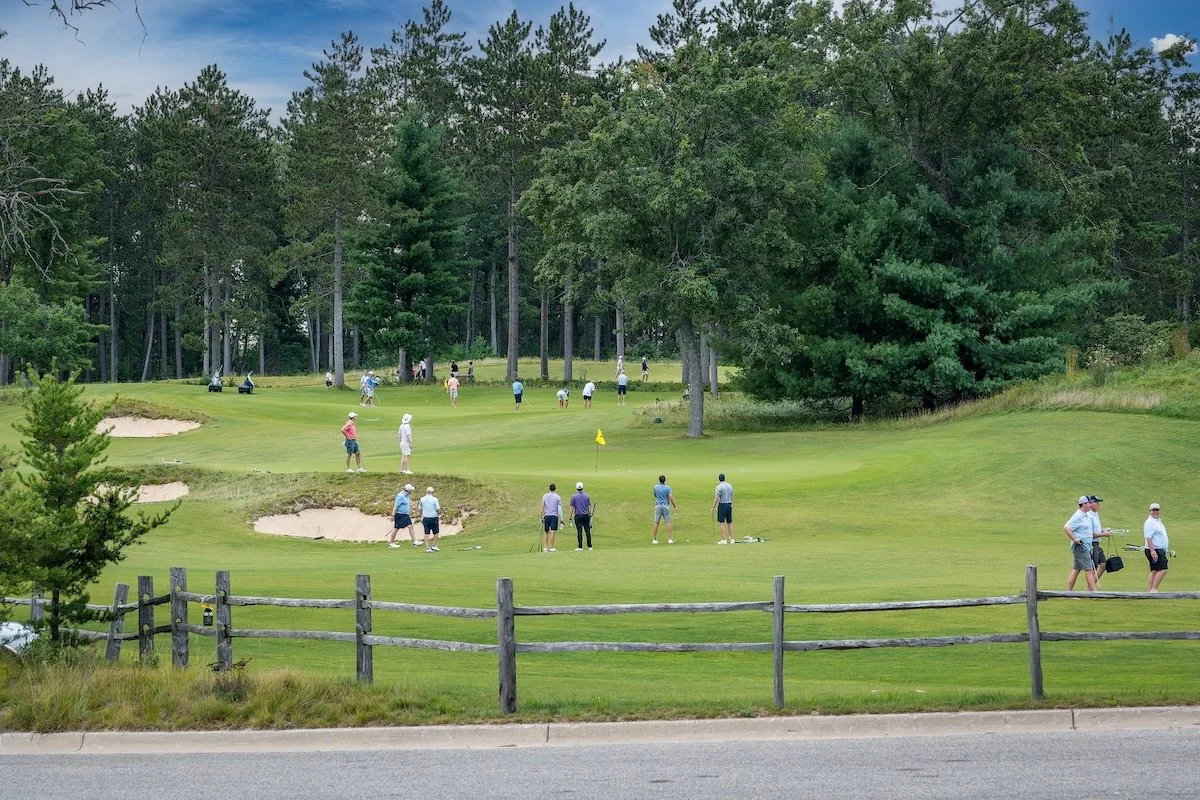
Bootlegger, named for Michigan’s Prohibition-era past, is a laid‑back 10‑hole short course built for fun. [Patrick Koenig/Forest Dunes]
The addition of Bootlegger, Forest Dunes’ 10-hole short course, marked another important evolution—one that leaned into fun without sacrificing architectural integrity.
Named as a nod to Prohibition-era bootlegging that was rampant along the Canada–Michigan border and beyond, Bootlegger is intentionally relaxed and refreshingly unpretentious. With all holes ranging between 50 and 140 yards—think wedges, putters, and creative shotmaking—it’s designed for pure fun. At just over 1,100 yards, it can be walked in under an hour—or stretched across an entire evening. You can play barefoot, carry a drink, and tee it up however you like. There’s a small clubhouse and an open-air bar near the first tee. Music plays through discreet speakers. Adirondack chairs dot the layout, and an outdoor patio overlooks the greens.
Designed by Keith Rhebb and Riley Johns to use the natural slopes and contours of the land, it features open green fronts, false fronts, wavy putting surfaces, and green complexes that serve as the course’s true defense. Some holes have no rough at all; others bleed into fescue. You can run the ball up, putt from well off the green, or hit with a putter off the tee if that’s your fancy.
Teeing positions rotate daily using movable mats, with distances listed on a chalkboard. Your green fee is a day rate—play as often as you want. Play alone. Play with a big group. The atmosphere is intentionally relaxed. The message is simple: have fun.
In the modern golf resort arms race, short courses have become essential. Bootlegger fits Forest Dunes like a glove. Whether as an ideal capper to a 36-hole day or an alternative to playing a second 18, it’s the perfect extension of the all-day golf mindset.
Hilltop Putting Course
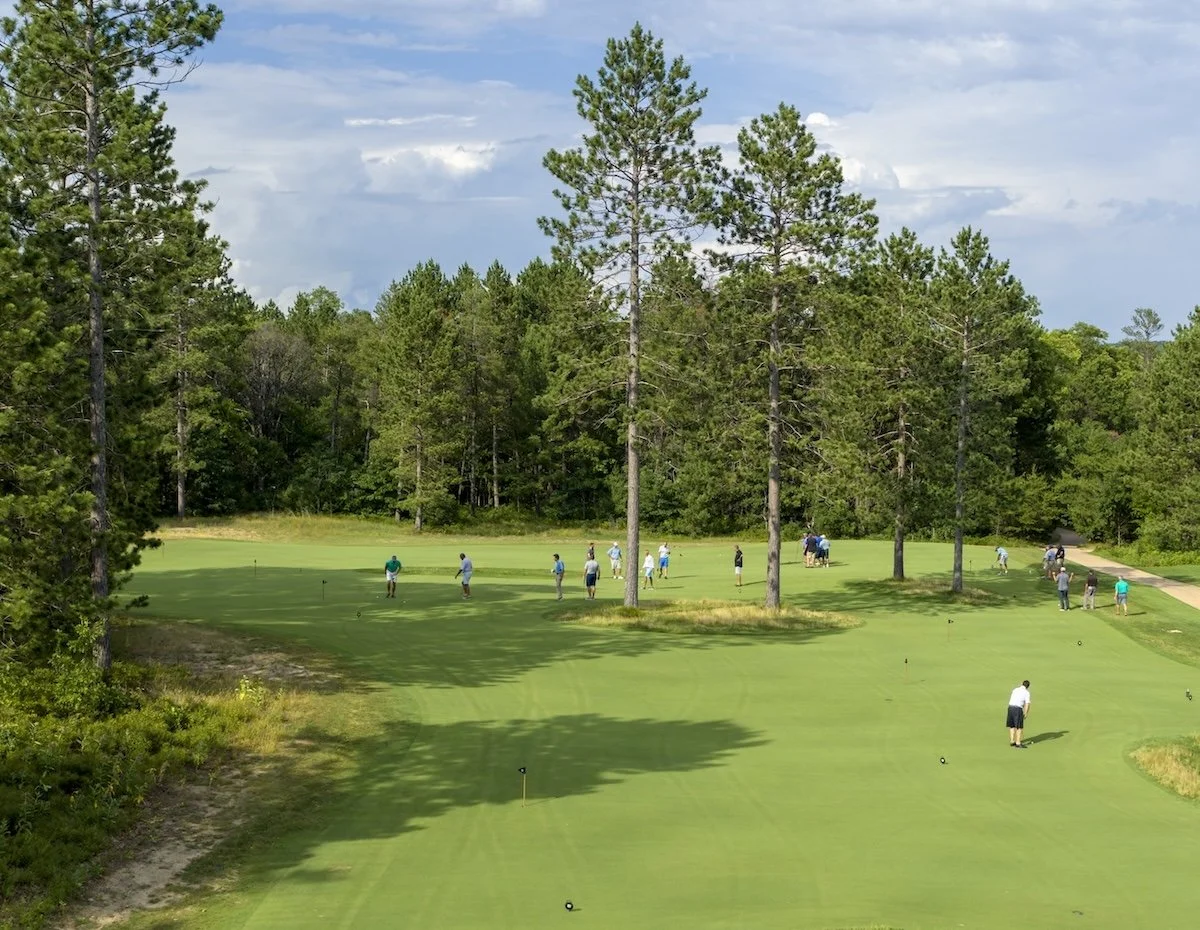
Set on high ground with rolling contours, Hilltop is a putting course made for lingering as the day winds down. [Kevin Frisch PR]
The fun continues at the Hilltop Putting Course, an 18-hole layout that doubles as Forest Dunes’ most natural gathering spot. Set on rolling terrain near the clubhouse, it’s equal parts competitive diversion and social hub—dotted by trees and grassy mounds across two acres.
Hilltop encourages lingering after dinner, with players often seen, drinks in hand, replaying putts and reliving shots from earlier rounds. There’s no charge to play it. You don’t need to be staying on property, have a tee time on the other courses, or even be playing golf that day. Whether you’re heading in for dinner, stopping by out of curiosity, or winding down after a full slate of holes, Hilltop is open and inviting—one more expression of Forest Dunes’ belief that golf should be shared and enjoyed without friction.
Like everything else at Forest Dunes, Hilltop isn’t overproduced or precious. It’s meant to be used, revisited, and enjoyed well into the evening. It’s also the kind of place where plans for tomorrow’s golf tend to take shape, debated over drinks until the last putt drops.
Skyfall: The Next Chapter

The upcoming Skyfall course, designed by Gil Hanse and Jim Wagner, will feature dramatic elevation changes and a markedly different character. [Forest Dunes]
Forest Dunes’ next leap forward is already taking shape. For all the attention The Loop has brought to the retreat, traveling golfers still have only two 18-hole courses to choose from on any given day. A third eighteen-hole course would bolster the offerings and give players reason to stay longer.
Enter Skyfall, a new course designed by the team of Gil Hanse and Jim Wagner. Construction is planned to begin in 2026, with an anticipated opening around 2028. The site extends over 300 acres and is bisected by a central ridge. The ridge serves as a routing hub, with holes moving outward from it and returning—a classic architectural spine. Elevation changes of up to 100 feet, dramatic by Northern Michigan standards, promise a markedly different experience from both The Loop and Forest Dunes.
The plan is for Skyfall to operate as a private club, with limited tee time windows reserved for resort guests, likely through elevated golf packages. Beyond the golf itself, the private structure is designed to cultivate a community of members drawn together by shared sensibility as much as shared access—a gathering place layered within the larger resort. Its addition reflects a belief that Forest Dunes needs not just more golf, but different golf: a third full-scale course to complement the Weiskopf and Doak designs and deepen what is already one of the Midwest’s most compelling golf destinations.
Forest Dunes Lodging: Comfortable and Golf-Focused
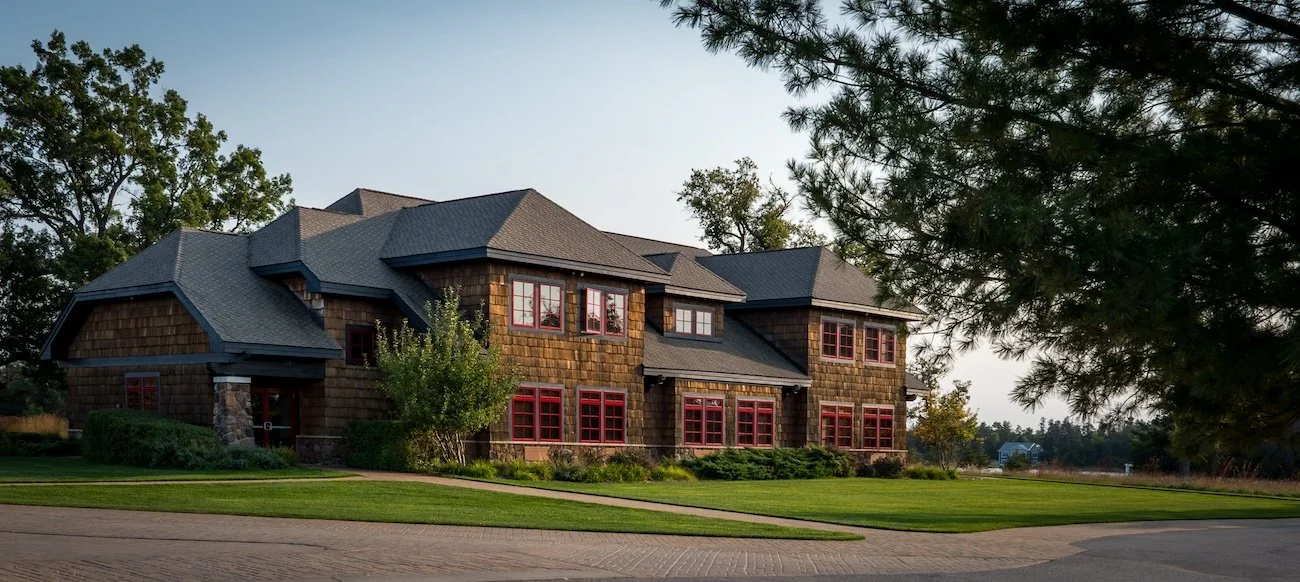
The Lake Au Sable Lodge offers comfortable accommodations just steps from the golf. [Forest Dunes]
Lodging at Forest Dunes is intentionally simple, comfortable, and close to the action. Guests stay in a mix of lodge rooms, suites, cottages, and larger homes, all designed with golfers in mind. Easy access to the courses, space to spread out gear, and quiet at night make them ideal for buddy groups or solo travelers who won’t linger long indoors anyway.
Standard rooms in the Lake Au Sable Lodge come with two queen beds and provide comfortable accommodations for most trips. For those needing more space, two-bedroom lodge suites add full kitchens, separate sleeping areas, and private second-floor balconies.
Buddy trips often gravitate toward the cottages and larger homes scattered around the property. These accommodations are designed for shared golf travel, with multiple bedrooms, generous living spaces, and outdoor gathering areas that frequently include fire pits and game spaces.
The common thread across all lodging options is proximity. Nothing feels far away, and that convenience becomes part of Forest Dunes’ appeal—roll out of bed, grab breakfast, and be on the first tee within minutes.
Dining at Forest Dunes : Easy and Social
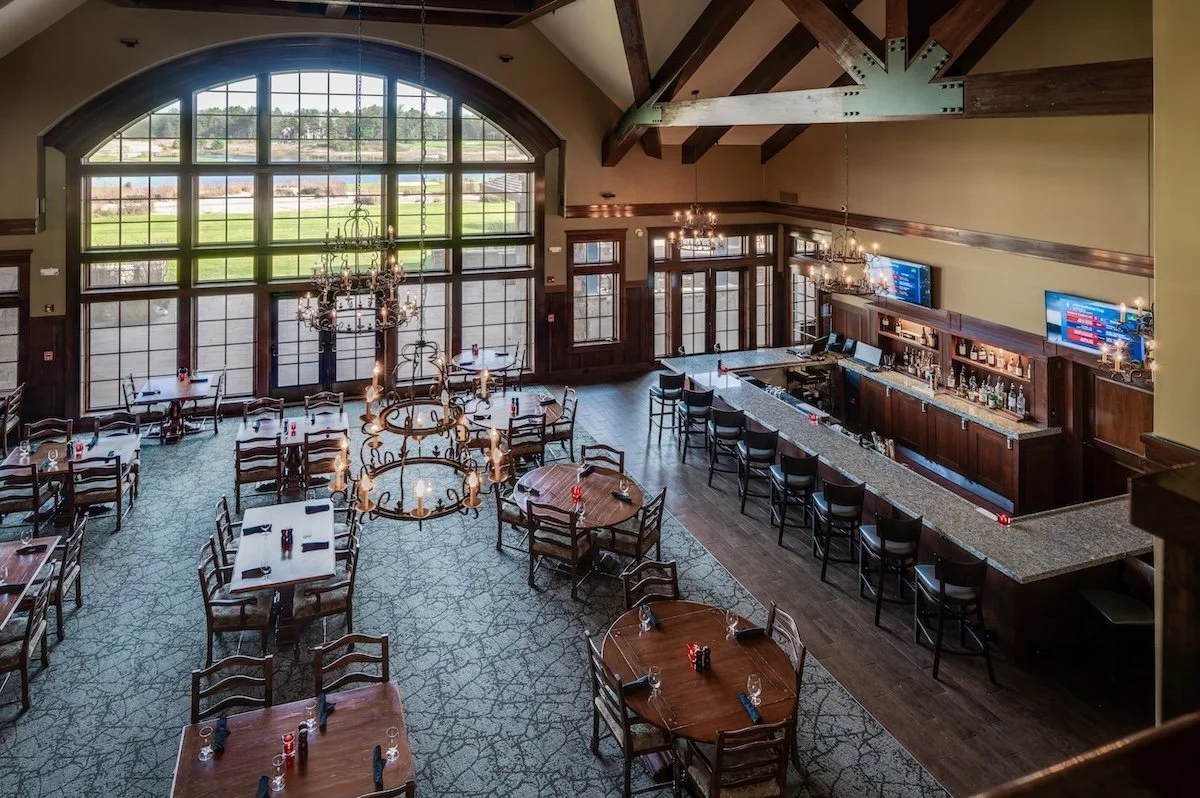
With its indoor and outdoor hospitality spaces, the clubhouse remains the social center of Forest Dunes. [Forest Dunes]
Dining follows the same philosophy. The Main Dining Room in the clubhouse anchors the experience, an airy space with exposed wood beams, natural light, and wood accents that create a relaxed, quietly refined atmosphere. It’s the kind of room that welcomes golfers straight off the course and encourages them to linger a little longer at the table.
Outdoor dining is a particular highlight in good weather. Lunch or dinner on the patio—or beneath an Adirondack-style pavilion overlooking the lake and the Forest Dunes course—extends the day naturally, especially during Northern Michigan’s long summer evenings.
Additional venues give the resort variety without complicating things. Keeper’s Pub, formerly the grill room and now a cozy Irish-style pub with stone walls and a clubhouse setting, offers a more intimate atmosphere for drinks or a casual meal. The covered, open-air Bootlegger Bar serves as the social hub after golf, especially at night, with a comfort-food menu prepared by the main kitchen and a relaxed, come-as-you-are energy that mirrors the short course nearby.
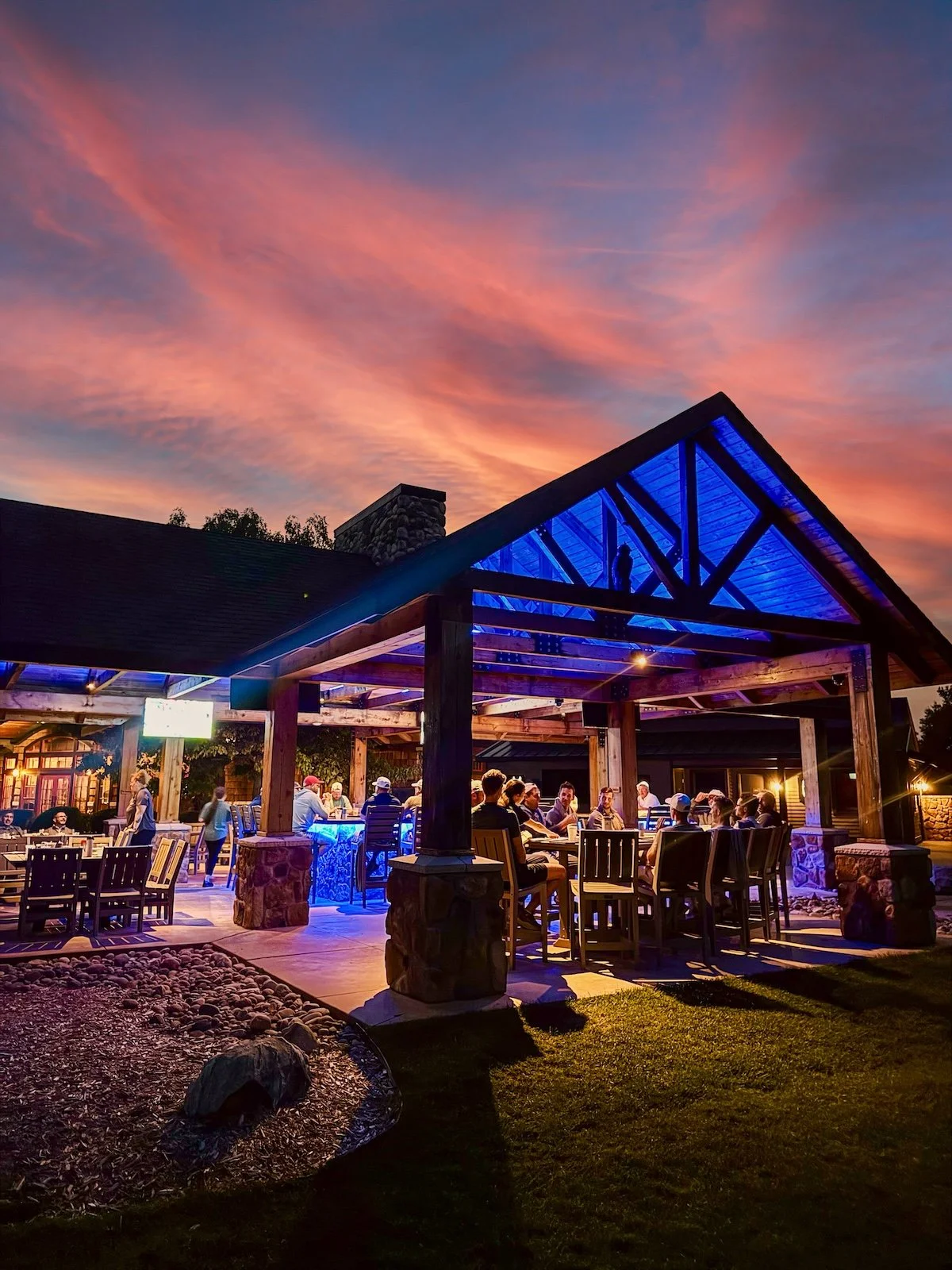
Groups gravitate to the open-air Bootlegger Bar at night. [Forest Dunes]
For small groups looking to elevate the evening, a Chef’s Table experience can be reserved for up to eight guests. Located on the second floor of the clubhouse and overlooking the main dining room, it provides a more private, communal setting that works particularly well for special occasions or celebratory rounds.
Getting There—and Why It’s Worth It
Forest Dunes is not accidental golf. You don’t stumble upon it.
Most visitors drive—roughly three hours from Detroit (DTW) depending on traffic and the inevitable construction on I-75 north. Traverse City’s Cherry Capital Airport (TVC) also eases access for out-of-state golfers. It now offers direct flights from 19 cities (as of 2026), though many routes operate seasonally from late spring through fall—conveniently aligned with the golf season but worth confirming before booking your visit.
From Traverse City, it’s about a 90-minute drive heading east through forest and farmland into a setting that is pleasantly removed from everyday life. Golfers looking to extend a Northern Michigan trip often pair Forest Dunes with stops at Treetops Resort in Gaylord, just under an hour away, or the Boyne Golf resorts farther north, creating a multi-stop itinerary that showcases the region’s depth of golf.
The golf season is relatively short. Forest Dunes’ courses typically open at the beginning of May and close in early October. Spring can be dicey, but summer is when Northern Michigan earns its stripes as a Mecca for traveling golfers: temperatures hover around 80 degrees, humidity is minimal, and daylight stretches late into the evening. At Forest Dunes, you can play until your legs give out, grab dinner, and still have enough light for another loop on the putting course.
Who Forest Dunes Is (and Isn’t) For
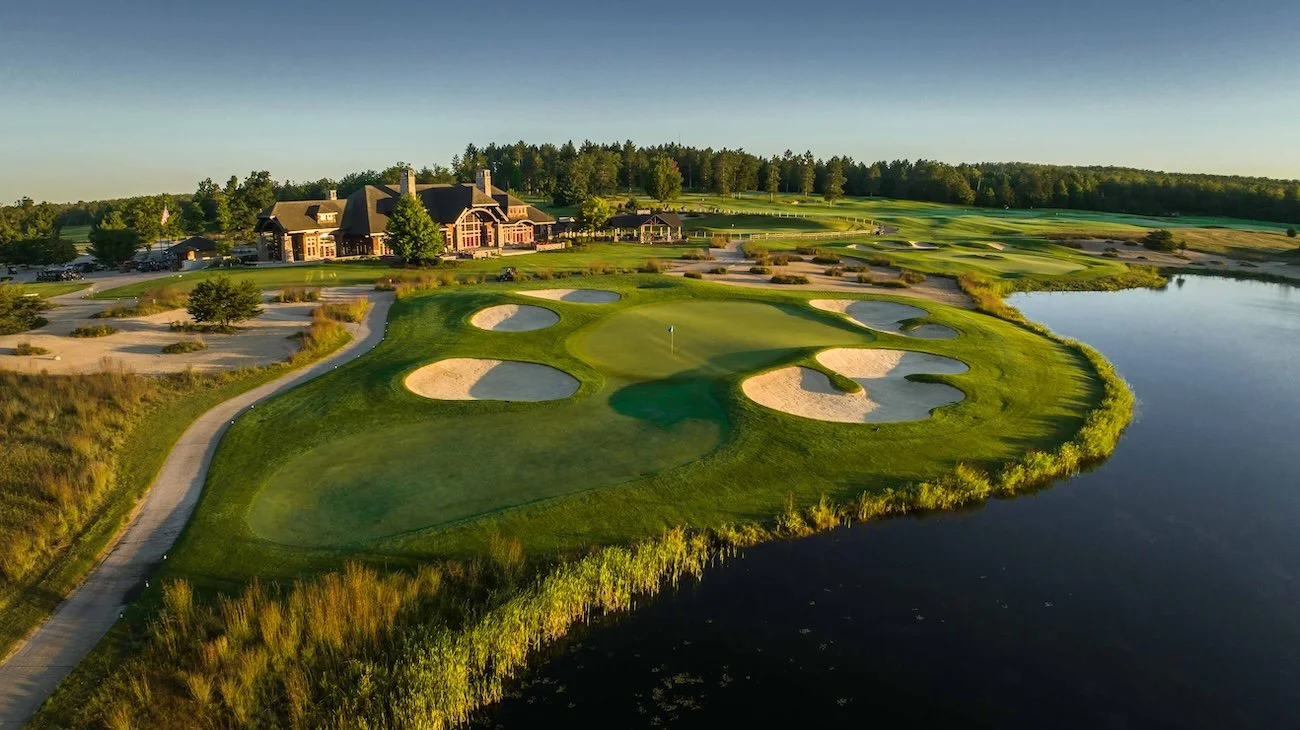
Forest Dunes is a destination built entirely around exceptional golf. [Patrick Koenig/Forest Dunes]
Forest Dunes is not for every WGG reader—and it doesn’t pretend to be.
There’s little here beyond golf. No shopping village. No curated excursions. If that sounds limiting, this isn’t your place. But if the idea of being fully absorbed in golf—for a long weekend or a full week—sounds liberating, Forest Dunes delivers an experience few resorts can match.
Northern Michigan has no shortage of excellent golf. What Forest Dunes has—and what makes it distinctive—is a collection of courses that reward the architecture-curious traveler on multiple levels simultaneously: one that tests shot-making, one that tests thinking, one that tests nothing except your willingness to have fun. The drive up is long. The cell service is unreliable. None of that seems to matter once you arrive. It’s a place people drive long distances to reach—and then find, almost without deciding, that they’d rather stay another day.
Planning your next golf getaway?
Browse all Weekend Golf Getaways destination guides for in-depth coverage of golf resorts, memorable courses, accommodations, dining, and experiences worth building a trip around.