
The Otesaga Hotel & Leatherstocking Golf Course
A Cooperstown Stay Shaped by History, Scenery, and Golf

The Otesaga commands a storybook location by Leatherstocking’s 18th green and Otsego Lake. [credit: The Otesaga Resort Hotel]
Where Legends Meet the Lake
Long before Cooperstown became synonymous with baseball immortality, it was already a place where Americans came to tell stories about heroes. In the early 19th century, novelist James Fenimore Cooper transformed the surrounding forests and shores of Otsego Lake—his “Glimmerglass”—into the setting for frontier tales that helped shape the young nation’s imagination. Generations later, a different kind of legend found a permanent home here when the National Baseball Hall of Fame and Museum turned the village into baseball’s spiritual capital.
That sense of reverence still defines arrival. Cooperstown sits in central New York, tucked into the northern reaches of the Catskills region, a little off the usual interstate rhythm and far enough removed to seem set apart. Visitors come for the Hall of Fame, but quickly discover that the village reads more like a portrait of small-town America—white steeples, tree-lined streets, and a lakefront landscape lifted from a Norman Rockwell canvas.
Along the shoreline of Otsego Lake, that continuity takes on a more personal rhythm. The Otesaga Resort Hotel and Leatherstocking Golf Course sit side by side at the water’s edge, where golf, village life, and scenery merge into a single experience. The Otesaga, with its long history and commanding lakeside presence, serves as the anchor of the Cooperstown getaway, while Leatherstocking unfolds beside it as part of the same landscape. Laid out more than a century ago, the golf course was never meant to stand apart from Cooperstown’s identity but to participate in it—another way of moving through a setting long associated with memory and tradition.
And when the round is done, and you’re back on The Otesaga’s wide veranda, Cooperstown itself is waiting just down the road—a small village with an outsized claim on the American imagination, especially in summer and fall, when the lake, the light, and the town’s slow pace seem most in sync.
Cooperstown Before the Hall of Fame

Most famous for the Baseball Hall of Fame, Cooperstown offers history, museums, lake recreation, and memorable golf experiences. [credit: The Otesaga Resort Hotel]
Cooperstown’s identity as baseball’s spiritual capital is well known. The long-told legend that the game was invented here only adds to the lore, but the town’s cultural roots run deeper into the 19th and early 20th centuries. Cooperstown traces its origins to Judge William Cooper’s 1785 outpost beside Otsego Lake, the lake his son James Fenimore Cooper later immortalized as “Glimmerglass” in the Leatherstocking Tales. By the early 1900s, the shoreline drew wealthy New Yorkers and creative minds, captivated by the landscape’s quiet beauty and sense of possibility.
In 1909, brothers Edward Severin Clark and Stephen Carlton Clark opened The Otesaga, a Federal-style lakeside retreat designed as a “place of meetings” and named for an Iroquois word for gathering. With broad verandas, a central dome, and 700 feet of frontage on the lake, the hotel offered lakeside elegance for summer visitors seeking comfort and community.
Leatherstocking Golf Course opened alongside The Otesaga. Recognizing the growing appeal of golf, the Clarks commissioned Devereux Emmet, one of the leading architects of the sport's Golden Age of course design, to lay out a nine-hole course beside the hotel; ten years later, Emmet returned to expand it into the marquee 18-hole layout golfers play today. Emmet let the land do the talking—rolling ground, hardwoods, and the lake's edge shaped a sequence of walkable holes that felt in harmony with the village itself. Guests could step from their rooms to the first tee and return along the shoreline, with the hotel's columns rising just beyond the final green.
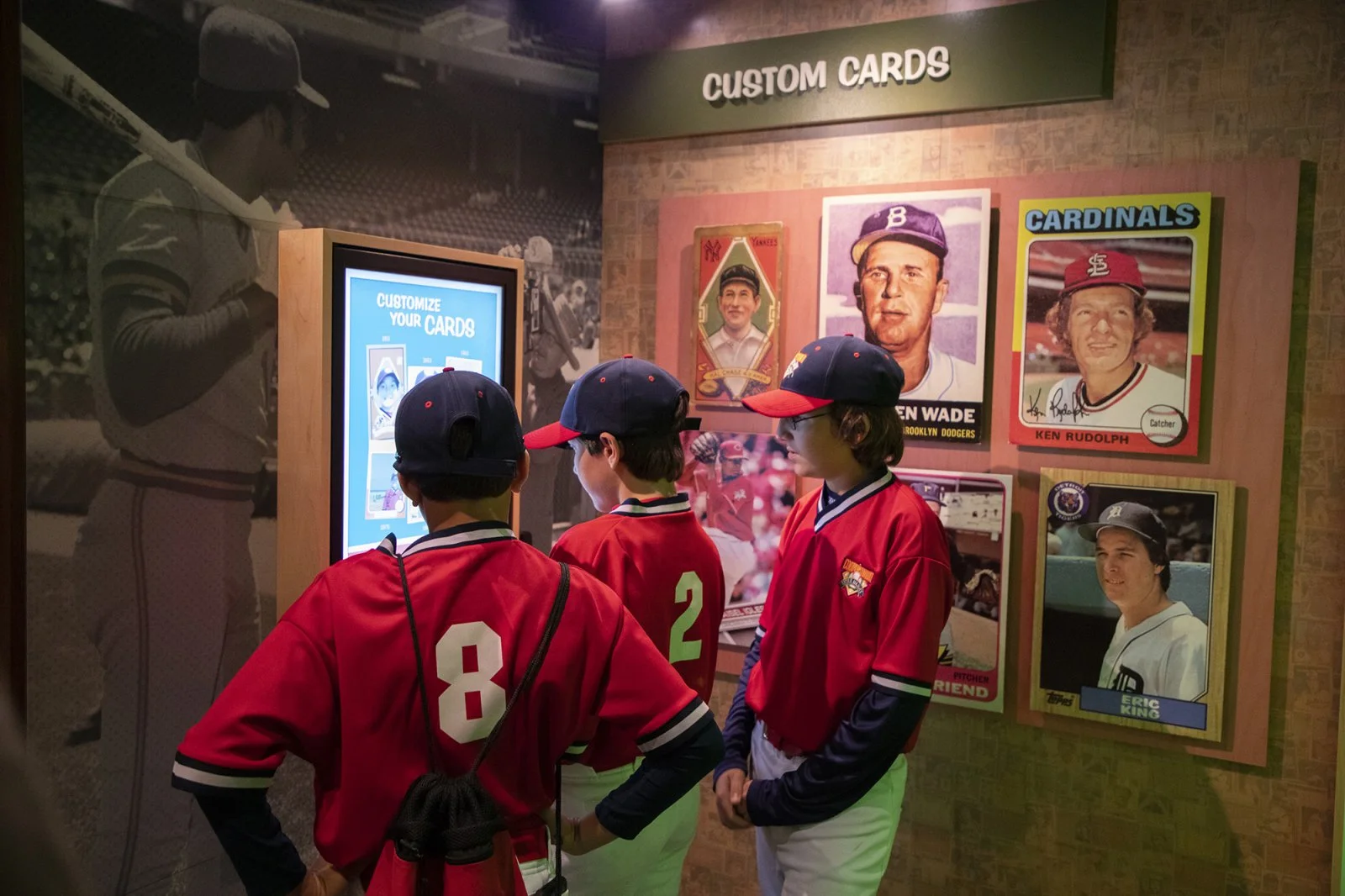
The National Baseball Hall of Fame appeals to fans of every generation. [credit: ThisIsCooperstown.com / Milo Stewart, Jr.]
The Clarks also helped shape Cooperstown's cultural identity. In 1939, Stephen Carlton Clark brought the New York State Historical Association to Cooperstown, and five years later, in 1944, its collection found a permanent home when the Fenimore Art Museum opened overlooking the lake, showcasing American folk art, Hudson River School landscapes, and notable Native American collections. That same year, the Farmers' Museum opened to recreate 19th-century rural life with costumed interpreters, historic buildings, and working farmland.
The National Baseball Hall of Fame and Museum, meanwhile, had opened in 1939, just under a mile from The Otesaga, formalizing the village's association with the game. Together, these institutions reflect the village's layered story—art, history, sport, and rural life—woven into the same lakeside landscape that draws golfers and travelers today.
Leatherstocking Golf Course
Classic Design, Lakeside Rhythm
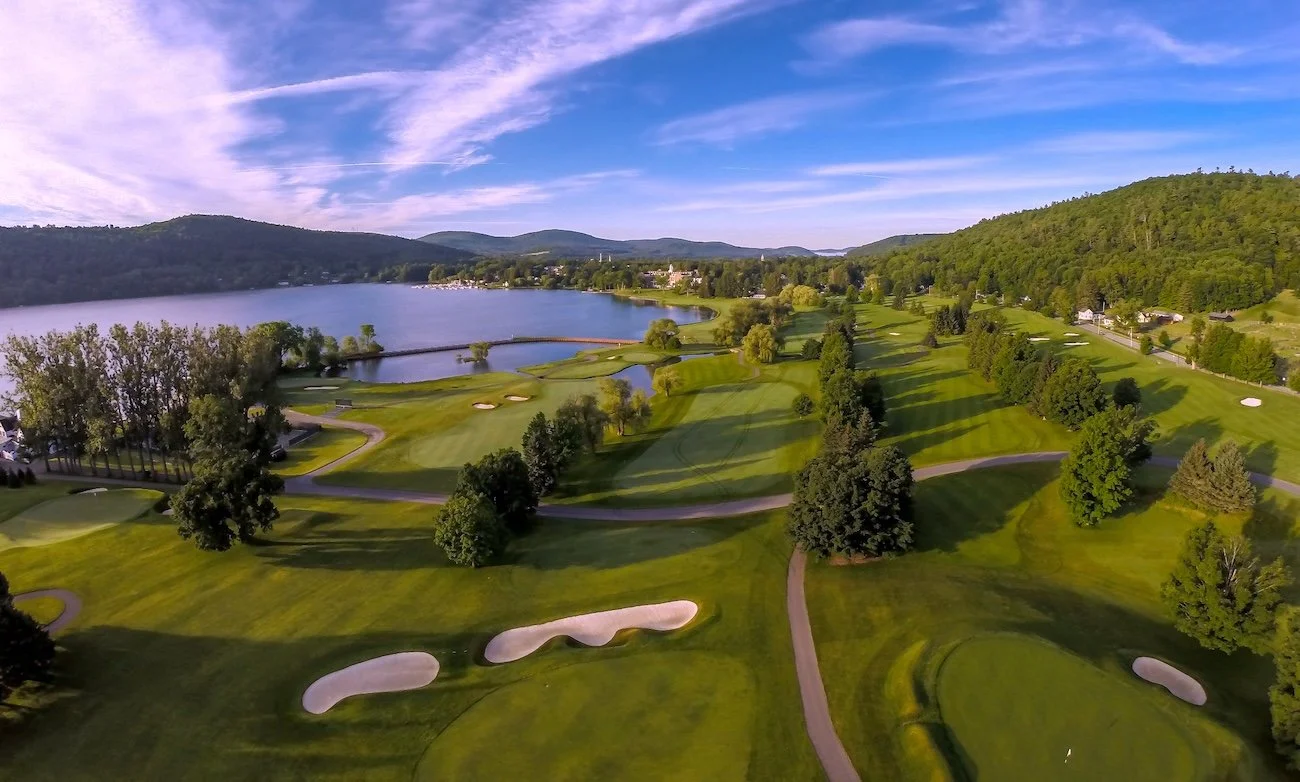
Devereux Emmet's Golden Age design remains a timeless test of strategic golf. [credit: The Otesaga Resort Hotel]
Leatherstocking Golf Course announces itself long before you reach the first tee, visible from the veranda and windows of The Otesaga, which has anchored this shoreline since 1909. A nine-hole course designed by Golden Age architect Devereux Emmet opened that same year, and ten years later he returned to expand it to a full 18-hole layout that unfolds gently along Otsego Lake. Since then, Leatherstocking has stood the test of time; it remains very much the course completed in 1919. Long regarded as one of New York’s stronger public-access layouts, it was ranked No. 2 among the state’s public courses by Golfweek in 2026, behind only Bethpage Black.
Emmet, one of the most prominent course architects of his era, also designed Garden City Golf Club and the Blue and Gold courses at Congressional Country Club. At Leatherstocking, he let the land shape the routing rather than forcing a formula onto it. Unlike many of his contemporaries, he avoided the period’s “template” holes borrowed from the British Isles. Instead, he allowed contours, elevation changes, and sight lines to determine the movement of the course, favoring angles over length and variety over repetition. That philosophy shows up clearly at Leatherstocking, where hilly fairways, steep bunkers, and small plateaued greens make the course play deeper and more demanding than it first appears.

Leatherstocking's most memorable holes bring Otsego Lake into play. [credit: The Otesaga Resort Hotel]
From the back tees, Leatherstocking plays to 6,401 yards, par 72, with a rating of 70.8 and a slope of 135, and it offers four sets of tees stepping down to about 5,200 yards. Fairways roll through hardwoods and eventually down toward the lake, revealing themselves gradually. They are generally welcoming in width, but angles matter. Greens are modest in size and subtly contoured, well protected against players who have power but lack finesse. Nearly a hundred bunkers are scattered across the course, most of them small and shallow in keeping with the era, yet rarely simple to escape. Many lie hidden from view, including several behind the putting surfaces. Mounds, knobs, and subtle ridges often complicate recovery, turning what looks like a routine splash-out into a thoughtful shot.
The front nine sets the tone with steady elevation changes and contained corridors. Early holes climb through hardwoods and along creek lines that pinch landing areas, with the second hole offering an early reminder of Emmet’s well-defended, plateaued greens. The fourth drops sharply downhill, a par 5 of about 513 yards that previews the kind of elevation shifts that define the round. The sixth, a short dogleg-right par 4, emphasizes line and angles more than length, reinforcing that this is a course where position matters more than power.
Leatherstocking makes its most lasting impressions on the back nine. The 11th hole introduces drama: a par 5 that climbs to the highest point on the course, where the tee box opens onto a broad vista over the layout, the lake, and the hotel in the distance. It is a moment to pause and take in the setting before the closing stretch pulls you back down toward the water. A different kind of drama follows immediately on the 12th hole, a one-shotter that plunges roughly 100 feet toward a green guarded by a cluster of sand pits standing sentry at the front, with more waiting along the sides and back.
The finishing stretch—16, 17, 18—is where Leatherstocking’s setting takes center stage. The 16th is a downhill par 4 of about 366 yards that plays toward Otsego Lake, with the hotel view prominent in the background. The 17th follows as a par 3 played from tee boxes set right at the lake’s edge; challenging the flag requires a full carry across an inlet, roughly 180 yards from the back tees, while a cautious bailout remains available to the left.
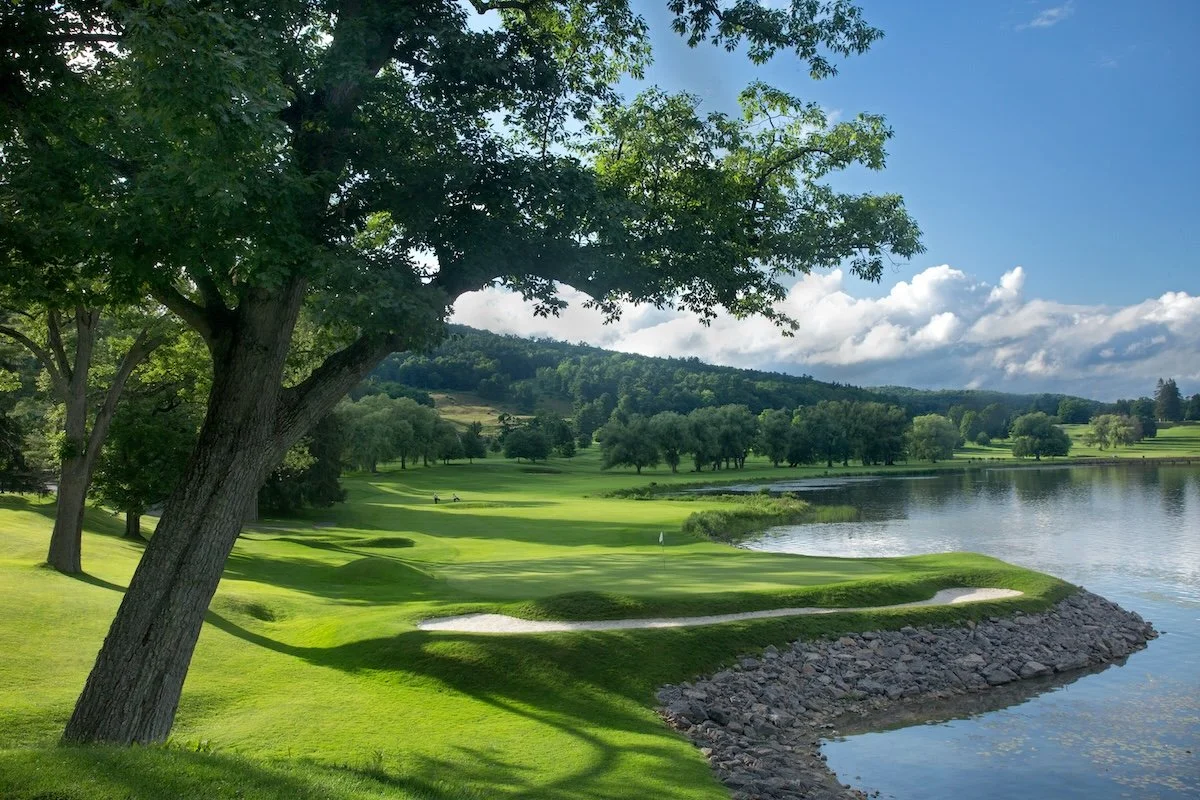
The cape-style 18th is one of the great finishing holes in American resort golf. [credit: The Otesaga Resort Hotel]
The round concludes with one of the most recognizable finishing holes in resort golf: a sharp cape-style dogleg-left par 5 of about 515 yards that begins from island-style tees and traces the shoreline toward The Otesaga. Bold tee shots require a formidable flight over the lake, but bite off too little and a creek lurking near the trees comes into play. The final approach is framed by water that tightens near the green, with the hotel rising just beyond — both backdrop and final witness.
Leatherstocking is a course that improves with familiarity. The first round introduces the routing; later rounds reveal how much nuance lies beneath what first feels straightforward. Eventually, you learn the lake wind instinctively and begin choosing lines with confidence.
Reflecting its Golden Age character, the course is well suited to walking. Pull carts are available, and although a few holes across Lake Street involve climbs, the overall flow remains comfortable. Weekend and holiday walking restrictions apply during peak morning hours, but those on foot get a clearer sense of the course’s rhythm. Practice facilities—including a driving range, putting green, and short-game area—are conveniently located near the clubhouse.
For golfers looking for a completely different kind of lakeside experience, The Coeur d'Alene Resort pairs championship golf with modern spectacle, including its famous floating island green and boat rides between the resort and course.
The Otesaga — Timeless Lakeside Elegance

The Otesaga has welcomed guests to Cooperstown since 1909. [credit: The Otesaga Resort Hotel]
The Otesaga sits directly on Otsego Lake with a quiet presence that makes the pace of life feel timeless. It was built during America's grand resort era, when affluent families escaped cities for long summers beside the lake, and much of that atmosphere still lingers today. Opened in 1909, the hotel feels less like a resort placed here and more like a grand summer house that has always belonged to the shoreline.
While one side of the hotel reveals a brick, Federal-style elevation, the lake side of the building features a long, white façade wrapped in broad verandas overlooking the placid waters. Together, they give the building a layered sense of history that matches its setting. Furnished with rows of white rocking chairs facing the water, the verandas are often filled with guests watching the light shift over the lake, sometimes joined by a Hall of Fame ballplayer visiting for an event.
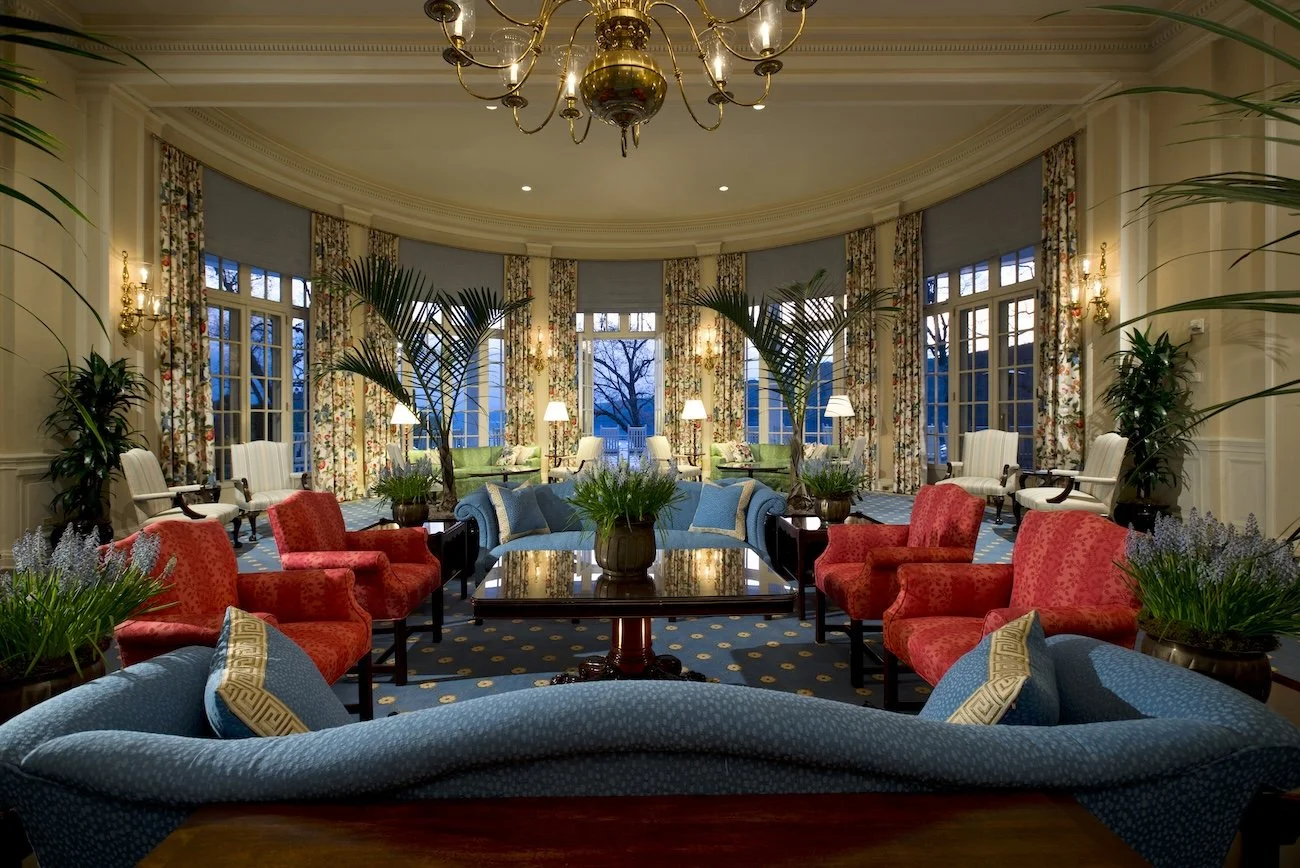
Tall windows, seasonal flora, and warm furnishings give the lobby its gracious feel. [credit: The Otesaga Resort Hotel]
Inside, public spaces feel gracious rather than grand. Polished wood floors, oversized windows, comfortable seating areas, and generously scaled rooms create an atmosphere formal enough to feel special but relaxed enough to invite guests to settle in and linger. Comfortable corners are everywhere—perfect for reading, conversation, or simply watching the day move outside. It is easy to imagine generations of guests falling into the same rhythms without effort.
The hotel's roughly 135 guestrooms and suites preserve their traditional character while providing modern comfort. Classic furnishings, high ceilings, updated baths, and views of either Otsego Lake or Leatherstocking Golf Course create accommodations that feel comfortably rooted in another era rather than frozen in it. The rooms carry a sense of continuity, as though the rituals of staying here have changed very little over more than a century.

Guest rooms at The Otesaga blend historic character with classic, comfortable style. [credit: The Otesaga Resort Hotel]
The hotel's history is part of the experience; it shapes the pace of the stay and gives even a short visit a feeling of tradition in motion. Dining ranges from the elegant atmosphere of 1909 to more casual lakeside fare, giving guests flexibility without diluting the hotel’s sense of place.
What distinguishes The Otesaga most is how naturally it connects everything around it. You can walk from your room to the first tee of the golf course. Stroll into town for coffee or dinner. Spend an afternoon by the water without ever feeling like you are filling time between activities. The hotel rewards unstructured time as much as planned activities. For many, an hour on the veranda can be as memorable as a round of golf or a visit to the Hall of Fame. Nothing feels staged, and the best days unfold at their own pace.
Dining at The Otesaga and in the Village

1909, The Otesaga’s refined steakhouse, is the choice for a special occasion dinner. [credit: The Otesaga Resort Hotel]
Dining at The Otesaga mirrors the rhythm of the stay itself—flexible, seasonal, and comfortably unpretentious.
1909 is the hotel’s signature dining experience. The property’s refined steakhouse features an elegantly appointed dining room and tables on the veranda, with a menu built around locally sourced ingredients and bold flavors. Steaks anchor the menu—filet mignon, New York strip, ribeye—joined by classics like rack of lamb and Dover sole. It’s the natural choice when you’re in the mood for a proper night out: jacket-welcome but never stiff, with a pace that encourages lingering over wine and conversation as the lake darkens beyond the windows.
For a more casual meal, The Hawkeye Bar & Grill is the easy standout for lunch or dinner. The vibe is relaxed, the view is the main event, and the kitchen hits the right notes without fuss: juicy burgers, stone-fired pizzas, and other comfort favorites. Inside, the lower-lobby room feels cozy and unforced; outside, the patio draws the post-golf crowd, where cold drinks and lake breezes stretch the day a little longer.
At the golf course, Leatherstocking Golf Bar & Grill keeps things approachable and familiar. The all-day menu is built for golfers still in their shoes—burgers, sandwiches, salads, and hot plates that reward a round played in the sun. It’s the kind of spot where groups naturally gather to recount the day's best shots, swap stories, and order another round before heading back to the hotel or into town.
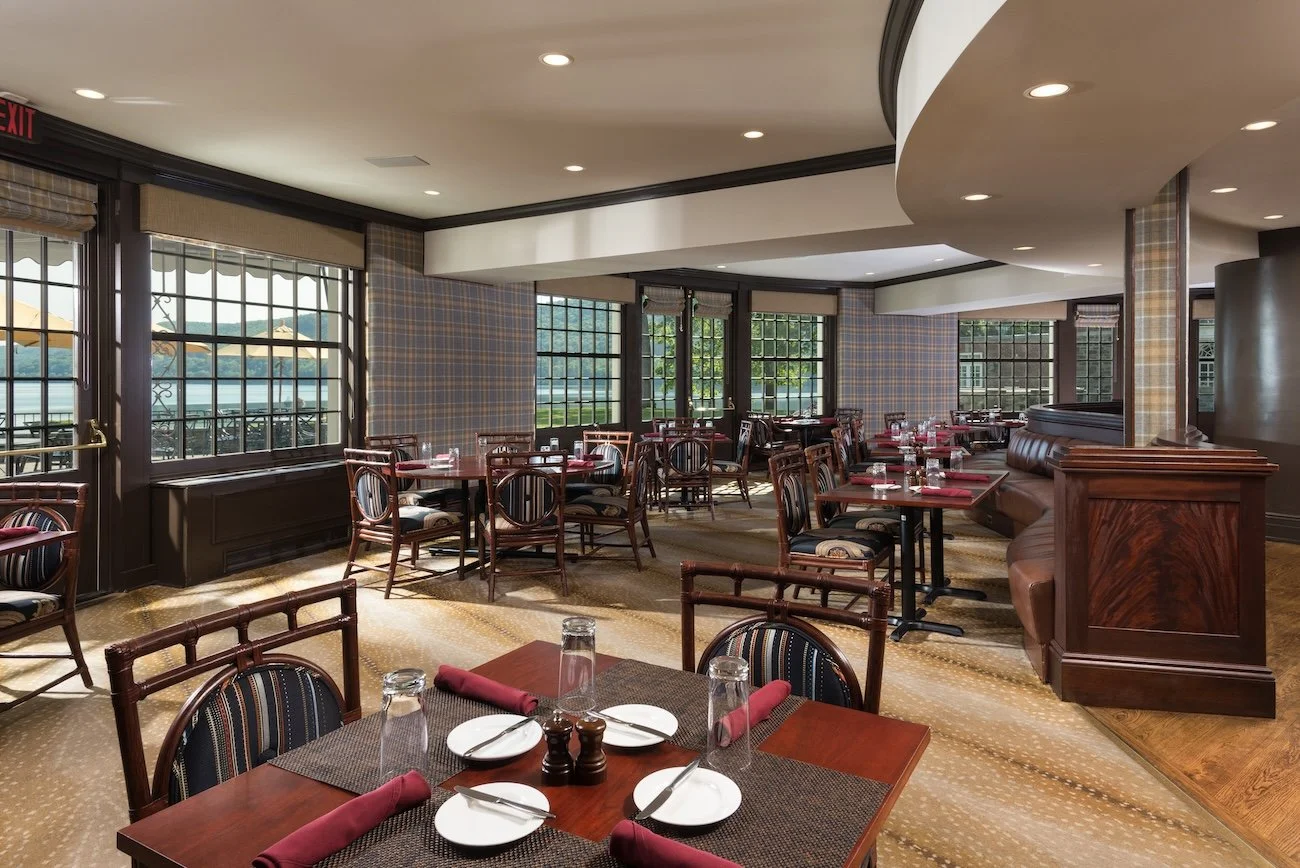
The Hawkeye Grill offers a more casual, lakeside dining option. [credit: The Otesaga Resort Hotel]
Rounding out The Otesaga's dining offerings, each morning begins with breakfast in Glimmerglass, a bright, ballroom-style room with tall windows framing Otsego Lake and tables dressed in crisp linen. Breakfast leans classic—omelets, Belgian waffles, fresh pastries, hearty mains—but the real draw is the setting. Coffee in hand, watching morning light move across the water, it's easy to see why generations of guests have started their days here.
In town, Main Street and the nearby blocks offer several longtime favorites that still pulse with Cooperstown's local heartbeat. For a proper sit-down, Nicoletta's Italian Café remains a Main Street staple for straightforward pastas and hearty Italian classics, while Mel's at 22 brings an intimate, contemporary feel to Chestnut Street with creative American dishes and a strong cocktail program. For something more casual, Cooley's Stone House Tavern, set in a vintage stone building on Pioneer Street just around the corner from the Hall of Fame, is a village fixture for hearty pub fare in a warm, well-worn setting. Doubleday Cafe—its name a nod to the town's baseball origin story—remains an easy, unpretentious go-to for a quick, satisfying meal any time of day. Beyond these, Cooperstown is dotted with cafés, pubs, and family-run restaurants serving everything from breakfast to late-night bites, making it easy to find a good meal just a short walk from the hotel.
What to Do in Cooperstown
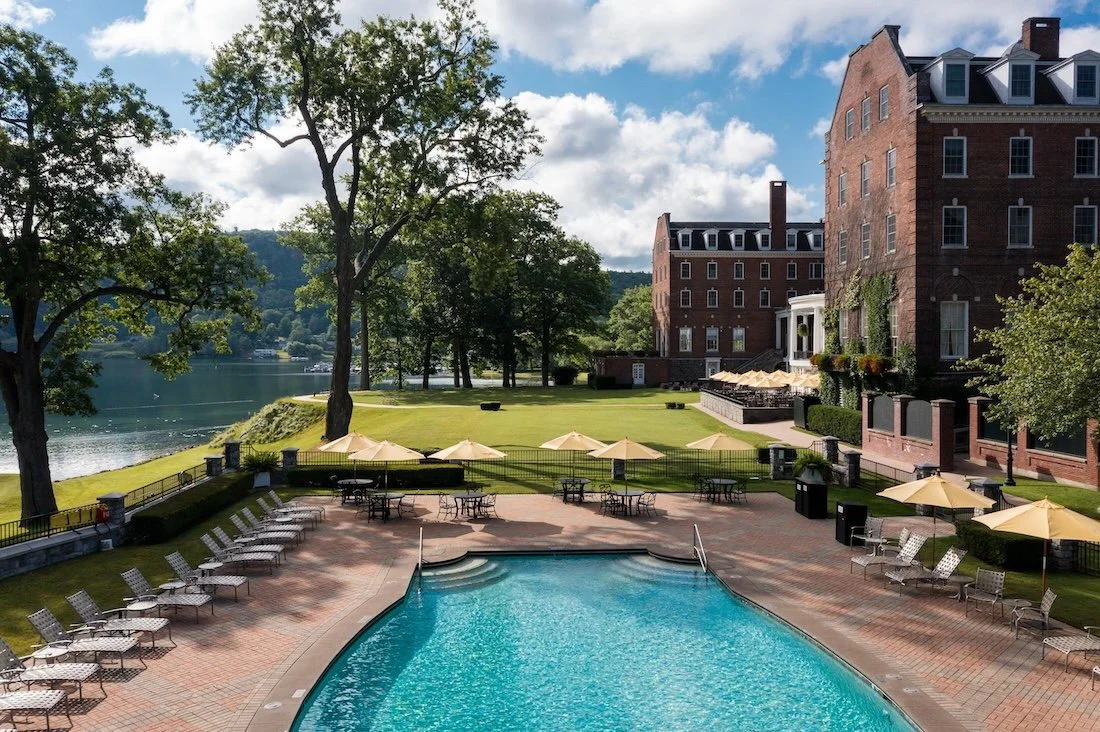
The pool opens a little before Memorial Day and closes around Columbus Day. [credit: The Otesaga Resort Hotel]
The Otesaga has plenty to keep golfers and non-golfers alike busy. Days can start with lakeside yoga, pairing nicely with a treatment at the hotel's Hawkeye Spa, or a match on one of two tennis courts or the dedicated pickleball court adjacent to the outdoor pool. The heated outdoor pool, positioned just above the shoreline, is open seasonally, roughly Memorial Day through Columbus Day weekend. Traditionalists might prefer a game of croquet on the lawn—mallets and wickets set out much as they were in the hotel's earliest days—while those drawn to the water can launch kayaks, canoes, rowboats, or stand-up paddleboards right from The Otesaga's private dock on Otsego Lake. As evening settles in, the Fire Bar, an outdoor fire-pit terrace, becomes a natural gathering spot before or after dinner.
Cooperstown's appeal extends well beyond Leatherstocking and The Otesaga itself, and it would be a shame not to sample what the village offers. Cooperstown is compact, walkable, and layered with stories that reveal themselves over time. A popular way to explore the town and nearby trails is aboard the hotel's complimentary cruiser bikes. Check with the concierge about guided hotel history tours and walking tours into the village.
No visit to Cooperstown seems complete without baseball. The National Baseball Hall of Fame anchors Main Street, where fans trace the game's history through uniforms, photographs, and plaques honoring legends from Ruth to Ichiro. Even non-fans can't help but be drawn in by the care and narrative woven through the exhibits.

Outdoor lakeside yoga is a popular activity at The Otesaga. [credit: The Otesaga Resort Hotel]
But there's much more here than baseball. The Fenimore Art Museum, overlooking the lake, houses American folk art, Hudson River School landscapes, and one of the country's finest collections of Native American art and objects. Across the street, the Farmers' Museum recreates 19th-century rural life with costumed interpreters, historic buildings, and working farms.
Summer brings the Glimmerglass Festival, a world-class performing arts series staged on the far side of the lake, featuring opera, musicals, and concerts in a theater that feels intimate despite its size.
For a slower pace, Brewery Ommegang, set amid fields seven miles outside town, pours Belgian-style ales and invites lingering over tastings or an unhurried lunch. In autumn, the hills surrounding Otsego Lake ignite in reds and golds, making a late-season round at Leatherstocking or a simple lakeside walk unforgettable.
Museums, festivals, or time by the water—Cooperstown works not because of any single attraction, but because you can move easily between them—or decide not to.
Travelers who place as much emphasis on the spa as the golf may also enjoy our guides to Enchantment & Seven Canyons Golf Club in Sedona—home to the celebrated Mii amo spa—or the historic Omni Grove Park Inn in Asheville, whose celebrated subterranean spa is one of the country's most distinctive wellness experiences.
Planning Your Trip
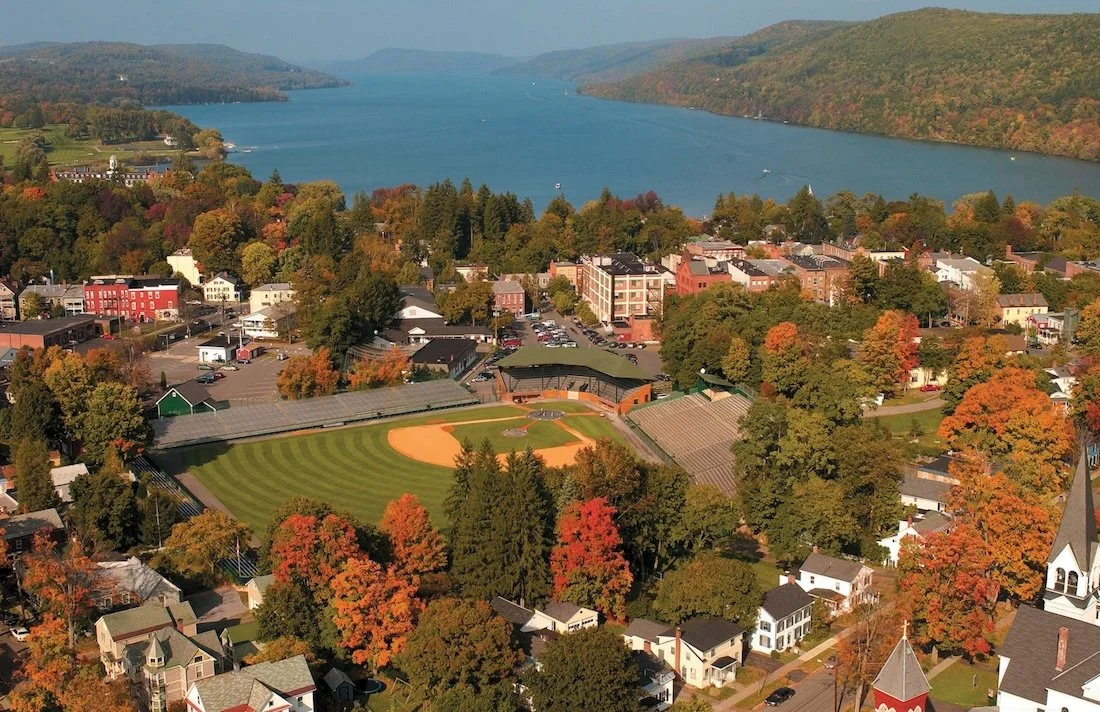
Autumn transforms Cooperstown into a colorful destination of brilliant lakeside scenery. [credit: ThisIsCooperstown.com]
Cooperstown is remote, and getting there reminds you how far removed the village feels from interstate routines. The village sits roughly 70 miles east of Albany—about a 90-minute drive—making Albany International Airport the most convenient commercial option. Syracuse Hancock International Airport is another viable choice, nearly a two-hour drive.
This is overwhelmingly a drive destination. It's about a four-hour drive from New York City, and closer to five hours from Philadelphia and Boston, depending on traffic and season. There is no direct train service; the nearest Amtrak stop is in Utica, 40 miles north, requiring a rental car. Once in Cooperstown, the need to drive largely disappears, especially if staying at The Otesaga.
The golf season runs May through October, with peak conditions in late spring and early fall. Summer brings full energy, long evenings, and reliably playable weather, though it is the busiest period. Shoulder-season visits in May or October offer lower rates and lighter crowds, but cooler temperatures and softer turf may affect play.
One week stands apart on the calendar: Baseball Hall of Fame Induction Weekend, usually held in late July. It's the most extraordinary time to experience Cooperstown's baseball culture at full volume, but it also brings crowds, higher prices, and limited availability—lodging near the village, including at The Otesaga, often books up within days of the announcement of the new class of inductees in January. For travelers focused primarily on golf and atmosphere, planning around that week is wise. For baseball devotees, it's a once-in-a-lifetime kind of pilgrimage.
Who Will Love Cooperstown?
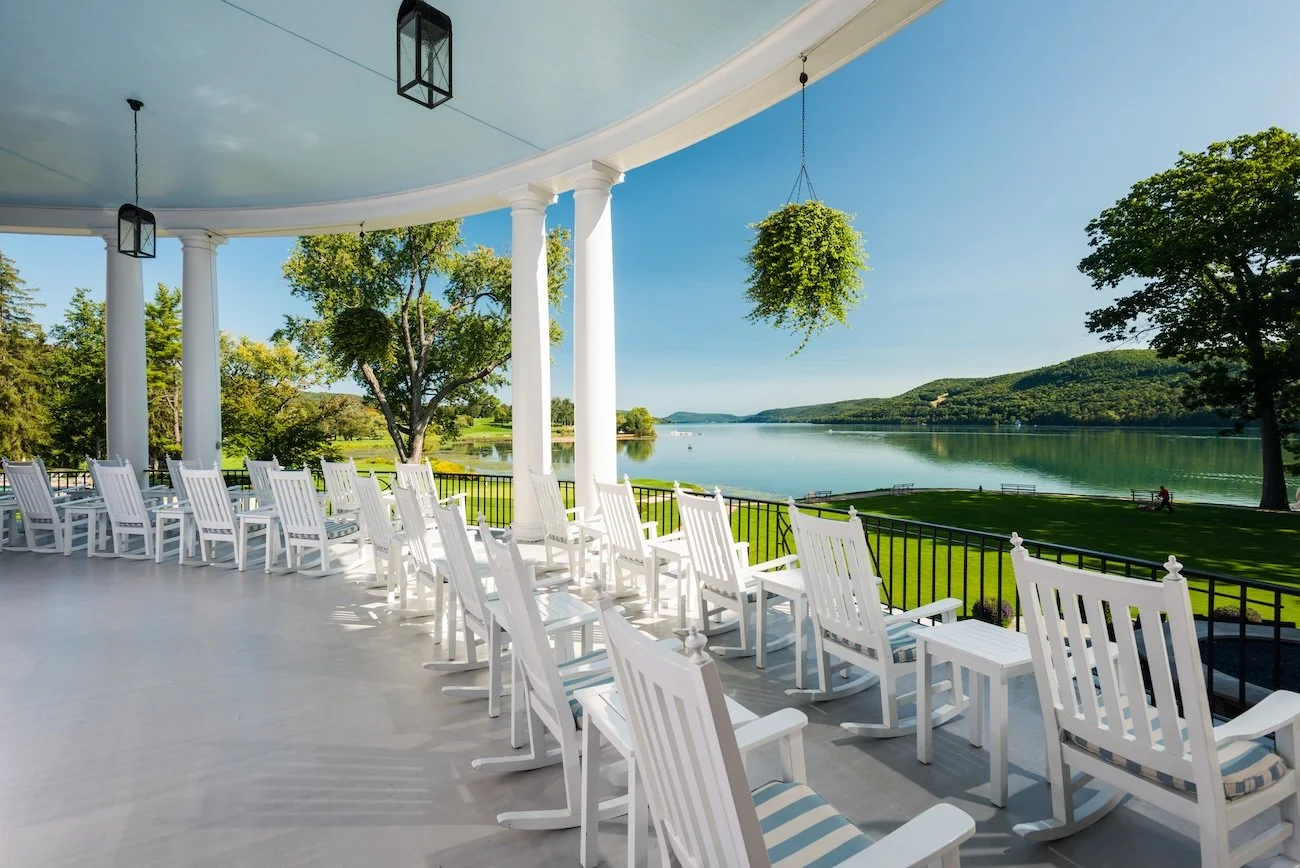
Rocking chairs on The Otesaga’s wide veranda invite long, lakeside lingering. [credit: The Otesaga Resort Hotel]
Cooperstown rewards golfers who value connectivity over variety. It suits those who appreciate classic golf course architecture, layered history, baseball lore, and trips where golf, lodging, and village life are naturally intertwined. It’s a great place for families. Couples, small groups, and solo travelers will also find its small-town slice of Americana especially appealing.
It’s less suited to travelers seeking multiple courses, constant activity, or nightlife. Those measuring a golf trip by volume rather than texture may find Cooperstown too small or too quiet for their tastes.
For the right golf traveler, Cooperstown offers a reassuring sense that nothing more is needed: a single course that begs to be replayed, a historic hotel on the lake, a village that’s easy to wander and steeped in history and baseball reverence, and a pace that lets you savor every shot, every view, every moment—whether baseball brought you here or not.
All photos in this article courtesy of The Otesaga and Cooperstown/Otsego County Tourism (ThisIsCooperstown.com).
You May Also Enjoy …
If you enjoyed this look at The Otesaga & Leatherstocking Golf Course, you might also like these Weekend Golf Getaways destination guides:
• Enchantment & Seven Canyons Golf Club (Arizona) — Red-rock scenery, the nationally renowned Mii amo spa, and one of the Southwest's most memorable golf settings.
• The Omni Grove Park Inn (North Carolina) — Historic Asheville resort with a restored Donald Ross course and one of America’s great destination spas.
• Forest Dunes (Michigan) — Pure golf immersion featuring Tom Weiskopf’s original championship course, Tom Doak’s reversible Loop, and the Bootlegger short course.
• The Coeur d’Alene Resort (Idaho) — A floating island green, a mahogany boat ride to the course, and lakefront luxury on the Pacific Northwest's most iconic golf lake.
Planning your next golf getaway?
Browse all Weekend Golf Getaways destination guides for in-depth coverage of golf resorts, memorable courses, accommodations, dining, and experiences worth building a trip around.